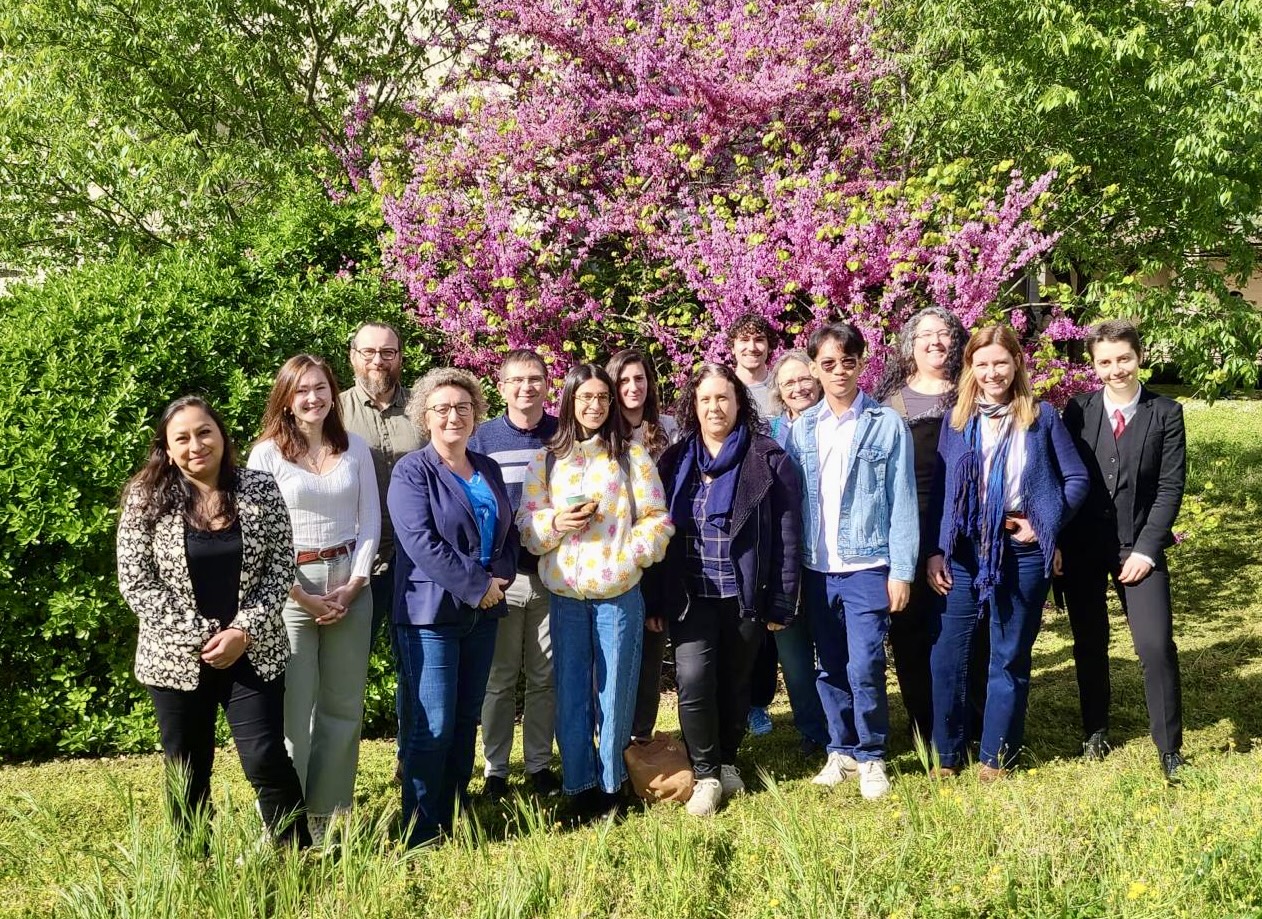
The general objective of our group is to understand the pathophysiology of planar cell polarity (PCP) in mammals, and more specifically to identify and define the molecular and cellular mechanisms of PCP, and the consequences of the early and late suppression of PCP signalling.
PCP is mainly understood and studied in the epithelium, and in particular the inner ear, which is accepted as one of the best models for analyzing PCP in mammals. It is more difficult to understand how the mechanisms of PCP affect non-epithelial cells such as neurons or glial cells, due to the absence of a reference epithelial plane and the inherent 3D structure of the brain. However, we do know that mutations in PCP genes significantly affect the nervous system, and some have been associated with neurodevelopmental disorders (autistic syndrome disorders), sensory impairments and neurological disorders (epilepsy or ataxia). In 2011, we created the "Planar Polarity and Plasticity" team, which combines complementary expertise and uses an epithelial model (the cochlea) to decipher and study the role(s) of PCP signalling in mammalian brains, during their development and in adulthood. This original combination of scientific expertise (epithelial and neuronal), combined with a multidisciplinary approach to PCP integrating cellular, developmental and functional approaches and a series of specific conditional mutants, has enabled our group to contribute significantly to the understanding of how PCP signalling regulates critical processes such as cytoskeletal dynamics, dendritic neuronal arborization, synaptogenesis, synaptic plasticity. We have also shown that the modification of the PCP protein can be involved in learning and social deficit, opening up new perspectives on the pathophysiological process of cognitive disorders.
These objectives were achieved thanks to the solid expertise of our group in biology and cell development, the solid local and international network of collaborators and the state-of-the-art facilities at Magendie or the Neurocampus in Bordeaux.
Follow us on Twitter: 

The neuromuscular junction (NMJ), synapse between the motor neuron terminal and a skeletal muscle fiber is crucial, throughout life, in maintaining the reliable neurotransmission required for functional […]
In the hippocampus, dentate gyrus granule cells connect to CA3 pyramidal cells via their axons, the mossy fibers (Mf). The synaptic terminals of Mfs (Mf boutons, MfBs) form large and complex synapses with […]
Core planar cell polarity (PCP) genes, which are involved in various neurodevelopmental disorders such as neural tube closure, epilepsy, and autism spectrum disorder, have poorly defined molecular signatures […]
The development of the neuromuscular junction (NMJ) requires dynamic trans-synaptic coordination orchestrated by secreted factors, including Wnt family morphogens. To investigate how these synaptic cues […]
Social behavior is a basic domain affected by several neurodevelopmental disorders, including ASD and a heterogeneous set of neuropsychiatric disorders. The SCRIB gene that codes for the polarity protein […]