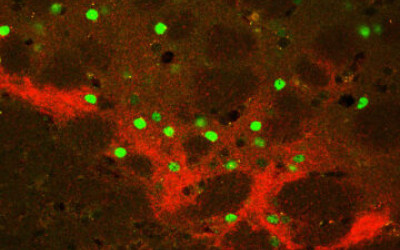
IF du Neurocentre
IF1234567891011121314151617181920253035404550
Nombre00419291313871002321161403231101
%00268443230111321201111101

372 publications


08/2026 | Glia
Astrocytic mGluR5 Regulation of Synaptic Transmission is Activity-Dependent in Adult Rats.
Mountadem S, Hilal ML, Pommier D, Arnouil D, Langlais VC, Simon V, Amadio A, Miegebielle M, Marais S, Josephine C, Cannich A, Varilh M, Bourel J, Cota D, Marsicano G, Bemelmans AP, Ciofi P, Oliet SHR, Panatier A
doi: 10.1002/glia.70162

Abstract:
Data accumulated over the last two decades have demonstrated that astrocytes play key roles in the regulation of synaptic transmission and plasticity. This is due, among other mechanisms, to their capability to detect and regulate synaptic transmission by expressing receptors and releasing gliotransmitters, respectively. Importantly, in juvenile rats, astrocytes are able to detect glutamate release at the level of individual synapses through mGluR5 and consequently up-regulate excitatory synaptic transmission efficacy through the release of purines. Whether this upregulation is still present in the adult brain is an open question. Using immunohistochemistry and RNAscope on fixed tissue, as well as electrophysiological recordings on acute hippocampal brain slices of adult male rats, we demonstrated that this regulatory pathway also prevails in adult rats. Most surprisingly, such facilitation of glutamate release that is readily observed when a small number of synapses are activated was completely abolished under conditions where a large number of inputs were stimulated. These findings thus suggest that astrocytes integrate the incoming afferent information and adapt their responses depending on the network activity.


29/01/2026 | j neuroinflammation
Astrocyte CB(1) receptors drive blood-brain barrier disruption in central nervous system inflammatory disease.
Colomer T, Bernal-Chico A, Sanchez-Martin E, Moreno-Garcia A, Baraibar AM, Uribe-Irusta A, Iriarte-Sarria A, Beriain S, Skupio U, Gatuingt-Chasseriaud C, Gonzales D, Laplagne G, Serrat R, de Guevara IP, Matute C, Clemente D, Tepavcevic V, Fernandez-Moncada I, Chapouly C, Marsicano G, Mato S
doi: 10.1186/s12974-026-03708-3


09/2025 | Nat Neurosci
Potentiation of mitochondrial function by mitoDREADD-G(s) reverses pharmacological and neurodegenerative cognitive impairment in mice.
Pagano Zottola AC, Martin-Jimenez R, Lavanco G, Hamel-Cote G, Ramon-Duaso C, Rodrigues RS, Mariani Y, Khan M, Drago F, Jean S, Rio IB, Jimenez-Blasco D, Egana-Huguet J, Eraso-Pichot A, Beriain S, Cannich A, Vidal-Palencia L, Infantino R, Julio-Kalajzic F, Gisquet D, Goncalves A, Al-Younis I, Baussan Y, Duvezin-Caubet S, Devin A, Soria-Gomez E, Puente N, Bolanos JP, Grandes P, Pouvreau S, Busquets-Garcia A, Marsicano G, Bellocchio L, Hebert-Chatelain E

Abstract:
Many brain disorders involve mitochondrial alterations, but owing to the lack of suitable tools, the causal role of mitochondrial dysfunction in pathophysiological processes is difficult to establish. Heterotrimeric guanine nucleotide-binding (G) proteins are key regulators of cell functions, and they can be found within mitochondria. Therefore, we reasoned that the activation of stimulatory mitochondrial G proteins (G(s)) could rapidly promote the activity of the organelle and possibly compensate for bioenergetic dysfunction. Here, we show that a mitochondria-targeted recombinant designer receptor exclusively activated by designer drugs (mitoDREADD-G(s)) can acutely trigger intramitochondrial signaling to increase mitochondrial membrane potential and oxygen consumption. In vivo activation of mitoDREADD-G(s) abolished memory alterations in cannabinoid-treated mice and in two mouse models of Alzheimer's disease and frontotemporal dementia. Thus, mitoDREADD-G(s) enables the establishment of causal relationships between mitochondria and biological or disease-related processes and represents an innovative potential therapeutic approach for disorders associated with mitochondrial impairment.


24/06/2025 | neurochem res
The Endocannabinoid System in Retinal Muller Glia: Lessons From Astrocyte Research.
Beriain S, Fernandez-Moncada I, Pereiro X, Eraso-Pichot A, Vecino E, Marsicano G
doi: 10.1007/s11064-025-04457-0

Abstract:
The endocannabinoid system (ECS) is a widespread neuromodulatory system involved in both physiological and pathological processes. The ECS has been mainly characterized in neurons, but emerging evidence has revealed its presence in different glial cells. Many studies focused on the functions of the ECS in astrocytes, but its role in other glial cells remains poorly explored. Muller cells are the main glial cells in the retina, providing structural maintenance, metabolic support and neuroprotection to other retinal cells. However, the crosstalk between the ECS and Muller glia (MG) has been scantly described so far. In this context, inspired by similar research on astrocytes, the study of the presence and activity of the ECS in MG is currently emerging as an interesting way of controlling retinal functions in physiopathological conditions. This review will examine the current knowledge on the ECS in MG with the general aim to promote future research in this field.


28/04/2025 | Glia
Astroglial CB(1) Reveal Sex-Specific Synaptic Effects of Amphetamine.
Mariani Y, Dalla-Tor T, Garavaldi T, Julio-Kalajzic F, Gisquet D, Gomez-Sotres P, Cannich A, Gambino G, Drago F, Serrat R, Hurel I, Chaouloff F, Pouvreau S, Bellocchio L, Marsicano G, Covelo A
doi: 10.1002/glia.70026

Abstract:
The Nucleus Accumbens (NAc) is a critical brain region for the effects of psychostimulant drugs. Type-1 cannabinoid receptors (CB(1)), the main elements of the endocannabinoid system (ECS) in the brain, participate in these effects and modulate synaptic functions in the NAc. Besides their neuronal expression, CB(1) receptors are also present in astrocytes, where they contribute to the regulation of synaptic plasticity and behavior. However, the impact of astroglial CB(1) receptors on synaptic plasticity in the NAc and on psychostimulant-induced synaptic and behavioral effects is currently unknown. This study shows that the psychostimulant amphetamine impairs a form of astroglial CB(1) receptor-dependent synaptic plasticity in the NAc of male, but not female mice. Consistently, locomotor effects of amphetamine require astroglial CB(1) receptors in male, but not female mice. These results, by revealing unforeseen mechanisms underlying sex-dependent effects of amphetamine, pave the way to a better understanding of the diverse impact of psychostimulants in women and men.


11/03/2025 | Prog Neurobiol
Astrocytic EphB3 receptors regulate D-serine-gated synaptic plasticity and memory.
Langlais VC, Mountadem S, Benazzouz I, Amadio A, Matos M, Jourdes A, Cannich A, Julio-Kalajzic F, Belluomo I, Matias I, Maitre M, Leste-Lasserre T, Marais S, Avignone E, Marsicano G, Bellocchio L, Oliet SHR, Panatier A

Abstract:
The activation of classical NMDA receptors (NMDARs) requires the binding of a co-agonist in addition to glutamate. Whereas astrocytic-derived d-serine was shown to play such a role at CA3-CA1 hippocampal synapses, the exact mechanism by which neurons interact with neighboring astrocytes to regulate synaptic d-serine availability remains to be fully elucidated. Considering the close anatomical apposition of astrocytic and neuronal elements at synapses, the aforementioned process is likely to involve cells adhesion molecules. One very likely candidate could be the astrocytic EphB3 receptor and its neuronal partner, ephrinB3. Here, we first showed in acute hippocampal slices from adult mice that stimulation of EphB3 receptors with exogenous ephrinB3 increased d-serine availability at CA3-CA1 synapses, resulting in an increased NMDAR activity. Conversely, inhibiting endogenous EphB3 receptors caused an impairment of both synaptic NMDAR activity and NMDAR-dependent long-term synaptic potentiation (LTP), effects that could be rescued by exogenous d-serine. Most interestingly, knocking down EphB3 receptor specifically in astrocytes yielded a similar impairment in hippocampal plasticity and, most importantly, caused a deficit in novel object recognition memory. Altogether, our data thus indicate that EphB3 receptors in hippocampal astrocytes play a key role in regulating synaptic NMDAR function, activity-dependent plasticity and memory.


04/09/2024 | Nat Commun
Cannabidiol ameliorates mitochondrial disease via PPARgamma activation in preclinical models.
Puighermanal E, Luna-Sanchez M, Gella A, van der Walt G, Urpi A, Royo M, Tena-Morraja P, Appiah I, de Donato MH, Menardy F, Bianchi P, Esteve-Codina A, Rodriguez-Pascau L, Vergara C, Gomez-Pallares M, Marsicano G, Bellocchio L, Martinell M, Sanz E, Jurado S, Soriano FX, Pizcueta P, Quintana A

Abstract:
Mutations in mitochondrial energy-producing genes lead to a heterogeneous group of untreatable disorders known as primary mitochondrial diseases (MD). Leigh syndrome (LS) is the most common pediatric MD and is characterized by progressive neuromuscular affectation and premature death. Here, we show that daily cannabidiol (CBD) administration significantly extends lifespan and ameliorates pathology in two LS mouse models, and improves cellular function in fibroblasts from LS patients. CBD delays motor decline and neurodegenerative signs, improves social deficits and breathing abnormalities, decreases thermally induced seizures, and improves neuropathology in affected brain regions. Mechanistically, we identify peroxisome proliferator-activated receptor gamma (PPARgamma) as a key nuclear receptor mediating CBD's beneficial effects, while also providing proof of dysregulated PPARgamma expression and activity as a common feature in both mouse neurons and fibroblasts from LS patients. Taken together, our results provide the first evidence for CBD as a potential treatment for LS.


21/08/2024 | J Neurosci
GAP43 located on corticostriatal terminals restrains novelty-induced hyperactivity in mice.
Maroto IB, Costas-Insua C, Montero-Fernandez C, Hermoso-Lopez A, Lebouc M, Bajo-Graneras R, Alvaro-Blazquez A, Blazquez C, Cannich A, Marsicano G, Martin R, Baufreton J, Rodriguez-Crespo I, Bellocchio L, Guzman M

Abstract:
Growth-associated protein of 43 kDa (GAP43) is a key cytoskeleton-associated component of the presynaptic terminal that facilitates neuroplasticity. Downregulation of GAP43 expression has been associated to various psychiatric conditions in humans and evokes hippocampus-dependent memory impairments in mice. Despite the extensive studies conducted on hippocampal GAP43 in past decades, however, very little is known about its roles in modulating the excitatory vs. inhibitory balance in other brain regions. We recently generated conditional knockout mice in which the Gap43 gene was selectively inactivated in either telencephalic glutamatergic neurons (Gap43(fl/fl) ;Nex1(Cre) mice, hereafter Glu-GAP43(-/-) mice) or forebrain GABAergic neurons (Gap43(fl/fl) ;Dlx5/6(Cre) mice, hereafter GABA-GAP43(-/-) mice). Here, we show that Glu-GAP43(-/-) but not GABA-GAP43(-/-) mice of either sex show a striking hyperactive phenotype when exposed to a novel environment. This behavioral alteration of Glu-GAP43(-/-) mice was linked to a selective activation of dorsal-striatum neurons, as well as to an enhanced corticostriatal glutamatergic transmission and an abrogation of corticostriatal endocannabinoid-mediated long-term depression. In line with these observations, GAP43 was abundantly expressed in corticostriatal glutamatergic terminals of wild-type mice. The novelty-induced hyperactive phenotype of Glu-GAP43(-/-) mice was abrogated by chemogenetically inhibiting corticostriatal afferences with a G(i)-coupled 'designer receptor exclusively activated by designer drugs' (DREADD), thus further supporting that novelty-induced activity is controlled by GAP43 at corticostriatal excitatory projections. Taken together, these findings show an unprecedented regulatory role of GAP43 in the corticostriatal circuitry and provide a new mouse model with a delimited neuronal-circuit alteration for studying novelty-induced hyperactivity, a phenotypic shortfall that occurs in diverse psychiatric diseases.Significance statement Psychiatric alterations such as attention deficit/hyperactivity disorder, schizophrenia and bipolar disorder pose a significant health and socioeconomic burden to our society. Animal models that recapitulate precise phenotypical traits of those diseases are therefore warranted for developing new therapeutic interventions. Here, we found that mice lacking the protein GAP43 selectively in telencephalic glutamatergic neurons show a robust novelty-induced hyperactive phenotype, a behavioral deficit often associated to psychiatric diseases. These mice exhibit profound alterations in corticostriatal excitatory plasticity and a selective overactivation of dorsal-striatum neurons in response to a novel environment. Our findings thus unveil an important role of GAP43 in corticostriatal function and provide a new animal model with a delimited neuronal-circuit alteration for studying novelty-induced hyperactivity in psychiatric disorders.


18/08/2024 | Nat Commun
Olfactory bulb astrocytes link social transmission of stress to cognitive adaptation in male mice.
Gomez-Sotres P, Skupio U, Dalla Tor T, Julio-Kalajzic F, Cannich A, Gisquet D, Bonilla-Del Rio I, Drago F, Puente N, Grandes P, Bellocchio L, Busquets-Garcia A, Bains JS, Marsicano G
doi: 10.1038/s41467-024-51416-4

Abstract:
Emotions and behavior can be affected by social chemosignals from conspecifics. For instance, olfactory signals from stressed individuals induce stress-like physiological and synaptic changes in naive partners. Direct stress also alters cognition, but the impact of socially transmitted stress on memory processes is currently unknown. Here we show that exposure to chemosignals produced by stressed individuals is sufficient to impair memory retrieval in unstressed male mice. This requires astrocyte control of information in the olfactory bulb mediated by mitochondria-associated CB1 receptors (mtCB1). Targeted genetic manipulations, in vivo Ca(2+) imaging and behavioral analyses reveal that mtCB1-dependent control of mitochondrial Ca(2+) dynamics is necessary to process olfactory information from stressed partners and to define their cognitive consequences. Thus, olfactory bulb astrocytes provide a link between social odors and their behavioral meaning.


09/08/2024 | Nat Commun
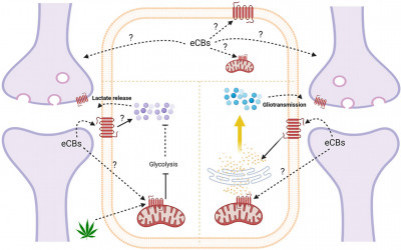
A lactate-dependent shift of glycolysis mediates synaptic and cognitive processes in male mice.
Fernandez-Moncada I, Lavanco G, Fundazuri UB, Bollmohr N, Mountadem S, Dalla Tor T, Hachaguer P, Julio-Kalajzic F, Gisquet D, Serrat R, Bellocchio L, Cannich A, Fortunato-Marsol B, Nasu Y, Campbell RE, Drago F, Cannizzaro C, Ferreira G, Bouzier-Sore AK, Pellerin L, Bolanos JP, Bonvento G, Barros LF, Oliet SHR, Panatier A, Marsicano G
doi: 10.1038/s41467-024-51008-2

Abstract:
Astrocytes control brain activity via both metabolic processes and gliotransmission, but the physiological links between these functions are scantly known. Here we show that endogenous activation of astrocyte type-1 cannabinoid (CB1) receptors determines a shift of glycolysis towards the lactate-dependent production of D-serine, thereby gating synaptic and cognitive functions in male mice. Mutant mice lacking the CB1 receptor gene in astrocytes (GFAP-CB1-KO) are impaired in novel object recognition (NOR) memory. This phenotype is rescued by the gliotransmitter D-serine, by its precursor L-serine, and also by lactate and 3,5-DHBA, an agonist of the lactate receptor HCAR1. Such lactate-dependent effect is abolished when the astrocyte-specific phosphorylated-pathway (PP), which diverts glycolysis towards L-serine synthesis, is blocked. Consistently, lactate and 3,5-DHBA promoted the co-agonist binding site occupancy of CA1 post-synaptic NMDA receptors in hippocampal slices in a PP-dependent manner. Thus, a tight cross-talk between astrocytic energy metabolism and gliotransmission determines synaptic and cognitive processes.


24/04/2024 | Nat Commun
Single cell tracing of Pomc neurons reveals recruitment of 'Ghost' subtypes with atypical identity in a mouse model of obesity.
Leon S, Simon V, Lee TH, Steuernagel L, Clark S, Biglari N, Lesté-Lasserre T, Dupuy N, Cannich A, Bellocchio L, Zizzari P, Allard C, Gonzales D, Le Feuvre Y, Lhuillier E, Brochard A, Nicolas JC, Teillon J, Nikolski M, Marsicano G, Fioramonti X, Brüning JC, Cota D, Quarta C
doi: 10.1038/s41467-024-47877-2

Abstract:
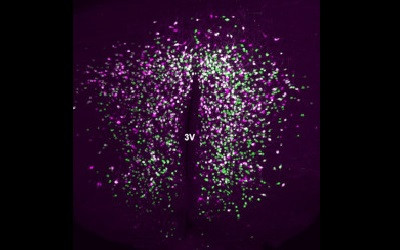
The hypothalamus contains a remarkable diversity of neurons that orchestrate behavioural and metabolic outputs in a highly plastic manner. Neuronal diversity is key to enabling hypothalamic functions and, according to the neuroscience dogma, it is predetermined during embryonic life. Here, by combining lineage tracing of hypothalamic pro-opiomelanocortin (Pomc) neurons with single-cell profiling approaches in adult male mice, we uncovered subpopulations of 'Ghost' neurons endowed with atypical molecular and functional identity. Compared to 'classical' Pomc neurons, Ghost neurons exhibit negligible Pomc expression and are 'invisible' to available neuroanatomical approaches and promoter-based reporter mice for studying Pomc biology. Ghost neuron numbers augment in diet-induced obese mice, independent of neurogenesis or cell death, but weight loss can reverse this shift. Our work challenges the notion of fixed, developmentally programmed neuronal identities in the mature hypothalamus and highlight the ability of specialised neurons to reversibly adapt their functional identity to adult-onset obesogenic stimuli.


15/04/2024 | Curr Biol
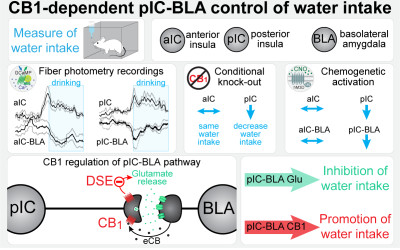
Cannabinoids regulate an insula circuit controlling water intake.
Zhao Z, Covelo A, Couderc Y, Mitra A, Varilh M, Wu Y, Jacky D, Fayad R, Cannich A, Bellocchio L, Marsicano G, Beyeler A
doi: 10.1016/j.cub.2024.03.053

Abstract:
The insular cortex, or insula, is a large brain region involved in the detection of thirst and the regulation of water intake. However, our understanding of the topographical, circuit, and molecular mechanisms for controlling water intake within the insula remains parcellated. We found that type-1 cannabinoid (CB(1)) receptors in the insular cortex cells participate in the regulation of water intake and deconstructed the circuit mechanisms of this control. Topographically, we revealed that the activity of excitatory neurons in both the anterior insula (aIC) and posterior insula (pIC) increases in response to water intake, yet only the specific removal of CB(1) receptors in the pIC decreases water intake. Interestingly, we found that CB(1) receptors are highly expressed in insula projections to the basolateral amygdala (BLA), while undetectable in the neighboring central part of the amygdala. Thus, we recorded the neurons of the aIC or pIC targeting the BLA (aIC-BLA and pIC-BLA) and found that they decreased their activity upon water drinking. Additionally, chemogenetic activation of pIC-BLA projection neurons decreased water intake. Finally, we uncovered CB(1)-dependent short-term synaptic plasticity (depolarization-induced suppression of excitation [DSE]) selectively in pIC-BLA, compared with aIC-BLA synapses. Altogether, our results support a model where CB(1) receptor signaling promotes water intake by inhibiting the pIC-BLA pathway, thereby contributing to the fine top-down control of thirst responses.


21/03/2024 | embo mol med
The CB(1) receptor interacts with cereblon and drives cereblon deficiency-associated memory shortfalls.
Costas-Insua C, Hermoso-Lopez A, Moreno E, Montero-Fernandez C, Alvaro-Blazquez A, Maroto IB, Sanchez-Ruiz A, Diez-Alarcia R, Blazquez C, Morales P, Canela EI, Casado V, Uriguen L, Perea G, Bellocchio L, Rodriguez-Crespo I, Guzman M
doi: 10.1038/s44321-024-00054-w

Abstract:
Cereblon/CRBN is a substrate-recognition component of the Cullin4A-DDB1-Roc1 E3 ubiquitin ligase complex. Destabilizing mutations in the human CRBN gene cause a form of autosomal recessive non-syndromic intellectual disability (ARNSID) that is modelled by knocking-out the mouse Crbn gene. A reduction in excitatory neurotransmission has been proposed as an underlying mechanism of the disease. However, the precise factors eliciting this impairment remain mostly unknown. Here we report that CRBN molecules selectively located on glutamatergic neurons are necessary for proper memory function. Combining various in vivo approaches, we show that the cannabinoid CB(1) receptor (CB(1)R), a key suppressor of synaptic transmission, is overactivated in CRBN deficiency-linked ARNSID mouse models, and that the memory deficits observed in these animals can be rescued by acute CB(1)R-selective pharmacological antagonism. Molecular studies demonstrated that CRBN interacts physically with CB(1)R and impairs the CB(1)R-G(i/o)-cAMP-PKA pathway in a ubiquitin ligase-independent manner. Taken together, these findings unveil that CB(1)R overactivation is a driving mechanism of CRBN deficiency-linked ARNSID and anticipate that the antagonism of CB(1)R could constitute a new therapy for this orphan disease.


09/02/2024 | Nat Commun
Endogenous cannabinoids in the piriform cortex tune olfactory perception.
Terral G, Harrell E, Lepousez G, Wards Y, Huang D, Dolique T, Casali G, Nissant A, Lledo PM, Ferreira G, Marsicano G, Roux L
doi: 10.1038/s41467-024-45161-x

Abstract:
Sensory perception depends on interactions between external inputs transduced by peripheral sensory organs and internal network dynamics generated by central neuronal circuits. In the sensory cortex, desynchronized network states associate with high signal-to-noise ratio stimulus-evoked responses and heightened perception. Cannabinoid-type-1-receptors (CB1Rs) - which influence network coordination in the hippocampus - are present in anterior piriform cortex (aPC), a sensory paleocortex supporting olfactory perception. Yet, how CB1Rs shape aPC network activity and affect odor perception is unknown. Using pharmacological manipulations coupled with multi-electrode recordings or fiber photometry in the aPC of freely moving male mice, we show that systemic CB1R blockade as well as local drug infusion increases the amplitude of gamma oscillations in aPC, while simultaneously reducing the occurrence of synchronized population events involving aPC excitatory neurons. In animals exposed to odor sources, blockade of CB1Rs reduces correlation among aPC excitatory units and lowers behavioral olfactory detection thresholds. These results suggest that endogenous endocannabinoid signaling promotes synchronized population events and dampen gamma oscillations in the aPC which results in a reduced sensitivity to external sensory inputs.


26/12/2023 | biomedicines
COVID-19 on Oral Health: A New Bilateral Connection for the Pandemic.
Bellocchio L, Dipalma G, Inchingolo AM, Inchingolo AD, Ferrante L, Del Vecchio G, Malcangi G, Palermo A, Qendro A, Inchingolo F
doi: 10.3390/biomedicines12010060

Abstract:
Severe acute respiratory syndrome coronavirus 2 (SARS-CoV-2) infection and transmission are generally known to be produced by respiratory droplets and aerosols from the oral cavity (O.C.) of infected subjects, as stated by the World Health Organization. Saliva also retains the viral particles and aids in the spread of COVID-19. Angiotensin-converting enzyme Type 2 (ACE2) and transmembrane serine protease 2 (TMPRSS2) are two of the numerous factors that promote SARS-CoV-2 infection, expressed by O.C. structures, various mucosa types, and the epithelia of salivary glands. A systemic SARS-CoV-2 infection might result from viral replication in O.C. cells. On the other hand, cellular damage of different subtypes in the O.C. might be associated with various clinical signs and symptoms. Factors interfering with SARS-CoV-2 infection potential might represent fertile ground for possible local pharmacotherapeutic interventions, which may confine SARS-CoV-2 virus entry and transmission in the O.C., finally representing a way to reduce COVID-19 incidence and severity.


20/10/2023 | Curr Biol
Striatopallidal cannabinoid type-1 receptors mediate amphetamine-induced sensitization.
Mariani Y, Covelo A, Rodrigues RS, Julio-Kalajzic F, Pagano Zottola AC, Lavanco G, Fabrizio M, Gisquet D, Drago F, Cannich A, Baufreton J, Marsicano G, Bellocchio L
doi: 10.1016/j.cub.2023.09.075

Abstract:
Repeated exposure to psychostimulants, such as amphetamine, causes a long-lasting enhancement in the behavioral responses to the drug, called behavioral sensitization.(1) This phenomenon involves several neuronal systems and brain areas, among which the dorsal striatum plays a key role.(2) The endocannabinoid system (ECS) has been proposed to participate in this effect, but the neuronal basis of this interaction has not been investigated.(3) In the CNS, the ECS exerts its functions mainly acting through the cannabinoid type-1 (CB(1)) receptor, which is highly expressed at terminals of striatal medium spiny neurons (MSNs) belonging to both the direct and indirect pathways.(4) In this study, we show that, although striatal CB(1) receptors are not involved in the acute response to amphetamine, the behavioral sensitization and related synaptic changes require the activation of CB(1) receptors specifically located at striatopallidal MSNs (indirect pathway). These results highlight a new mechanism of psychostimulant sensitization, a phenomenon that plays a key role in the health-threatening effects of these drugs.


17/08/2023 | cell chem biol
Mitochondria-targeted melatonin photorelease supports the presence of melatonin MT1 receptors in mitochondria inhibiting respiration.
Somalo-Barranco G, Pagano Zottola AC, Abdulrahman AO, El Zein RM, Cannich A, Munoz L, Serra C, Oishi A, Marsicano G, Masri B, Bellocchio L, Llebaria A, Jockers R
doi: 10.1016/j.chembiol.2023.07.009

Abstract:
The presence of signaling-competent G protein-coupled receptors in intracellular compartments is increasingly recognized. Recently, the presence of G(i/o) protein-coupled melatonin MT(1) receptors in mitochondria has been revealed, in addition to the plasma membrane. Melatonin is highly cell permeant, activating plasma membrane and mitochondrial receptors equally. Here, we present MCS-1145, a melatonin derivative bearing a triphenylphosphonium cation for specific mitochondrial targeting and a photocleavable o-nitrobenzyl group releasing melatonin upon illumination. MCS-1145 displayed low affinity for MT(1) and MT(2) but spontaneously accumulated in mitochondria, where it was resistant to washout. Uncaged MCS-1145 and exogenous melatonin recruited beta-arrestin 2 to MT(1) in mitochondria and inhibited oxygen consumption in mitochondria isolated from HEK293 cells only when expressing MT(1) and from mouse cerebellum of WT mice but not from MT(1)-knockout mice. Overall, we developed the first mitochondria-targeted photoactivatable melatonin ligand and demonstrate that melatonin inhibits mitochondrial respiration through mitochondrial MT(1) receptors.


08/2023 | Neurobiol Dis
An enquiry to the role of CB1 receptors in neurodegeneration.
Fernandez-Moncada I, Eraso-Pichot A, Dalla Tor T, Fortunato-Marsol B, Marsicano G

Abstract:
Neurodegenerative disorders are debilitating conditions that impair patient quality of life and that represent heavy social-economic burdens to society. Whereas the root of some of these brain illnesses lies in autosomal inheritance, the origin of most of these neuropathologies is scantly understood. Similarly, the cellular and molecular substrates explaining the progressive loss of brain functions remains to be fully described too. Indeed, the study of brain neurodegeneration has resulted in a complex picture, composed of a myriad of altered processes that include broken brain bioenergetics, widespread neuroinflammation and aberrant activity of signaling pathways. In this context, several lines of research have shown that the endocannabinoid system (ECS) and its main signaling hub, the type-1 cannabinoid (CB1) receptor are altered in diverse neurodegenerative disorders. However, some of these data are conflictive or poorly described. In this review, we summarize the findings about the alterations in ECS and CB1 receptors signaling in three representative brain illnesses, the Alzheimer's, Parkinson's and Huntington's diseases, and we discuss the relevance of these studies in understanding neurodegeneration development and progression, with a special focus on astrocyte function. Noteworthy, the analysis of ECS defects in neurodegeneration warrant much more studies, as our conceptual understanding of ECS function has evolved quickly in the last years, which now include glia cells and the subcellular-specific CB1 receptors signaling as critical players of brain functions.


28/07/2023 | J Neurochem
Type-1 cannabinoid receptors and their ever-expanding roles in brain energy processes.
Fernandez-Moncada I, Rodrigues RS, Fundazuri UB, Bellocchio L, Marsicano G
doi: 10.1111/jnc.15922

Abstract:
The brain requires large quantities of energy to sustain its functions. At the same time, the brain is isolated from the rest of the body, forcing this organ to develop strategies to control and fulfill its own energy needs. Likely based on these constraints, several brain-specific mechanisms emerged during evolution. For example, metabolically specialized cells are present in the brain, where intercellular metabolic cycles are organized to separate workload and optimize the use of energy. To orchestrate these strategies across time and space, several signaling pathways control the metabolism of brain cells. One of such controlling systems is the endocannabinoid system, whose main signaling hub in the brain is the type-1 cannabinoid (CB(1) ) receptor. CB(1) receptors govern a plethora of different processes in the brain, including cognitive function, emotional responses, or feeding behaviors. Classically, the mechanisms of action of CB(1) receptors on brain function had been explained by its direct targeting of neuronal synaptic function. However, new discoveries have challenged this view. In this review, we will present and discuss recent data about how a small fraction of CB(1) receptors associated to mitochondrial membranes (mtCB(1) ), are able to exert a powerful control on brain functions and behavior. mtCB(1) receptors impair mitochondrial functions both in neurons and astrocytes. In the latter cells, this effect is linked to an impairment of astrocyte glycolytic function, resulting in specific behavioral outputs. Finally, we will discuss the potential implications of (mt)CB(1) expression on oligodendrocytes and microglia metabolic functions, with the aim to encourage interdisciplinary approaches to better understand the role of (mt)CB(1) receptors in brain function and behavior.


Abstract:
Phytocannabinoids, including the non-addictive cannabis component cannabidivarin (CBDV), have been reported to hold therapeutic potential in several neurodevelopmental disorders (NDDs). Nonetheless, the therapeutic value of phytocannabinoids for treating Fragile X syndrome (FXS), a major NDD, remains unexplored. Here, we characterized the neurobehavioral effects of CBDV at doses of 20 or 100 mg/kg in the Fmr1-knockout (Fmr1-KO) mouse model of FXS using two temporally different intraperitoneal regimens: subchronic 10-day delivery during adulthood (Study 1: rescue treatment) or chronic 5-week delivery at adolescence (Study 2: preventive treatment). Behavioral tests assessing FXS-like abnormalities included anxiety, locomotor, cognitive, social and sensory alterations. Expression of inflammatory and plasticity markers was investigated in the hippocampus and prefrontal cortex. When administered during adulthood (Study 1), the effects of CBDV were marginal, rescuing at the lower dose only the acoustic hyper-responsiveness of Fmr1-KO mice and at both doses their altered hippocampal expression of neurotrophins. When administered during adolescence (Study 2), CBDV at both doses prevented the cognitive, social and acoustic alterations of adult Fmr1-KO mice and modified the expression of several inflammatory brain markers in both wild-type littermates and mutants. These findings warrant the therapeutic potential of CBDV for preventing neurobehavioral alterations associated with FXS, highlighting the relevance of its early administration.


08/06/2023 | Nat Med
Signaling-specific inhibition of the CB(1) receptor for cannabis use disorder: phase 1 and phase 2a randomized trials.
Haney M, Vallee M, Fabre S, Collins Reed S, Zanese M, Campistron G, Arout CA, Foltin RW, Cooper ZD, Kearney-Ramos T, Metna M, Justinova Z, Schindler C, Hebert-Chatelain E, Bellocchio L, Cathala A, Bari A, Serrat R, Finlay DB, Caraci F, Redon B, Martin-Garcia E, Busquets-Garcia A, Matias I, Levin FR, Felpin FX, Simon N, Cota D, Spampinato U, Maldonado R, Shaham Y, Glass M, Thomsen LL, Mengel H, Marsicano G, Monlezun S, Revest JM, Piazza PV
doi: 10.1038/s41591-023-02381-w

Abstract:
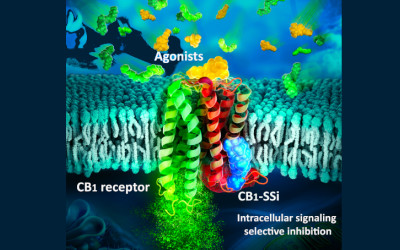
Cannabis use disorder (CUD) is widespread, and there is no pharmacotherapy to facilitate its treatment. AEF0117, the first of a new pharmacological class, is a signaling-specific inhibitor of the cannabinoid receptor 1 (CB(1)-SSi). AEF0117 selectively inhibits a subset of intracellular effects resulting from Delta(9)-tetrahydrocannabinol (THC) binding without modifying behavior per se. In mice and non-human primates, AEF0117 decreased cannabinoid self-administration and THC-related behavioral impairment without producing significant adverse effects. In single-ascending-dose (0.2 mg, 0.6 mg, 2 mg and 6 mg; n = 40) and multiple-ascending-dose (0.6 mg, 2 mg and 6 mg; n = 24) phase 1 trials, healthy volunteers were randomized to ascending-dose cohorts (n = 8 per cohort; 6:2 AEF0117 to placebo randomization). In both studies, AEF0117 was safe and well tolerated (primary outcome measurements). In a double-blind, placebo-controlled, crossover phase 2a trial, volunteers with CUD were randomized to two ascending-dose cohorts (0.06 mg, n = 14; 1 mg, n = 15). AEF0117 significantly reduced cannabis' positive subjective effects (primary outcome measurement, assessed by visual analog scales) by 19% (0.06 mg) and 38% (1 mg) compared to placebo (P < 0.04). AEF0117 (1 mg) also reduced cannabis self-administration (P < 0.05). In volunteers with CUD, AEF0117 was well tolerated and did not precipitate cannabis withdrawal. These data suggest that AEF0117 is a safe and potentially efficacious treatment for CUD.ClinicalTrials.gov identifiers: NCT03325595 , NCT03443895 and NCT03717272 .


02/06/2023 | Int J Mol Sci
Cannabidiol for Oral Health: A New Promising Therapeutical Tool in Dentistry.
Bellocchio L, Patano A, Inchingolo AD, Inchingolo F, Dipalma G, Isacco CG, de Ruvo E, Rapone B, Mancini A, Lorusso F, Scarano A, Malcangi G, Inchingolo AM
doi: 10.3390/ijms24119693

Abstract:
The medical use of cannabis has a very long history. Although many substances called cannabinoids are present in cannabis, Delta9tetrahydrocannabinol (Delta9-THC), cannabidiol (CBD) and cannabinol (CBN) are the three main cannabinoids that are most present and described. CBD itself is not responsible for the psychotropic effects of cannabis, since it does not produce the typical behavioral effects associated with the consumption of this drug. CBD has recently gained growing attention in modern society and seems to be increasingly explored in dentistry. Several subjective findings suggest some therapeutic effects of CBD that are strongly supported by research evidence. However, there is a plethora of data regarding CBD's mechanism of action and therapeutic potential, which are in many cases contradictory. We will first provide an overview of the scientific evidence on the molecular mechanism of CBD's action. Furthermore, we will map the recent developments regarding the possible oral benefits of CBD. In summary, we will highlight CBD's promising biological features for its application in dentistry, despite exiting patents that suggest the current compositions for oral care as the main interest of the industry.


06/2023 | Encephale
[Exercise for the promotion of mental health : Putative mechanisms, recommendations, and scientific challenges].
Legrand FD, Chaouloff F, Ginoux C, Ninot G, Polidori G, Beaumont F, Murer S, Jeandet P, Pelissolo A
doi: 10.1016/j.encep.2023.03.004

Abstract:
The idea of applying various forms of physical activity for the betterment of physical health and the reduction of chronic medical conditions is ubiquitous. Despite evidence of successful applications of physical activity for improvement of mental health dating back to antiquity, it has until recent years remained unconventional to consider exercise as an intervention strategy for various mental health conditions. The past two decades, however, have seen a relative explosion of interest in understanding and applying various programs and forms of exercise to improve mental health. Here, our purpose is to provide a comprehensive and updated overview of the application of exercise as a strategy for improving mental health. In the present paper we first summarize contemporary research regarding short- and long-term impacts of exercise on mental health. Then an overview of the putative mechanisms and neurobiological bases underpinning the beneficial effects of exercise is provided. Finally, we suggest directions for future research as well as a series of concrete recommendations for clinicians who wish to prescribe physical activity as part of patient mental health management.


24/04/2023 | Neuron
Mitochondrial cannabinoid receptors gate corticosterone impact on novel object recognition.
Skupio U, Welte J, Serrat R, Eraso-Pichot A, Julio-Kalajzić F, Gisquet D, Cannich A, Delcasso S, Matias I, Fundazuri UB, Pouvreau S, Pagano Zottola AC, Lavanco G, Drago F, Ruiz de Azua I, Lutz B, Bellocchio L, Busquets-Garcia A, Chaouloff F, Marsicano G
doi: 10.1016/j.neuron.2023.04.001

Abstract:
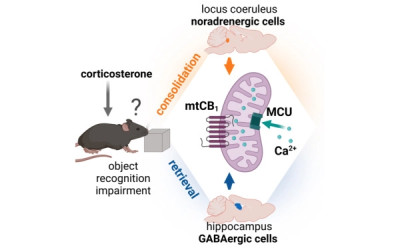
Corticosteroid-mediated stress responses require the activation of complex brain circuits involving mitochondrial activity, but the underlying cellular and molecular mechanisms are scantly known. The endocannabinoid system is implicated in stress coping, and it can directly regulate brain mitochondrial functions via type 1 cannabinoid (CB(1)) receptors associated with mitochondrial membranes (mtCB(1)). In this study, we show that the impairing effect of corticosterone in the novel object recognition (NOR) task in mice requires mtCB(1) receptors and the regulation of mitochondrial calcium levels in neurons. Different brain circuits are modulated by this mechanism to mediate the impact of corticosterone during specific phases of the task. Thus, whereas corticosterone recruits mtCB(1) receptors in noradrenergic neurons to impair NOR consolidation, mtCB(1) receptors in local hippocampal GABAergic interneurons are required to inhibit NOR retrieval. These data reveal unforeseen mechanisms mediating the effects of corticosteroids during different phases of NOR, involving mitochondrial calcium alterations in different brain circuits.


21/04/2023 | Nat Commun
Control of a hippocampal recurrent excitatory circuit by cannabinoid receptor-interacting protein Gap43.
Maroto IB, Costas-Insua C, Berthoux C, Moreno E, Ruiz-Calvo A, Montero-Fernandez C, Macias-Camero A, Martin R, Garcia-Font N, Sanchez-Prieto J, Marsicano G, Bellocchio L, Canela EI, Casado V, Galve-Roperh I, Nunez A, Fernandez de Sevilla D, Rodriguez-Crespo I, Castillo PE, Guzman M
doi: 10.1038/s41467-023-38026-2

Abstract:
The type-1 cannabinoid receptor (CB(1)R) is widely expressed in excitatory and inhibitory nerve terminals, and by suppressing neurotransmitter release, its activation modulates neural circuits and brain function. While the interaction of CB(1)R with various intracellular proteins is thought to alter receptor signaling, the identity and role of these proteins are poorly understood. Using a high-throughput proteomic analysis complemented with an array of in vitro and in vivo approaches in the mouse brain, we report that the C-terminal, intracellular domain of CB(1)R interacts specifically with growth-associated protein of 43 kDa (GAP43). The CB(1)R-GAP43 interaction occurs selectively at mossy cell axon boutons, which establish excitatory synapses with dentate granule cells in the hippocampus. This interaction impairs CB(1)R-mediated suppression of mossy cell to granule cell transmission, thereby inhibiting cannabinoid-mediated anti-convulsant activity in mice. Thus, GAP43 acts as a synapse type-specific regulatory partner of CB(1)R that hampers CB(1)R-mediated effects on hippocampal circuit function.


Abstract:
Astrocytes are key players in brain homeostasis and function. During the last years, several studies have cemented this notion by showing that these cells respond to neuronal signals and, via the release of molecules that modulate and support synaptic activity (gliotransmission) participates in the functions of the so-called tripartite synapse. Thus, besides their established control of brain metabolism, astrocytes can also actively control synaptic activity and behavior. Among the signaling pathways that shape the functions of astrocyte, the cannabinoid type-1 (CB1) receptor is emerging as a critical player in the control of both gliotransmission and the metabolic cooperation between astrocytes and neurons. In the present short review, we describe known and newly discovered properties of the astroglial CB1 receptors and their role in modulating brain function and behavior. Based on this evidence, we finally discuss how the functions and mode of actions of astrocyte CB1 receptors might represent a clear example of the inextricable relationship between energy metabolism and gliotransmission. These tight interactions will need to be taken into account for future research in astrocyte functions and call for a reinforcement of the theoretical and experimental bridges between studies on metabolic and synaptic functions of astrocytes.


10/12/2022 | Psychoneuroendocrinology
Age-dependent effects of estradiol on temporal memory: A role for the type 1 cannabinoid receptor?
Potier M, Maitre M, Leste-Lasserre T, Marsicano G, Chaouloff F, Marighetto A
doi: 10.1016/j.psyneuen.2022.106002

Abstract:
This study investigated in male mice how age modulates the effects of acute 17beta-estradiol (E2) on dorsal CA1 (dCA1)-dependent retention of temporal associations, which are critical for declarative memory. E2 was systemically injected to young (3-4 months old) and aged (22-24 months old) adult mice either (i) 1 h before the acquisition of an auditory trace fear conditioning (TFC) procedure allowing the assessment of temporal memory retention 24 h later or (ii) during in vivo electrophysiological recordings of CA3 to dCA1 synaptic efficacy under anesthesia. In young mice, E2 induced parallel dose-dependent reductions in memory and synaptic efficacy, i.e. an impairment in TFC retention and a long-term (NMDA receptor-dependent) depression of dCA1 synaptic efficacy as assessed by field excitatory postsynaptic potentials. In contrast, E2 tended to improved TFC retention whilst failing to change synaptic efficacy in aged mice. Age-dependent effects of E2 treatment were confirmed by immunohistochemical analyses of TFC acquisition-elicited dCA1 Fos activation. Thus, such an activation was respectively reduced and enhanced in young and aged E2-treated mice, compared to vehicle treatments. Hippocampal mRNA expression of estrogen receptors by RT-PCR analyses revealed an age-related increase in each receptor mRNA expression. In keeping with the key role of the endocannabinoid system in memory processes and CA3 to dCA1 synaptic plasticity, we next examined the role of cannabinoid type 1 receptors (CB(1)-R) in the aforementioned age-dependent effects of E2. Having confirmed that mRNA expression of CB(1)-R diminishes with age, we then observed that the deleterious effects of E2 on both memory and synaptic efficacy were both prevented by the CB(1)-R antagonist Rimonabant whilst being absent in CB(1)-R knock out mice. This study (i) reveals age-dependent effects of acute E2 on temporal memory and CA3 to dCA1 synaptic efficacy and (ii) suggests a key role of CB(1)-R in mediating E2 deleterious effects in young adulthood. Aging-related reductions in CB(1)-R might thus underlie E2 paradoxical effects across age.


17/11/2022 | Nat Neurosci
Astrocytes mediate long-lasting synaptic regulation of ventral tegmental area dopamine neurons.
Requie LM, Gómez-Gonzalo M, Speggiorin M, Managò F, Melone M, Congiu M, Chiavegato A, Lia A, Zonta M, Losi G, Henriques VJ, Pugliese A, Pacinelli G, Marsicano G, Papaleo F, Muntoni AL, Conti F, Carmignoto G
doi: 10.1038/s41593-022-01193-4

Abstract:
The plasticity of glutamatergic transmission in the ventral tegmental area (VTA) represents a fundamental mechanism in the modulation of dopamine neuron burst firing and phasic dopamine release at target regions. These processes encode basic behavioral responses, including locomotor activity, learning and motivated behaviors. Here we describe a hitherto unidentified mechanism of long-term synaptic plasticity in mouse VTA. We found that the burst firing in individual dopamine neurons induces a long-lasting potentiation of excitatory synapses on adjacent dopamine neurons that crucially depends on Ca(2+) elevations in astrocytes, mediated by endocannabinoid CB1 and dopamine D2 receptors co-localized at the same astrocytic process, and activation of pre-synaptic metabotropic glutamate receptors. Consistent with these findings, selective in vivo activation of astrocytes increases the burst firing of dopamine neurons in the VTA and induces locomotor hyperactivity. Astrocytes play, therefore, a key role in the modulation of VTA dopamine neuron functional activity.


24/10/2022 | embo mol med
Lactate dehydrogenases promote glioblastoma growth and invasion via a metabolic symbiosis.
Guyon J, Fernandez-Moncada I, Larrieu CM, Bouchez CL, Pagano Zottola AC, Galvis J, Chouleur T, Burban A, Joseph K, Ravi VM, Espedal H, Rosland GV, Daher B, Barre A, Dartigues B, Karkar S, Rudewicz J, Romero-Garmendia I, Klink B, Grutzmann K, Derieppe MA, Molinie T, Obad N, Leon C, Seano G, Miletic H, Heiland DH, Marsicano G, Nikolski M, Bjerkvig R, Bikfalvi A, Daubon T
doi: 10.15252/emmm.202115343

Abstract:
Lactate is a central metabolite in brain physiology but also contributes to tumor development. Glioblastoma (GB) is the most common and malignant primary brain tumor in adults, recognized by angiogenic and invasive growth, in addition to its altered metabolism. We show herein that lactate fuels GB anaplerosis by replenishing the tricarboxylic acid (TCA) cycle in absence of glucose. Lactate dehydrogenases (LDHA and LDHB), which we found spatially expressed in GB tissues, catalyze the interconversion of pyruvate and lactate. However, ablation of both LDH isoforms, but not only one, led to a reduction in tumor growth and an increase in mouse survival. Comparative transcriptomics and metabolomics revealed metabolic rewiring involving high oxidative phosphorylation (OXPHOS) in the LDHA/B KO group which sensitized tumors to cranial irradiation, thus improving mouse survival. When mice were treated with the antiepileptic drug stiripentol, which targets LDH activity, tumor growth decreased. Our findings unveil the complex metabolic network in which both LDHA and LDHB are integrated and show that the combined inhibition of LDHA and LDHB strongly sensitizes GB to therapy.


11/10/2022 | Cell Rep
Astroglial ER-mitochondria calcium transfer mediates endocannabinoid-dependent synaptic integration.
Serrat R, Covelo A, Kouskoff V, Delcasso S, Ruiz-Calvo A, Chenouard N, Stella C, Blancard C, Salin B, Julio-Kalajzić F, Cannich A, Massa F, Varilh M, Deforges S, Robin LM, De Stefani D, Busquets-Garcia A, Gambino F, Beyeler A, Pouvreau S, Marsicano G
doi: 10.1016/j.celrep.2022.111499


07/10/2022 | Mol Psychiatry
Insulin modulates emotional behavior through a serotonin-dependent mechanism.
Martin H, Bullich S, Martinat M, Chataigner M, Di Miceli M, Simon V, Clark S, Butler J, Schell M, Chopra S, Chaouloff F, Kleinridders A, Cota D, De Deurwaerdere P, Pénicaud L, Layé S, Guiard BP, Fioramonti X
doi: 10.1038/s41380-022-01812-3

Abstract:
Type-2 Diabetes (T2D) is characterized by insulin resistance and accompanied by psychiatric comorbidities including major depressive disorders (MDD). Patients with T2D are twice more likely to suffer from MDD and clinical studies have shown that insulin resistance is positively correlated with the severity of depressive symptoms. However, the potential contribution of central insulin signaling in MDD in patients with T2D remains elusive. Here we hypothesized that insulin modulates the serotonergic (5-HT) system to control emotional behavior and that insulin resistance in 5-HT neurons contributes to the development of mood disorders in T2D. Our results show that insulin directly modulates the activity of dorsal raphe (DR) 5-HT neurons to dampen 5-HT neurotransmission through a 5-HT(1A) receptor-mediated inhibitory feedback. In addition, insulin-induced 5-HT neuromodulation is necessary to promote anxiolytic-like effect in response to intranasal insulin delivery. Interestingly, such an anxiolytic effect of intranasal insulin as well as the response of DR 5-HT neurons to insulin are both blunted in high-fat diet-fed T2D animals. Altogether, these findings point to a novel mechanism by which insulin directly modulates the activity of DR 5-HT neurons to dampen 5-HT neurotransmission and control emotional behaviors, and emphasize the idea that impaired insulin-sensitivity in these neurons is critical for the development of T2D-associated mood disorders.


23/08/2022 | Cell Rep
Visual-area-specific tonic modulation of GABA release by endocannabinoids sets the activity and coordination of neocortical principal neurons.
Koukouli F, Montmerle M, Aguirre A, De Brito Van Velze M, Peixoto J, Choudhary V, Varilh M, Julio-Kalajzic F, Allene C, Mendez P, Zerlaut Y, Marsicano G, Schluter OM, Rebola N, Bacci A, Lourenco J
doi: 10.1016/j.celrep.2022.111202

Abstract:
Perisomatic inhibition of pyramidal neurons (PNs) coordinates cortical network activity during sensory processing, and this role is mainly attributed to parvalbumin-expressing basket cells (BCs). However, cannabinoid receptor type 1 (CB1)-expressing interneurons are also BCs, but the connectivity and function of these elusive but prominent neocortical inhibitory neurons are unclear. We find that their connectivity pattern is visual area specific. Persistently active CB1 signaling suppresses GABA release from CB1 BCs in the medial secondary visual cortex (V2M), but not in the primary visual cortex (V1). Accordingly, in vivo, tonic CB1 signaling is responsible for higher but less coordinated PN activity in the V2M than in the V1. These differential firing dynamics in the V1 and V2M can be captured by a computational network model that incorporates visual-area-specific properties. Our results indicate a differential CB1-mediated mechanism controlling PN activity, suggesting an alternative connectivity scheme of a specific GABAergic circuit in different cortical areas.


19/08/2022 | cells
Expression of Functional Cannabinoid Type-1 (CB1) Receptor in Mitochondria of White Adipocytes.
Pagano Zottola AC, Severi I, Cannich A, Ciofi P, Cota D, Marsicano G, Giordano A, Bellocchio L
doi: 10.3390/cells11162582

Abstract:
Via activation of the cannabinoid type-1 (CB1) receptor, endogenous and exogenous cannabinoids modulate important biochemical and cellular processes in adipocytes. Several pieces of evidence suggest that alterations of mitochondrial physiology might be a possible mechanism underlying cannabinoids' effects on adipocyte biology. Many reports suggest the presence of CB1 receptor mRNA in both white and brown adipose tissue, but the detailed subcellular localization of CB1 protein in adipose cells has so far been scarcely addressed. In this study, we show the presence of the functional CB1 receptor at different subcellular locations of adipocytes from epididymal white adipose tissue (eWAT) depots. We observed that CB1 is located at different subcellular levels, including the plasma membrane and in close association with mitochondria (mtCB1). Functional analysis in tissue homogenates and isolated mitochondria allowed us to reveal that cannabinoids negatively regulate complex-I-dependent oxygen consumption in eWAT. This effect requires mtCB1 activation and consequent regulation of the intramitochondrial cAMP-PKA pathway. Thus, CB1 receptors are functionally present at the mitochondrial level in eWAT adipocytes, adding another possible mechanism for peripheral regulation of energy metabolism.


09/08/2022 | Psychopharmacology (Berl)
Adolescent self-administration of the synthetic cannabinoid receptor agonist JWH-018 induces neurobiological and behavioral alterations in adult male mice.
Margiani G, Castelli MP, Pintori N, Frau R, Ennas MG, Orrù V, Serra V, Fiorillo E, Fadda P, Marsicano G, De Luca MA
doi: 10.1007/s00213-022-06191-9

Abstract:
RATIONALE: The use of synthetic cannabinoid receptor agonists (SCRAs) is growing among adolescents, posing major medical and psychiatric risks. JWH-018 represents the reference compound of SCRA-containing products. OBJECTIVES: This study was performed to evaluate the enduring consequences of adolescent voluntary consumption of JWH-018. METHODS: The reinforcing properties of JWH-018 were characterized in male CD1 adolescent mice by intravenous self-administration (IVSA). Afterwards, behavioral, neurochemical, and molecular evaluations were performed at adulthood. RESULTS: Adolescent mice acquired operant behavior (lever pressing, Fixed Ratio 1-3; 7.5 µg/kg/inf); this behavior was specifically directed at obtaining JWH-018 since it increased under Progressive Ratio schedule of reinforcement, and was absent in vehicle mice. JWH-018 IVSA was reduced by pretreatment of the CB1-antagonist/inverse agonist AM251. Adolescent exposure to JWH-018 by IVSA increased, at adulthood, both nestlet shredding and marble burying phenotypes, suggesting long-lasting repetitive/compulsive-like behavioral effects. JWH-018 did not affect risk proclivity in the wire-beam bridge task. In adult brains, there was an increase of ionized calcium binding adaptor molecule 1 (IBA-1) positive cells in the caudate-putamen (CPu) and nucleus accumbens (NAc), along with a decrease of glial fibrillary acidic protein (GFAP) immunoreactivity in the CPu. These glial alterations in adult brains were coupled with an increase of the chemokine RANTES and a decrease of the cytokines IL2 and IL13 in the cortex, and an increase of the chemokine MPC1 in the striatum. CONCLUSIONS: This study suggests for the first time that male mice self-administer the prototypical SCRA JWH-018 during adolescence. The adolescent voluntary consumption of JWH-018 leads to long-lasting behavioral and neurochemical aberrations along with glia-mediated inflammatory responses in adult brains.


13/07/2022 | Glia
Endocannabinoid signaling in astrocytes.
Eraso-Pichot A, Pouvreau S, Olivera-Pinto A, Gomez-Sotres P, Skupio U, Marsicano G
doi: 10.1002/glia.24246

Abstract:
The study of the astrocytic contribution to brain functions has been growing in popularity in the neuroscience field. In the last years, and especially since the demonstration of the involvement of astrocytes in synaptic functions, the astrocyte field has revealed multiple functions of these cells that seemed inconceivable not long ago. In parallel, cannabinoid investigation has also identified different ways by which cannabinoids are able to interact with these cells, modify their functions, alter their communication with neurons and impact behavior. In this review, we will describe the expression of different endocannabinoid system members in astrocytes. Moreover, we will relate the latest findings regarding cannabinoid modulation of some of the most relevant astroglial functions, namely calcium (Ca(2+) ) dynamics, gliotransmission, metabolism, and inflammation.


11/07/2022 | nat metab
Metabolic Messengers: endocannabinoids.
Busquets-García A, Bolaños JP, Marsicano G
doi: 10.1038/s42255-022-00600-1


01/05/2022 | J Neurosci Methods
Imaging mitochondrial calcium dynamics in the central nervous system.
Serrat R, Oliveira-Pinto A, Marsicano G, Pouvreau S
doi: 10.1016/j.jneumeth.2022.109560

Abstract:
Mitochondrial calcium handling is a particularly active research area in the neuroscience field, as it plays key roles in the regulation of several functions of the central nervous system, such as synaptic transmission and plasticity, astrocyte calcium signaling, neuronal activity... In the last few decades, a panel of techniques have been developed to measure mitochondrial calcium dynamics, relying mostly on photonic microscopy, and including synthetic sensors, hybrid sensors and genetically encoded calcium sensors. The goal of this review is to endow the reader with a deep knowledge of the historical and latest tools to monitor mitochondrial calcium events in the brain, as well as a comprehensive overview of the current state of the art in brain mitochondrial calcium signaling. We will discuss the main calcium probes used in the field, their mitochondrial targeting strategies, their key properties and major drawbacks. In addition, we will detail the main roles of mitochondrial calcium handling in neuronal tissues through an extended report of the recent studies using mitochondrial targeted calcium sensors in neuronal and astroglial cells, in vitro and in vivo.


11/02/2022 | Mol Cell Neurosci
Differential expression of the neuronal CB1 cannabinoid receptor in the hippocampus of male Ts65Dn Down syndrome mouse model.
Di Franco N, Drutel G, Roullot-Lacarriere V, Julio-Kalajzic F, Lalanne V, Grel A, Leste-Lasserre T, Matias I, Cannich A, Gonzales D, Simon V, Cota D, Marsicano G, Piazza PV, Vallee M, Revest JM
doi: 10.1016/j.mcn.2022.103705

Abstract:
Down syndrome (DS) or Trisomy 21 is the most common genetic cause of mental retardation with severe learning and memory deficits. DS is due to the complete or partial triplication of human chromosome 21 (HSA21) triggering gene overexpression and protein synthesis alterations responsible for a plethora of mental and physical phenotypes. Among the diverse brain target systems that affect hippocampal-dependent learning and memory deficit impairments in DS, the upregulation of the endocannabinoid system (ECS), and notably the overexpression of the cannabinoid type-1 receptor (CB1), seems to play a major role. Combining various protein and gene expression targeted approaches using western blot, qRT-PCR and FISH techniques, we investigated the expression pattern of ECS components in the hippocampus (HPC) of male Ts65Dn mice. Among all the molecules that constitute the ECS, we found that the expression of the CB1 is altered in the HPC of Ts65Dn mice. CB1 distribution is differentially segregated between the dorsal and ventral part of the HPC and within the different cell populations that compose the HPC. CB1 expression is upregulated in GABAergic neurons of Ts65Dn mice whereas it is downregulated in glutamatergic neurons. These results highlight a complex regulation of the CB1 encoding gene (Cnr1) in Ts65Dn mice that could open new therapeutic solutions for this syndrome.


03/02/2022 | Eur J Neurosci
Cannabinoid Signalling in the Brain: New Vistas.
Busquets-Garcia A, Melis M, Bellocchio L, Marsicano G
doi: 10.1111/ejn.15618


01/02/2022 | Cell Metab
Forgetting in obesity: The pregnenolone link.
Bellocchio L, Marsicano G
doi: 10.1016/j.cmet.2022.01.006

Abstract:
Cognitive dysfunction is often diagnosed in people with obesity and associated metabolic disorders. In the latest issue of Cell Metabolism, Ramirez et al. highlight an impaired production of the neurosteroid pregnenolone in the hypothalamus as a mechanism for obesity-induced cognitive impairment in both rodent models and patients with obesity.


21/12/2021 | Cell Rep
Astroglial ER-mitochondria calcium transfer mediates endocannabinoid-dependent synaptic integration.
Serrat R, Covelo A, Kouskoff V, Delcasso S, Ruiz-Calvo A, Chenouard N, Stella C, Blancard C, Salin B, Julio-Kalajzić F, Cannich A, Massa F, Varilh M, Deforges S, Robin LM, De Stefani D, Busquets-Garcia A, Gambino F, Beyeler A, Pouvreau S, Marsicano G
doi: 10.1016/j.celrep.2021.110133

Abstract:
Intracellular calcium signaling underlies the astroglial control of synaptic transmission and plasticity. Mitochondria-endoplasmic reticulum contacts (MERCs) are key determinants of calcium dynamics, but their functional impact on astroglial regulation of brain information processing is unexplored. We found that the activation of astrocyte mitochondrial-associated type-1 cannabinoid (mtCB(1)) receptors determines MERC-dependent intracellular calcium signaling and synaptic integration. The stimulation of mtCB(1) receptors promotes calcium transfer from the endoplasmic reticulum to mitochondria through a specific molecular cascade, involving the mitochondrial calcium uniporter (MCU). Physiologically, mtCB(1)-dependent mitochondrial calcium uptake determines the dynamics of cytosolic calcium events in astrocytes upon endocannabinoid mobilization. Accordingly, electrophysiological recordings in hippocampal slices showed that conditional genetic exclusion of mtCB(1) receptors or dominant-negative MCU expression in astrocytes blocks lateral synaptic potentiation, through which astrocytes integrate the activity of distant synapses. Altogether, these data reveal an endocannabinoid link between astroglial MERCs and the regulation of brain network functions.


12/2021 | cannabis cannabinoid res
Microglial Cannabinoid Type 1 Receptor Regulates Brain Inflammation in a Sex-Specific Manner.
De Meij J, Alfanek Z, Morel L, Decoeur F, Leyrolle Q, Picard K, Carrier M, Aubert A, Séré A, Lucas C, Laforest G, Helbling JC, Tremblay ME, Cota D, Moisan MP, Marsicano G, Layé S, Nadjar A
doi: 10.1089/can.2020.0170

Abstract:
Background: Neuroinflammation is a key feature shared by most, if not all, neuropathologies. It involves complex biological processes that act as a protective mechanism to fight against the injurious stimuli, but it can lead to tissue damage if self-perpetuating. In this context, microglia, the main cellular actor of neuroinflammation in the brain, are seen as a double-edged sword. By phagocyting neuronal debris, these cells can not only provide tissue repair but can also contribute to neuronal damage by releasing harmful substances, including inflammatory cytokines. The mechanisms guiding these apparent opposing actions are poorly known. The endocannabinoid system modulates the release of inflammatory factors such as cytokines and could represent a functional link between microglia and neuroinflammatory processes. According to transcriptomic databases and in vitro studies, microglia, the main source of cytokines in pathological conditions, express the cannabinoid type 1 receptor (CB1R). Methods: We thus developed a conditional mouse model of CB1R deletion specifically in microglia, which was subjected to an immune challenge (peripheral lipopolysaccharide injection). Results: Our results reveal that microglial CB1R differentially controls sickness behavior in males and females. Conclusion: These findings add to the comprehension of neuroinflammatory processes and might be of great interest for future studies aimed at developing therapeutic strategies for brain disorders with higher prevalence in men.


12/10/2021 | Cell Rep
Functional heterogeneity of POMC neurons relies on mTORC1 signaling.
Saucisse N, Mazier W, Simon V, Binder E, Catania C, Bellocchio L, Romanov RA, Léon S, Matias I, Zizzari P, Quarta C, Cannich A, Meece K, Gonzales D, Clark S, Becker JM, Yeo GSH, Fioramonti X, Merkle FT, Wardlaw SL, Harkany T, Massa F, Marsicano G, Cota D
doi: 10.1016/j.celrep.2021.109800

Abstract:
Hypothalamic pro-opiomelanocortin (POMC) neurons are known to trigger satiety. However, these neuronal cells encompass heterogeneous subpopulations that release γ-aminobutyric acid (GABA), glutamate, or both neurotransmitters, whose functions are poorly defined. Using conditional mutagenesis and chemogenetics, we show that blockade of the energy sensor mechanistic target of rapamycin complex 1 (mTORC1) in POMC neurons causes hyperphagia by mimicking a cellular negative energy state. This is associated with decreased POMC-derived anorexigenic α-melanocyte-stimulating hormone and recruitment of POMC/GABAergic neurotransmission, which is restrained by cannabinoid type 1 receptor signaling. Electrophysiology and optogenetic studies further reveal that pharmacological blockade of mTORC1 simultaneously activates POMC/GABAergic neurons and inhibits POMC/glutamatergic ones, implying that the functional specificity of these subpopulations relies on mTORC1 activity. Finally, POMC neurons with different neurotransmitter profiles possess specific molecular signatures and spatial distribution. Altogether, these findings suggest that mTORC1 orchestrates the activity of distinct POMC neurons subpopulations to regulate feeding behavior.


15/09/2021 | Mol Psychiatry
The temporal origin of dentate granule neurons dictates their role in spatial memory.
Masachs N, Charrier V, Farrugia F, Lemaire V, Blin N, Mazier W, Tronel S, Montaron MF, Ge S, Marsicano G, Cota D, Deroche-Gamonet V, Herry C, Abrous DN
doi: 10.1038/s41380-021-01276-x

Abstract:
The dentate gyrus is one of the only brain regions that continues its development after birth in rodents. Adolescence is a very sensitive period during which cognitive competences are programmed. We investigated the role of dentate granule neurons (DGNs) born during adolescence in spatial memory and compared them with those generated earlier in life (in embryos or neonates) or during adulthood by combining functional imaging, retroviral and optogenetic tools to tag and silence DGNs. By imaging DGNs expressing Zif268, a proxy for neuronal activity, we found that neurons generated in adolescent rats (and not embryos or neonates) are transiently involved in spatial memory processing. In contrast, adult-generated DGNs are recruited at a later time point when animals are older. A causal relationship between the temporal origin of DGNs and spatial memory was confirmed by silencing DGNs in behaving animals. Our results demonstrate that the emergence of spatial memory depends on neurons born during adolescence, a function later assumed by neurons generated during adulthood.


05/08/2021 | J Neurosci
Identification of BiP as a CB1 receptor-interacting protein that fine-tunes cannabinoid signaling in the mouse brain.
Costas-Insua C, Moreno E, Maroto IB, Ruiz-Calvo A, Bajo-Graneras R, Martin-Gutierrez D, Diez-Alarcia R, Vilaro MT, Cortes R, Garcia-Font N, Martin R, Espina M, Botta J, Gines S, McCormick PJ, Sanchez-Prieto J, Galve-Roperh I, Mengod G, Uriguen L, Marsicano G, Bellocchio L, Canela EI, Casado V, Rodriguez-Crespo I, Guzman M
doi: 10.1523/jneurosci.0821-21.2021

Abstract:
Cannabinoids, the bioactive constituents of cannabis, exert a wide array of effects on the brain by engaging type-1 cannabinoid receptor (CB1R). Accruing evidence supports that cannabinoid action relies on context-dependent factors such as the biological characteristics of the target cell, suggesting that cell population-intrinsic molecular cues modulate CB1R-dependent signaling. Here, by using a yeast two-hybrid-based high-throughput screening, we identified BiP as a potential CB1R-interacting protein. We next found that CB1R and BiP interact specifically in vitro, and mapped the interaction site within the CB1R C-terminal (intracellular) domain and the BiP C-terminal (substrate-binding) domain-alpha. BiP selectively shaped agonist-evoked CB1R signaling by blocking an 'alternative' Gq/11 protein-dependent signaling module, while leaving the 'classical' Gi/o protein-dependent inhibition of the cAMP pathway unaffected. In situ proximity ligation assays conducted on brain samples from various genetic mouse models of conditional loss or gain of CB1R expression allowed to map CB1R-BiP complexes selectively on terminals of GABAergic neurons. Behavioral studies using cannabinoid-treated male BiP(+/-) mice supported that CB1R-BiP complexes modulate cannabinoid-evoked anxiety, one of the most frequent undesired effects of cannabis. Altogether, by identifying BiP as a CB1R-interacting protein that controls receptor function in a signaling pathway- and neuron population-selective manner, our findings may help to understand the striking context-dependent actions of cannabis in the brain.SIGNIFICANCE STATEMENT:Cannabis use is increasing worldwide, so innovative studies aimed to understand its complex mechanism of neurobiological action are warranted. Here, we found that cannabinoid CB1 receptor (CB1R), the primary molecular target of the bioactive constituents of cannabis, interacts specifically with an intracellular protein called BiP. The interaction between CB1R and BiP occurs selectively on terminals of GABAergic (inhibitory) neurons, and induces a remarkable shift in the CB1R-associated signaling profile. Behavioral studies conducted in mice support that CB1R-BiP complexes act as fine-tuners of anxiety, one of the most frequent undesired effects of cannabis use. Our findings open a new conceptual framework to understand the striking context-dependent pharmacological actions of cannabis in the brain.


03/08/2021 | Int J Mol Sci
Cannabinoids Drugs and Oral Health-From Recreational Side-Effects to Medicinal Purposes: A Systematic Review.
Bellocchio L, Inchingolo AD, Inchingolo AM, Lorusso F, Malcangi G, Santacroce L, Scarano A, Bordea IR, Hazballa D, D'Oria MT, Isacco CG, Nucci L, Serpico R, Tartaglia GM, Giovanniello D, Contaldo M, Farronato M, Dipalma G, Inchingolo F
doi: 10.3390/ijms22158329

Abstract:
BACKGROUND: marijuana, the common name for cannabis sativa preparations, is one of the most consumed drug all over the world, both at therapeutical and recreational levels. With the legalization of medical uses of cannabis in many countries, and even its recreational use in most of these, the prevalence of marijuana use has markedly risen over the last decade. At the same time, there is also a higher prevalence in the health concerns related to cannabis use and abuse. Thus, it is mandatory for oral healthcare operators to know and deal with the consequences and effects of cannabis use on oral cavity health. This review will briefly summarize the components of cannabis and the endocannabinoid system, as well as the cellular and molecular mechanisms of biological cannabis action in human cells and biologic activities on tissues. We will also look into oropharyngeal tissue expression of cannabinoid receptors, together with a putative association of cannabis to several oral diseases. Therefore, this review will elaborate the basic biology and physiology of cannabinoids in human oral tissues with the aim of providing a better comprehension of the effects of its use and abuse on oral health, in order to include cannabinoid usage into dental patient health records as well as good medicinal practice. METHODS: the paper selection was performed by PubMed/Medline and EMBASE electronic databases, and reported according to the PRISMA guidelines. The scientific products were included for qualitative analysis. RESULTS: the paper search screened a total of 276 papers. After the initial screening and the eligibility assessment, a total of 32 articles were considered for the qualitative analysis. CONCLUSIONS: today, cannabis consumption has been correlated to a higher risk of gingival and periodontal disease, oral infection and cancer of the oral cavity, while the physico-chemical activity has not been completely clarified. Further investigations are necessary to evaluate a therapeutic efficacy of this class of drugs for the promising treatment of several different diseases of the salivary glands and oral diseases.


19/06/2021 | Neuropharmacology
CB1R-dependent regulation of astrocyte physiology and astrocyte-neuron interactions.
Covelo A, Eraso-Pichot A, Fernández-Moncada I, Serrat R, Marsicano G
doi: 10.1016/j.neuropharm.2021.108678

Abstract:
The endocannabinoid system (ECS) is involved in a variety of brain functions, mainly through the activation of the type-1 cannabinoid receptors (CB1R). CB1R are highly expressed throughout the brain at different structural, cellular and subcellular locations and its activity and expression levels have a direct impact in synaptic activity and behavior. In the last few decades, astrocytes have arisen as active players of brain physiology through their participation in the tripartite synapse and through their metabolic interaction with neurons. Here, we discuss some of the mechanisms by which astroglial CB1R at different subcellular locations, regulate astrocyte calcium signals and have an impact on gliotransmission and metabolic regulation. In addition, we discuss evidence pointing at astrocytes as potential important sources of endocannabinoid synthesis and release. Thus, we summarize recent findings that add further complexity and establish that the ECS is a fundamental effector of astrocyte functions in the brain.


19/04/2021 | Cell Metab
Hypothalamic bile acid-TGR5 signaling protects from obesity.
Castellanos-Jankiewicz A, Guzman-Quevedo O, Fenelon VS, Zizzari P, Quarta C, Bellocchio L, Tailleux A, Charton J, Fernandois D, Henricsson M, Piveteau C, Simon V, Allard C, Quemener S, Guinot V, Hennuyer N, Perino A, Duveau A, Maitre M, Leste-Lasserre T, Clark S, Dupuy N, Cannich A, Gonzales D, Deprez B, Mithieux G, Dombrowicz D, Backhed F, Prevot V, Marsicano G, Staels B, Schoonjans K, Cota D
doi: 10.1016/j.cmet.2021.04.009

Abstract:
Bile acids (BAs) improve metabolism and exert anti-obesity effects through the activation of the Takeda G protein-coupled receptor 5 (TGR5) in peripheral tissues. TGR5 is also found in the brain hypothalamus, but whether hypothalamic BA signaling is implicated in body weight control and obesity pathophysiology remains unknown. Here we show that hypothalamic BA content is reduced in diet-induced obese mice. Central administration of BAs or a specific TGR5 agonist in these animals decreases body weight and fat mass by activating the sympathetic nervous system, thereby promoting negative energy balance. Conversely, genetic downregulation of hypothalamic TGR5 expression in the mediobasal hypothalamus favors the development of obesity and worsens established obesity by blunting sympathetic activity. Lastly, hypothalamic TGR5 signaling is required for the anti-obesity action of dietary BA supplementation. Together, these findings identify hypothalamic TGR5 signaling as a key mediator of a top-down neural mechanism that counteracts diet-induced obesity.


19/03/2021 | Neuron
Subcellular specificity of cannabinoid effects in striatonigral circuits.
Soria-Gomez E, Pagano Zottola AC, Mariani Y, Desprez T, Barresi M, Bonilla-Del Rio I, Muguruza C, Le Bon-Jego M, Julio-Kalajzic F, Flynn R, Terral G, Fernandez-Moncada I, Robin LM, Oliveira da Cruz JF, Corinti S, Amer YO, Goncalves J, Varilh M, Cannich A, Redon B, Zhao Z, Leste-Lasserre T, Vincent P, Tolentino-Cortes T, Busquets-Garcia A, Puente N, Bains JS, Hebert-Chatelain E, Barreda-Gomez G, Chaouloff F, Lohman AW, Callado LF, Grandes P, Baufreton J, Marsicano G, Bellocchio L
doi: 10.1016/j.neuron.2021.03.007

Abstract:
Recent advances in neuroscience have positioned brain circuits as key units in controlling behavior, implying that their positive or negative modulation necessarily leads to specific behavioral outcomes. However, emerging evidence suggests that the activation or inhibition of specific brain circuits can actually produce multimodal behavioral outcomes. This study shows that activation of a receptor at different subcellular locations in the same neuronal circuit can determine distinct behaviors. Pharmacological activation of type 1 cannabinoid (CB1) receptors in the striatonigral circuit elicits both antinociception and catalepsy in mice. The decrease in nociception depends on the activation of plasma membrane-residing CB1 receptors (pmCB1), leading to the inhibition of cytosolic PKA activity and substance P release. By contrast, mitochondrial-associated CB1 receptors (mtCB1) located at the same terminals mediate cannabinoid-induced catalepsy through the decrease in intra-mitochondrial PKA-dependent cellular respiration and synaptic transmission. Thus, subcellular-specific CB1 receptor signaling within striatonigral circuits determines multimodal control of behavior.


18/03/2021 | Nat Neurosci
Spinal astroglial cannabinoid receptors control pathological tremor.
Carlsen EMM, Falk S, Skupio U, Robin L, Zottola ACP, Marsicano G, Perrier JF
doi: 10.1038/s41593-021-00818-4

Abstract:
Cannabinoids reduce tremor associated with motor disorders induced by injuries and neurodegenerative disease. Here we show that this effect is mediated by cannabinoid receptors on astrocytes in the ventral horn of the spinal cord, where alternating limb movements are initiated. We first demonstrate that tremor is reduced in a mouse model of essential tremor after intrathecal injection of the cannabinoid analog WIN55,212-2. We investigate the underlying mechanism using electrophysiological recordings in spinal cord slices and show that endocannabinoids released from depolarized interneurons activate astrocytic cannabinoid receptors, causing an increase in intracellular Ca(2+), subsequent release of purines and inhibition of excitatory neurotransmission. Finally, we show that the anti-tremor action of WIN55,212-2 in the spinal cords of mice is suppressed after knocking out CB1 receptors in astrocytes. Our data suggest that cannabinoids reduce tremor via their action on spinal astrocytes.


03/11/2020 | Diabetes
CB1 and GLP-1 Receptors Cross-Talk Provides New Therapies for Obesity.
Zizzari P, He R, Falk S, Bellocchio L, Allard C, Clark S, Lest, Quarta C
doi: 10.2337/db20-0162

Abstract:
GLP-1 receptor (GLP-1R) agonists effectively improve glycemia and body weight in patients with type 2 diabetes and obesity, but have limited weight-lowering efficacy and minimal insulin sensitizing action. In preclinical models, peripherally-restricted cannabinoid-1 receptor (CB1R) inhibitors, which are devoid of the neuropsychiatric side-effects observed with brain-penetrant CB1R blockers, ameliorate obesity and its multiple metabolic complications. Using mouse models with genetic loss of CB1R or GLP-1R, we demonstrate that these two metabolic receptors modulate food intake and body weight via reciprocal functional interactions. In diet-induced obese mice, the co-administration of a peripheral CB1R inhibitor with long-acting GLP-1R agonists achieves greater reduction in body weight and fat mass than monotherapies, by promoting negative energy balance. This co-treatment also results in larger improvements in systemic and hepatic insulin action, systemic dyslipidemia, and reduction of hepatic steatosis. Thus, peripheral CB1R blockade may allow safely potentiating the anti-obesity and anti-diabetic effects of currently available GLP-1R agonists.


05/10/2020 | Addict Biol
Exercise craving potentiates excitatory inputs to ventral tegmental area dopaminergic neurons.
Medrano MC, Hurel I, Mesguich E, Redon B, Stevens C, Georges F, Melis M, Marsicano G, Chaouloff F
doi: 10.1111/adb.12967

Abstract:
Physical exercise, which can be addictogenic on its own, is considered a therapeutic alternative for drug craving. Exercise might thus share with drugs the ability to strengthen excitatory synapses onto ventral tegmental area (VTA) dopaminergic neurones, as assessed by the ratio of AMPA receptor (AMPAR)-mediated excitatory postsynaptic currents (EPSCs) to NMDA receptor (NMDAR)-mediated EPSCs. As did acute cocaine, amphetamine, or Delta(9) -tetrahydrocannabinol (THC) pretreatments, an acute 1-h wheel-running session increased the AMPAR/NMDAR ratio in VTA dopaminergic neurones. To dissect the respective influences of wheel-running seeking and performance, mice went through an operant protocol wherein wheel-running was conditioned by nose poking under fixed ratio schedules of reinforcement. Conditioned wheel-running increased the AMPAR/NMDAR ratio to a higher extent than free wheel-running, doing so although running performance was lower in the former paradigm than in the latter. Thus, the cue-reward association, rather than reward consumption, played a major role in this increase. The AMPAR/NMDAR ratio returned to baseline levels in mice that had extinguished the cued-running motivated task, but it increased after a cue-induced reinstatement session. The amplitude of this increase correlated with the intensity of exercise craving, as assessed by individual nose poke scores. Finally, cue-induced reinstatement of running seeking proved insensitive to acute cocaine or THC pretreatments. Our study reveals for the first time that the drive for exercise bears synaptic influences on VTA dopaminergic neurones which are reminiscent of drug actions. Whether these influences play a role in the therapeutic effects of exercise in human drug craving remains to be established.


30/09/2020 | Curr Biol
A Novel Cortical Mechanism for Top-Down Control of Water Intake.
Zhao Z, Soria-Gomez E, Varilh M, Covelo A, Julio-Kalajzic F, Cannich A, Castiglione A, Vanhoutte L, Duveau A, Zizzari P, Beyeler A, Cota D, Bellocchio L, Busquets-Garcia A, Marsicano G
doi: 10.1016/j.cub.2020.09.011

Abstract:
Water intake is crucial for maintaining body fluid homeostasis and animals' survival [1-4]. In the brain, complex processes trigger thirst and drinking behavior [1-5]. The anterior wall of the third ventricle formed by the subfornical organ (SFO), the median preoptic nucleus, and the organum vasculosum of the lamina terminalis (OVLT) constitute the primary structures sensing thirst signals and modulating water intake [6-10]. These subcortical regions are connected with the neocortex [11]. In particular, insular and anterior cingulate cortices (IC and ACC, respectively) have been shown to receive indirect innervations from the SFO and OVLT in rats [11] and to be involved in the control of water intake [12-15]. Type-1 cannabinoid receptors (CB1) modulate consummatory behaviors, such as feeding [16-26]. However, the role of CB1 receptors in the control of water intake is still a matter of debate [27-31]. Here, we show that endogenous activation of CB1 in cortical glutamatergic neurons of the ACC promotes water intake. Notably, presynaptic CB1 receptors of ACC glutamatergic neurons are abundantly located in the basolateral amygdala (BLA), a key area in the regulation of water intake. The selective expression of CB1 receptors in the ACC-to-BLA-projecting neurons is sufficient to stimulate drinking behavior. Moreover, chemogenetic stimulation of these projecting neurons suppresses drinking behavior, further supporting the role of this neuronal population in the control of water intake. Altogether, these data reveal a novel cortico-amygdalar mechanism involved in the regulation of drinking behavior.


26/09/2020 | autophagy
Cannabinoid-induced motor dysfunction via autophagy inhibition.
Blazquez C, Ruiz-Calvo A, Bajo-Graneras R, Baufreton JM, Resel E, Varilh M, Pagano Zottola AC, Mariani Y, Cannich A, Rodriguez-Navarro JA, Marsicano G, Galve-Roperh I, Bellocchio L, Guzman M
doi: 10.1080/15548627.2020.1827560

Abstract:
The recreational and medical use of cannabis is largely increasing worldwide. Cannabis use, however, can cause adverse side effects, so conducting innovative studies aimed to understand and potentially reduce cannabis-evoked harms is important. Previous research conducted on cultured neural cells had supported that CNR1/CB1R (cannabinoid receptor 1), the main molecular target of cannabis, affects macroautophagy/autophagy. However, it was not known whether CNR1 controls autophagy in the brain in vivo, and, eventually, what the functional consequences of a potential CNR1-autophagy connection could be. We have now found that Delta(9)-tetrahydrocannabinol (THC), the major intoxicating constituent of cannabis, impairs autophagy in the mouse striatum. Administration of autophagy activators (specifically, the rapalog temsirolimus and the disaccharide trehalose) rescues THC-induced autophagy inhibition and motor dyscoordination. The combination of various genetic strategies in vivo supports the idea that CNR1 molecules located on neurons belonging to the direct (striatonigral) pathway are required for the autophagy- and motor-impairing activity of THC. By identifying autophagy as a mechanistic link between THC and motor performance, our findings may open a new conceptual view on how cannabis acts in the brain.


21/09/2020 | Prog Neuropsychopharmacol Biol Psychiatry
Cannabis and exercise: Effects of Delta(9)-tetrahydrocannabinol on preference and motivation for wheel-running in mice.
Hurel I, Muguruza C, Redon B, Marsicano G, Chaouloff F
doi: 10.1016/j.pnpbp.2020.110117

Abstract:
Recent surveys have revealed close links between cannabis and exercise. Specifically, cannabis usage before and/or after exercise is an increasingly common habit primarily aimed at boosting exercise pleasure, motivation, and performance whilst facilitating post-exercise recovery. However, whether these beliefs reflect the true impact of cannabis on these aspects of exercise is unknown. This study has thus examined the effects of cannabis' main psychoactive ingredient, namely Delta(9)-tetrahydrocannabinol (THC), on (i) mouse wheel-running preference and performance and (ii) running motivation and seeking behaviour. Wheel-running preference and performance were investigated using a T-maze with free and locked wheels located at the extremity of either arm. Running motivation and seeking were assessed by a cued-running operant task wherein wheel-running was conditioned by nose poking. Moreover, because THC targets cannabinoid type 1 (CB1) receptors, i.e. receptors previously documented to control running motivation, this study also assessed the role of these receptors in running preference, performance, and craving-like behaviour. Whilst acute blockade or genetic deletion of CB1 receptors decreased running preference and performance in the T-maze, THC proved ineffective on either variable. The failure of THC to affect running variables in the T-maze extended to running motivation, as assessed by cued-running under a progressive ratio (PR) reinforcement schedule. This ineffectiveness of THC was not related to the treatment protocol because it successfully increased motivation for palatable food. Although craving-like behaviour, as indexed by a cue-induced reinstatement of running seeking, was found to depend on CB1 receptors, THC again proved ineffective. Neither running motivation nor running seeking were affected when CB1 receptors were further stimulated by increasing the levels of the endocannabinoid 2-arachidonoylglycerol. These results, which suggest that the drive for running is insensitive to the acute stimulation of CB1 receptors, raise the hypothesis that cannabis is devoid of effect on exercise motivation. Future investigation using chronic administration of THC, with and without other cannabis ingredients (e.g. cannabidiol), is however required before conclusions can be drawn.


18/08/2020 | Cell Rep
Specific Hippocampal Interneurons Shape Consolidation of Recognition Memory.
Oliveira da Cruz JF, Busquets-Garcia A, Zhao Z, Varilh M, Lavanco G, Bellocchio L, Robin L, Cannich A, Julio-Kalajzic F, Leste-Lasserre T, Maitre M, Drago F, Marsicano G, Soria-Gomez E
doi: 10.1016/j.celrep.2020.108046

Abstract:
A complex array of inhibitory interneurons tightly controls hippocampal activity, but how such diversity specifically affects memory processes is not well understood. We find that a small subclass of type 1 cannabinoid receptor (CB1R)-expressing hippocampal interneurons determines episodic-like memory consolidation by linking dopamine D1 receptor (D1R) signaling to GABAergic transmission. Mice lacking CB1Rs in D1-positive cells (D1-CB1-KO) display impairment in long-term, but not short-term, novel object recognition memory (NOR). Re-expression of CB1Rs in hippocampal D1R-positive cells rescues this NOR deficit. Learning induces an enhancement of in vivo hippocampal long-term potentiation (LTP), which is absent in mutant mice. CB1R-mediated NOR and the associated LTP facilitation involve local control of GABAergic inhibition in a D1-dependent manner. This study reveals that hippocampal CB1R-/D1R-expressing interneurons control NOR memory, identifying a mechanism linking the diversity of hippocampal interneurons to specific behavioral outcomes.


10/08/2020 | eLife
Inhibition of striatonigral autophagy as a link between cannabinoid intoxication and impairment of motor coordination.
Blazquez C, Ruiz-Calvo A, Bajo-Graneras R, Baufreton JM, Resel E, Varilh M, Pagano Zottola AC, Mariani Y, Cannich A, Rodriguez-Navarro JA, Marsicano G, Galve-Roperh I, Bellocchio L, Guzman M
doi: 10.7554/eLife.56811

Abstract:
The use of cannabis is rapidly expanding worldwide. Thus, innovative studies aimed to identify, understand and potentially reduce cannabis-evoked harms are warranted. Here, we found that Delta(9)-tetrahydrocannabinol, the psychoactive ingredient of cannabis, disrupts autophagy selectively in the striatum, a brain area that controls motor behavior, both in vitro and in vivo. Boosting autophagy, either pharmacologically (with temsirolimus) or by dietary intervention (with trehalose), rescued the Delta(9)-tetrahydrocannabinol-induced impairment of motor coordination in mice. The combination of conditional knockout mouse models and viral vector-mediated autophagy-modulating strategies in vivo showed that cannabinoid CB1 receptors located on neurons belonging to the direct (striatonigral) pathway are required for the motor-impairing activity of Delta(9)-tetrahydrocannabinol by inhibiting local autophagy. Taken together, these findings identify inhibition of autophagy as an unprecedented mechanistic link between cannabinoids and motor performance, and suggest that activators of autophagy might be considered as potential therapeutic tools to treat specific cannabinoid-evoked behavioral alterations.


03/08/2020 | Addict Biol
Sex-dependent pharmacological profiles of the synthetic cannabinoid MMB-Fubinaca.
Oliveira da Cruz JF, Ioannidou C, Pagano Zottola AC, Muguruza C, Gomez-Sotres P, Fernandez M, Callado LF, Marsicano G, Busquets-Garcia A
doi: 10.1111/adb.12940

Abstract:
Synthetic cannabinoids have emerged as novel psychoactive substances with damaging consequences for public health. They exhibit high affinity at the cannabinoid type-1 (CB1 ) receptor and produce similar and often more potent effects as other CB1 receptor agonists. However, we are still far from a complete pharmacological understanding of these compounds. In this study, by using behavioral, molecular, pharmacological, and electrophysiological approaches, we aimed at characterizing several in vitro and in vivo pharmacological effects of the synthetic cannabinoid MMB-Fubinaca (also known as AMB-Fubinaca or FUB-AMB), a particular synthetic cannabinoid. MMB-Fubinaca stimulates CB1 receptor-mediated functional coupling to G-proteins in mouse and human brain preparations in a similar manner as the CB1 receptor agonist WIN55,512-2 but with a much greater potency. Both drugs similarly activate the CB1 receptor-dependent extracellular signal-regulated kinase (ERK) pathway. Notably, in vivo administration of MMB-Fubinaca in mice induced greater behavioral and electrophysiological effects in male than in female mice in a CB1 receptor-dependent manner. Overall, these data provide a solid pharmacological profiling of the effects of MMB-Fubinaca and important information about the mechanisms of action underlying its harmful impact in humans. At the same time, they reinforce the significant sexual dimorphism of cannabinoid actions, which will have to be taken into account in future animal and clinical studies.


08/07/2020 | Nature
Glucose metabolism links astroglial mitochondria to cannabinoid effects.
Jimenez-Blasco D, Busquets-Garcia A, Hebert-Chatelain E, Serrat R, Vicente-Gutierrez C, Ioannidou C, G, Marsicano G
doi: 10.1038/s41586-020-2470-y

Abstract:
Astrocytes take up glucose from the bloodstream to provide energy to the brain, thereby allowing neuronal activity and behavioural responses(1-5). By contrast, astrocytes are under neuronal control through specific neurotransmitter receptors(5-7). However, whether the activation of astroglial receptors can directly regulate cellular glucose metabolism to eventually modulate behavioural responses is unclear. Here we show that activation of mouse astroglial type-1 cannabinoid receptors associated with mitochondrial membranes (mtCB(1)) hampers the metabolism of glucose and the production of lactate in the brain, resulting in altered neuronal functions and, in turn, impaired behavioural responses in social interaction assays. Specifically, activation of astroglial mtCB(1) receptors reduces the phosphorylation of the mitochondrial complex I subunit NDUFS4, which decreases the stability and activity of complex I. This leads to a reduction in the generation of reactive oxygen species by astrocytes and affects the glycolytic production of lactate through the hypoxia-inducible factor 1 pathway, eventually resulting in neuronal redox stress and impairment of behavioural responses in social interaction assays. Genetic and pharmacological correction of each of these effects abolishes the effect of cannabinoid treatment on the observed behaviour. These findings suggest that mtCB(1) receptor signalling can directly regulate astroglial glucose metabolism to fine-tune neuronal activity and behaviour in mice.


20/06/2020 | bio protoc
An Alternative Maze to Assess Novel Object Recognition in Mice.
Da Cruz JFO, Gomis-Gonzalez M, Maldonado R, Marsicano G, Ozaita A, Busquets-Garcia A
doi: 10.21769/BioProtoc.3651

Abstract:
The novel object recognition (NOR) task is a behavioral test commonly used to evaluate episodic-like declarative memory and it relies on the innate tendency of rodents to explore novelty. Here we present a maze used to evaluate NOR memory in mice that reduces the time of the assay while improving reliability of the measurements by increasing the exploratory behavior. This memory test, being performed in a two-arms maze, is suitable for several strains of mice (including inbreed and outbreed) and does not require extended training sessions allowing an accurate temporal assessment of memory formation. This particular maze increases the mouse exploration time and reduces variability compared to other arenas used before to assess NOR. As both long- and short-term NOR memory can be easily and accurately quantified using this paradigm, this improved methodology can be easily applied to study pharmacological, genetic or age-related modulation of cognitive function.


18/05/2020 | Nat Commun
Author Correction: Structural basis of astrocytic Ca(2+) signals at tripartite synapses.
Arizono M, Inavalli VVGK, Panatier A, Pfeiffer T, Angibaud J, Levet F, Veer MJTT, Stobart J, Bellocchio L, Mikoshiba K, Marsicano G, Weber B, Oliet SHR, Nagerl UV
doi: 10.1038/s41467-020-16453-9

Abstract:
An amendment to this paper has been published and can be accessed via a link at the top of the paper.


Abstract:
In the olfactory system, the endocannabinoid system (ECS) regulates sensory perception and memory. A major structure involved in these processes is the anterior piriform cortex (aPC), but the impact of ECS signaling in aPC circuitry is still scantly characterized. Using ex vivo patch clamp experiments in mice and neuroanatomical approaches, we show that the two major forms of ECS-dependent synaptic plasticity, namely depolarization-dependent suppression of inhibition (DSI) and long-term depression of inhibitory transmission (iLTD) are present in the aPC. Interestingly, iLTD expression depends on layer localization of the inhibitory neurons associated with the expression of the neuropeptide cholecystokinin. Conversely, the decrease of inhibitory transmission induced by exogenous cannabinoid agonists or DSI do not seem to be impacted by these factors. Altogether, these results indicate that CB1 receptors exert an anatomically specific and differential control of inhibitory plasticity in the aPC, likely involved in spatiotemporal regulation of olfactory processes.


20/04/2020 | Nat Commun
Structural basis of astrocytic Ca(2+) signals at tripartite synapses.
Arizono M, Inavalli VVGK, Panatier A, Pfeiffer T, Angibaud J, Levet F, Ter Veer MJT, Stobart J, Bellocchio L, Mikoshiba K, Marsicano G, Weber B, Oliet SHR, Nagerl UV
doi: 10.1038/s41467-020-15648-4

Abstract:
Astrocytic Ca(2+) signals can be fast and local, supporting the idea that astrocytes have the ability to regulate single synapses. However, the anatomical basis of such specific signaling remains unclear, owing to difficulties in resolving the spongiform domain of astrocytes where most tripartite synapses are located. Using 3D-STED microscopy in living organotypic brain slices, we imaged the spongiform domain of astrocytes and observed a reticular meshwork of nodes and shafts that often formed loop-like structures. These anatomical features were also observed in acute hippocampal slices and in barrel cortex in vivo. The majority of dendritic spines were contacted by nodes and their sizes were correlated. FRAP experiments and Ca(2+) imaging showed that nodes were biochemical compartments and Ca(2+) microdomains. Mapping astrocytic Ca(2+) signals onto STED images of nodes and dendritic spines showed they were associated with individual synapses. Here, we report on the nanoscale organization of astrocytes, identifying nodes as a functional astrocytic component of tripartite synapses that may enable synapse-specific communication between neurons and astrocytes.


16/04/2020 | genes (basel)
Cannabinoid Control of Olfactory Processes: The Where Matters.
Terral G, Marsicano G, Grandes P, Soria-Gomez E
doi: 10.3390/genes11040431

Abstract:
Olfaction has a direct influence on behavior and cognitive processes. There are different neuromodulatory systems in olfactory circuits that control the sensory information flowing through the rest of the brain. The presence of the cannabinoid type-1 (CB1) receptor, (the main cannabinoid receptor in the brain), has been shown for more than 20 years in different brain olfactory areas. However, only over the last decade have we started to know the specific cellular mechanisms that link cannabinoid signaling to olfactory processing and the control of behavior. In this review, we aim to summarize and discuss our current knowledge about the presence of CB1 receptors, and the function of the endocannabinoid system in the regulation of different olfactory brain circuits and related behaviors.


07/01/2020 | Neuron
Dopamine-Evoked Synaptic Regulation in the Nucleus Accumbens Requires Astrocyte Activity.
Corkrum M, Covelo A, Lines J, Bellocchio L, Pisansky M, Loke K, Quintana R, Rothwell PE, Lujan R, Marsicano G, Martin ED, Thomas MJ, Kofuji P, Araque A
doi: 10.1016/j.neuron.2019.12.026

Abstract:
Dopamine is involved in physiological processes like learning and memory, motor control and reward, and pathological conditions such as Parkinson's disease and addiction. In contrast to the extensive studies on neurons, astrocyte involvement in dopaminergic signaling remains largely unknown. Using transgenic mice, optogenetics, and pharmacogenetics, we studied the role of astrocytes on the dopaminergic system. We show that in freely behaving mice, astrocytes in the nucleus accumbens (NAc), a key reward center in the brain, respond with Ca(2+) elevations to synaptically released dopamine, a phenomenon enhanced by amphetamine. In brain slices, synaptically released dopamine increases astrocyte Ca(2+), stimulates ATP/adenosine release, and depresses excitatory synaptic transmission through activation of presynaptic A1 receptors. Amphetamine depresses neurotransmission through stimulation of astrocytes and the consequent A1 receptor activation. Furthermore, astrocytes modulate the acute behavioral psychomotor effects of amphetamine. Therefore, astrocytes mediate the dopamine- and amphetamine-induced synaptic regulation, revealing a novel cellular pathway in the brain reward system.


2020 | prog mol biol transl sci
The role of the endocannabinoid system in autism spectrum disorders: Evidence from mouse studies.
Pietropaolo S, Bellocchio L, Bouzon-Arnaiz I, Yee BK
doi: 10.1016/bs.pmbts.2020.04.016

Abstract:
A substantive volume of research on autism spectrum disorder (ASD) has emerged in recent years adding to our understanding of the etiopathological process. Preclinical models in mice and rats have been highly instrumental in modeling and dissecting the contributions of a multitude of known genetic and environmental risk factors. However, the translation of preclinical data into suitable drug targets must overcome three critical hurdles: (i) ASD comprises a highly heterogeneous group of conditions that can markedly differ in terms of their clinical presentation and symptoms, (ii) the plethora of genetic and environmental risk factors suggests a complex, non-unitary, etiopathology, and (iii) the lack of consensus over the myriad of preclinical models, with respect to both construct validity and face validity. Against this backdrop, this Chapter traces how the endocannabinoid system (ECS) has emerged as a promising target for intervention with predictive validity. Recent supportive preclinical evidence is summarized, especially studies in mice demonstrating the emergence of ASD-like behaviors following diverse genetic or pharmacological manipulations targeting the ECS. The critical relevance of ECS to the complex pathogenesis of ASD is underscored by its multiple roles in modulating neuronal functions and shaping brain development. Finally, we argue that important lessons have been learned from the novel mouse models of ASD, which not only stimulate game-changing innovative treatments but also foster a consensual framework to integrate the diverse approaches applied in the search of novel treatments for ASD.


09/12/2019 | J Neurosci Methods
Alpha technology: A powerful tool to detect mouse brain intracellular signaling events.
Zanese M*, Tomaselli G*, Roullot-Lacarriere V, Moreau M, Bellocchio L, Grel A, Marsicano G, Sans N, Vallee M, Revest JM
doi: 10.1016/j.jneumeth.2019.108543

Abstract:
BACKGROUND: Phosphorylation by protein kinases is a fundamental molecular process involved in the regulation of signaling activities in living organisms. Understanding this complex network of phosphorylation, especially phosphoproteins, is a necessary step for grasping the basis of cellular pathophysiology. Studying brain intracellular signaling is a particularly complex task due to the heterogeneous complex nature of the brain tissue, which consists of many embedded structures. NEW METHOD: Overcoming this degree of complexity requires a technology with a high throughput and economical in the amount of biological material used, so that a large number of signaling pathways may be analyzed in a large number of samples. We have turned to Alpha (Amplified Luminescent Proximity Homogeneous Assay) technology. COMPARISON WITH EXISTING METHOD: Western blot is certainly the most commonly used method to measure the phosphorylation state of proteins. Even though Western blot is an accurate and reliable method for analyzing modifications of proteins, it is a time-consuming and large amounts of samples are required. Those two parameters are critical when the goal of the research is to comprehend multi-signaling proteic events so as to analyze several targets from small brain areas. RESULT: Here we demonstrate that Alpha technology is particularly suitable for studying brain signaling pathways by allowing rapid, sensitive, reproducible and semi-quantitative detection of phosphoproteins from individual mouse brain tissue homogenates and from cell fractionation and synaptosomal preparations of mouse hippocampus. CONCLUSION: Alpha technology represents a major experimental step forward in unraveling the brain phosphoprotein-related molecular mechanisms involved in brain-related disorders.


Abstract:
Glucocorticoids, such as prednisolone, are considered sport doping agents owing to their ergogenic properties. These are accounted for by peripheral mechanisms associated with energetic and anti-inflammatory processes. However, because glucocorticoids target brain tissues, it is likely that these ergogenic impacts are associated with central effects. One of these might be reward motivation, which relies on glucocorticoid receptor-expressing mesocorticolimbic dopaminergic neurons. In keeping with this possibility, this study has explored in mice whether repeated prednisolone administration (5 or 15mug/ml of drinking water for 10 days) affected intrinsic motivation for running, a strong reinforcer in rodents. Running motivation was assessed by means of a cued-reward motivated instrumental task wherein wheel-running was conditioned by prior nose poke responses under fixed (FR), and then progressive (PR), ratio reinforcement schedules. Sub-chronic ingestion of prednisolone decreased the running distance covered during each rewarded sequence under FR schedules. This finding did not extend to wheel-running performances in mice provided free (i.e. unconditioned) wheel-running opportunities. Running motivation, as estimated under a PR reinforcement schedule, was found to be decreased (lowest concentration) or to remain unaffected (highest concentration) by prednisolone concentration. Lastly, an inter-individual analysis of the respective effects of prednisolone on muscular endurance (as assessed in the wire grid-hanging test) and on running motivation indicated that the former was not predictive of the latter. This observation suggests that prednisolone ergogenic impacts might occur without any concomitant increase in intrinsic exercise motivation.


Abstract:
Wheel running, especially in the homecage, has been widely used to study the neurobiology of exercise because animal tends to use it voluntarily. However, as for each reward, its consumption (in the present case, running performance) does not specifically provide information on its incentive value, i.e., the extent to which animals are motivated to run independently from their consumption of that reward. This is a major drawback, especially when focusing on the neurobiology governing the pathological imbalances between exercise and e.g., feeding (obesity, anorexia nervosa). Yet, few studies have shown that operant conditioning wherein wheel-running is used as a reinforcer that can be 'consumed' after nose-poking or lever-pressing allows to distinguish motivation from consumption. Thus, nose-poking or lever-pressing under a progressive ratio schedule of reinforcement in animals trained under fixed ratio reinforcement schedules provides, through the so-called breakpoint, an index of running motivation. As compared to wheel-running, numerous studies have used food as a reinforcer, which helped to uncover the neurobiology of feeding. However, to our knowledge, there is no paradigm allowing the assessment of the choice between running and feeding when presented in concurrence, with the possibility to measure a priori the motivation for each reward. Herein, we describe a protocol that first permits to measure the drive for each of these two rewards before it allows to measure the preference for one over the other in a reward choice setting. This paradigm could help to better characterize the neurobiology underlying pathological imbalances between physical activity and feeding, which is the core feature of eating disorders.


11/08/2019 | j pers
Stability and change of basic personal values in early adolescence: A 2-year longitudinal study.
Vecchione M, Schwartz SH, Davidov E, Cieciuch J, Alessandri G, Marsicano G
doi: 10.1111/jopy.12502

Abstract:
OBJECTIVE: We examined patterns of change and stability in the whole set of 10 Schwartz values over 2 years during early adolescence. METHOD: Participants completed the Portrait Values Questionnaire repeatedly throughout the junior high school years. The study involved six waves of data and a total of 382 respondents aged 10 years at the first measurement occasion (43% female). We investigated multiple types of stability in the values: mean-level, rank-order, and ipsative stability. RESULTS: At the mean-level, self-enhancement, and Openness to change values increased in importance. Self-direction and hedonism values showed the greatest increase-about one-third of a standard deviation. Conservation and self-transcendence values did not change with the exception of tradition, which decreased slightly. After correcting for measurement error, rank-order stability coefficients ranged from .39 (hedonism) to .77 (power). Correlations between value hierarchies measured 2 years apart were >/=.85 for 75% of respondents, and </=.12 for 5% of the respondents. Thus only a small proportion of participants experienced a marked change in the relative importance they ascribed to the 10 values. CONCLUSIONS: Results are discussed and related to earlier findings on patterns and magnitude of value change during other periods of the life span.


Abstract:
OBJECTIVE: The hypothalamic paraventricular nucleus (PVN) is a key target of the melanocortin system, which orchestrates behavioral and metabolic responses depending on energy availability. The mechanistic target of rapamycin complex 1 (mTORC1) and the endocannabinoid type 1 receptor (CB1R) pathways are two key signaling systems involved in the regulation of energy balance whose activity closely depends upon energy availability. Here we tested the hypothesis that modulation of mTORC1 and CB1R signaling regulates excitatory glutamatergic inputs onto the PVN. METHODS: Patch-clamp recordings in C57BL/6J mice, in mice lacking the mTORC1 component Rptor or CB1R in pro-opio-melanocortin (POMC) neurons, combined with pharmacology targeting mTORC1, the melanocortin receptor type 4 (MC4R), or the endocannabinoid system under chow or a hypercaloric diet. RESULTS: Acute pharmacological inhibition of mTORC1 in C57BL/6J mice decreased glutamatergic inputs onto the PVN via a mechanism requiring modulation of MC4R, endocannabinoid 2-AG mobilization by PVN parvocellular neurons, and retrograde activation of presynaptic CB1R. Further electrophysiology studies using mice lacking mTORC1 activity or CB1R in POMC neurons indicated that the observed effects involved mTORC1 and CB1R-dependent regulation of glutamate release from POMC neurons. Finally, energy surfeit caused by hypercaloric high-fat diet feeding, rapidly and time-dependently altered the glutamatergic inputs onto parvocellular neurons and the ability of mTORC1 and CB1R signaling to modulate such excitatory activity. CONCLUSIONS: These findings pinpoint the relationship between mTORC1 and endocannabinoid-CB1R signaling in the regulation of the POMC-mediated glutamatergic inputs onto PVN parvocellular neurons and its rapid alteration in conditions favoring the development of obesity.


02/07/2019 | Curr Biol
CB1 Receptors in the Anterior Piriform Cortex Control Odor Preference Memory.
Terral G, Busquets-Garcia A, Varilh M, Achicallende S, Cannich A, Bellocchio L, Bonilla-Del Rio I, Massa F, Puente N, Soria-Gomez E, Grandes P, Ferreira G, Marsicano G
doi: 10.1016/j.cub.2019.06.041

Abstract:
The retrieval of odor-related memories shapes animal behavior. The anterior piriform cortex (aPC) is the largest part of the olfactory cortex, and it plays important roles in olfactory processing and memory. However, it is still unclear whether specific cellular mechanisms in the aPC control olfactory memory, depending on the appetitive or aversive nature of the stimuli involved. Cannabinoid-type 1 (CB1) receptors are present in the aPC (aPC-CB1), but their potential impact on olfactory memory was never explored. Here, we used a combination of behavioral, genetic, anatomical, and electrophysiological approaches to characterize the functions of aPC-CB1 receptors in the regulation of appetitive and aversive olfactory memory. Pharmacological blockade or genetic deletion of aPC-CB1 receptors specifically impaired the retrieval of conditioned odor preference (COP). Interestingly, expression of conditioned odor aversion (COA) was unaffected by local CB1 receptor blockade, indicating that the role of aPC endocannabinoid signaling is selective for retrieval of appetitive memory. Anatomical investigations revealed that CB1 receptors are highly expressed on aPC GABAergic interneurons, and ex vivo electrophysiological recordings showed that their pharmacological activation reduces miniature inhibitory post-synaptic currents (mIPSCs) onto aPC semilunar (SL), but not pyramidal principal neurons. COP retrieval, but not COA, was associated with a specific CB1-receptor-dependent decrease of mIPSCs in SL cells. Altogether, these data indicate that aPC-CB1 receptor-dependent mechanisms physiologically control the retrieval of olfactory memory, depending on odor valence and engaging modulation of local inhibitory transmission.


Abstract:
Nucleoside diphosphate kinases (Nmes or NDPKs) have been implicated in a multitude of cellular processes, including an important role in metastasis suppression, and several enzymatic activities have been assigned to the Nme family. Nevertheless, for many of these processes, it has not been possible to establish a strong connection between Nme enzymatic activity and the relevant biological function. We hypothesized that, in addition to its known enzymatic functions, members of the Nme family might also regulate signaling cascades by acting on key signal transducers. Accordingly, here we show that Nme1 directly interacts with the calcium/calmodulin-dependent kinase II (CaMKII). Using purified proteins, we monitored the phosphorylation of a number of CaMKII substrates and determined that at nanomolar levels Nme1 enhances the phosphorylation of T-type substrates; this modulation shifts to inhibition at low micromolar concentrations. Specifically, the autophosphorylation of CaMKII at Thr286 is completely inhibited by 2 muM Nme1, a feature that distinguishes Nme1 from other known endogenous CaMKII inhibitors. Importantly, CaMKII inhibition does not require phosphotransfer activity by Nme1 because the kinase-dead Nme1 H118F mutant is as effective as the wild-type form of the enzyme. Our results provide a novel molecular mechanism whereby Nme1 could modulate diverse cellular processes in a manner that is independent of its known enzymatic activities.


23/03/2019 | Neuropharmacology
Astroglial monoacylglycerol lipase controls mutant huntingtin-induced damage of striatal neurons.
Ruiz-Calvo A, Bajo-Graneras R, Maroto IB, Zian D, Grabner GF, Garcia-Taboada E, Resel E, Zechner R, Zimmermann R, Ortega-Gutierrez S, Galve-Roperh I, Bellocchio L, Guzman M
doi: 10.1016/j.neuropharm.2019.03.027

Abstract:
Cannabinoids exert neuroprotection in a wide array of preclinical models. A number of these studies has focused on cannabinoid CB1 receptors in striatal medium spiny neurons (MSNs) and the most characteristic MSN-degenerative disease, Huntington's disease (HD). Accruing evidence supports that astrocytes contribute to drive HD progression, and that they express CB1 receptors, degrade endocannabinoids, and modulate endocannabinergic transmission. However, the possible role of the astroglial endocannabinoid system in controlling MSN integrity remains unknown. Here, we show that JZL-184, a selective inhibitor of monoacylglycerol lipase (MGL), the key enzyme that deactivates the endocannabinoid 2-arachidonoylglycerol, prevented the mutant huntingtin-induced up-regulation of the pro-inflammatory cytokine tumor necrosis factor-alpha in primary mouse striatal astrocytes via CB1 receptors. To study the role of astroglial MGL in vivo, we injected stereotactically into the mouse dorsal striatum viral vectors that encode mutant or normal huntingtin under the control of the glial fibrillary acidic protein promoter. We observed that, in wild-type mice, pharmacological blockade of MGL with JZL-184 (8mg/kg/day, i.p.) conferred neuroprotection against mutant huntingtin-induced striatal damage, as evidenced by the prevention of MSN loss, astrogliosis, and motor coordination impairment. We next found that conditional mutant mice bearing a genetic deletion of MGL selectively in astroglial cells (MGL(floxed/floxed;GFAP-Cre/+) mice) were resistant to mutant huntingtin-induced MSN loss, astrogliosis, and motor coordination impairment. Taken together, these data support that astroglial MGL controls the availability of a 2-arachidonoylglycerol pool that ensues protection of MSNs in the mouse striatum in vivo, thus providing a potential druggable target for reducing striatal neurodegeneration.


07/03/2019 | JCI Insight
The motivation for exercise over palatable food is dictated by cannabinoid type-1 receptors.
Muguruza C, Redon B, Fois GR, Hurel I, Scocard A, Nguyen C, Stevens C, Soria-Gomez E, Varilh M, Cannich A, Daniault J, Busquets-Garcia A, Pelliccia T, Caille S, Georges F, Marsicano G, Chaouloff F
doi: 10.1172/jci.insight.126190

Abstract:
The lack of intrinsic motivation to engage in, and adhere to, physical exercise has major health consequences. However, the neurobiological bases of exercise motivation are still unknown. This study aimed at examining whether the endocannabinoid system (ECS) is involved in this process. To do so, we developed an operant conditioning paradigm wherein mice unlocked a running wheel with nose pokes. Using pharmacological tools and conditional mutants for cannabinoid type-1 (CB1) receptors, we provide evidence that CB1 receptors located on GABAergic neurons are both necessary and sufficient to positively control running motivation. Conversely, this receptor population proved dispensable for the modulation of running duration per rewarded sequence. Although the ECS mediated the motivation for another reward, namely palatable food, such a regulation was independent from CB1 receptors on GABAergic neurons. In addition, we report that the lack of CB1 receptors on GABAergic neurons decreases the preference for running over palatable food when mice were proposed an exclusive choice between the two rewards. Beyond providing a paradigm that enables motivation processes for exercise to be dissected either singly or in concurrence, this study is the first to our knowledge to identify a neurobiological mechanism that might contribute to sedentary behavior.


02/2019 | nat metab
Functional identity of hypothalamic melanocortin neurons depends on Tbx3.
Quarta C, Fisette A, Xu Y, Collden G, Legutko B, Tseng YT, Reim A, Wierer M, De Rosa MC, Klaus V, Rausch R, Thaker VV, Graf E, Strom TM, Poher AL, Gruber T, Le Thuc O, Cebrian-Serrano A, Kabra D, Bellocchio L, Woods SC, Pflugfelder GO, Nogueiras R, Zeltser L, Grunwald Kadow IC, Moon A, Garcia-Caceres C, Mann M, Treier M, Doege CA, Tschop MH
doi: 10.1038/s42255-018-0028-1

Abstract:
Heterogeneous populations of hypothalamic neurons orchestrate energy balance via the release of specific signatures of neuropeptides. However, how specific intracellular machinery controls peptidergic identities and function of individual hypothalamic neurons remains largely unknown. The transcription factor T-box 3 (Tbx3) is expressed in hypothalamic neurons sensing and governing energy status, whereas human TBX3 haploinsufficiency has been linked with obesity. Here, we demonstrate that loss of Tbx3 function in hypothalamic neurons causes weight gain and other metabolic disturbances by disrupting both the peptidergic identity and plasticity of Pomc/Cart and Agrp/Npy neurons. These alterations are observed after loss of Tbx3 in both immature hypothalamic neurons and terminally differentiated mouse neurons. We further establish the importance of Tbx3 for body weight regulation in Drosophila melanogaster and show that TBX3 is implicated in the differentiation of human embryonic stem cells into hypothalamic Pomc neurons. Our data indicate that Tbx3 directs the terminal specification of neurons as functional components of the melanocortin system and is required for maintaining their peptidergic identity. In summary, we report the discovery of a key mechanistic process underlying the functional heterogeneity of hypothalamic neurons governing body weight and systemic metabolism.


Abstract:
Anorexia nervosa (AN), mostly observed in female adolescents, is the most fatal mental illness. Its core is a motivational imbalance between exercise and feeding in favor of the former. The most privileged animal model of AN is the 'activity-based anorexia' (ABA) model wherein partly starved rodents housed with running wheels exercise at the expense of feeding. However, the ABA model bears face and construct validity limits, including its inability to specifically assess running motivation and feeding motivation. As infant/adolescent trauma is a precipitating factor in AN, this study first analyzed post-weaning isolation rearing (PWIR) impacts on body weights and wheel-running performances in female mice exposed to an ABA protocol. Next, we studied through operant conditioning protocols i) whether food restriction affects in a sex-dependent manner running motivation before ii) investigating how PWIR and sex affect running and feeding drives under ad libitum fed conditions and food restriction. Besides amplifying ABA-elicited body weight reductions, PWIR stimulated wheel-running activities in anticipation of feeding in female mice, suggesting increased running motivation. To confirm this hypothesis, we used a cued-reward motivated instrumental task wherein wheel-running was conditioned by prior nose poke responses. It was first observed that food restriction increased running motivation in male, but not female, mice. When fed grouped and PWIR mice were tested for their running and palatable feeding drives, all mice, excepted PWIR males, displayed increased nose poke responses for running over feeding. This was true when rewards were proposed alone or within a concurrent test. The increased preference for running over feeding in fed females did not extend to running performances (time, distance) during each rewarded sequence, confirming that motivation for, and performance during, running are independent entities. With food restriction, mice displayed a sex-independent increase in their preference for feeding over running in both group-housed and PWIR conditions. This study shows that the ABA model does not specifically capture running and feeding drives, i.e. components known to be affected in AN.


23/08/2018 | Neuron
Hippocampal CB1 Receptors Control Incidental Associations.
Busquets-Garcia A, Oliveira da Cruz JF, Terral G, Zottola ACP, Soria-Gomez E, Contini A, Martin H, Redon B, Varilh M, Ioannidou C, Drago F, Massa F, Fioramonti X, Trifilieff P, Ferreira G, Marsicano G
doi: 10.1016/j.neuron.2018.08.014

Abstract:
By priming brain circuits, associations between low-salience stimuli often guide future behavioral choices through a process known as mediated or inferred learning. However, the precise neurobiological mechanisms of these incidental associations are largely unknown. Using sensory preconditioning procedures, we show that type 1 cannabinoid receptors (CB1R) in hippocampal GABAergic neurons are necessary and sufficient for mediated but not direct learning. Deletion and re-expression of CB1R in hippocampal GABAergic neurons abolishes and rescues mediated learning, respectively. Interestingly, paired presentations of low-salience sensory cues induce a specific protein synthesis-dependent enhancement of hippocampal CB1R expression and facilitate long-term synaptic plasticity at inhibitory synapses. CB1R blockade or chemogenetic manipulations of hippocampal GABAergic neurons upon preconditioning affect incidental associations, as revealed by impaired mediated learning. Thus, CB1R-dependent control of inhibitory hippocampal neurotransmission mediates incidental associations, allowing future associative inference, a fundamental process for everyday life, which is altered in major neuropsychiatric diseases.


06/06/2018 | Neuron
Astroglial CB1 Receptors Determine Synaptic D-Serine Availability to Enable Recognition Memory.
Robin LM*, Cruz J*, Oliveira da Cruz JF, Langlais VC, Martin-Fernandez M, Metna-Laurent M, Busquets-Garcia A, Bellocchio L, Soria-Gomez E, Papouin T, Varilh M, Sherwood MW, Belluomo I, Balcells G, Matias I, Bosier B, Drago F, Van Eeckhaut A, Smolders I, Georges F, Araque A, Panatier A, Oliet SHR*, Marsicano G*
doi: 10.1016/j.neuron.2018.04.034

Abstract:
Bidirectional communication between neurons and astrocytes shapes synaptic plasticity and behavior. D-serine is a necessary co-agonist of synaptic N-methyl-D-aspartate receptors (NMDARs), but the physiological factors regulating its impact on memory processes are scantly known. We show that astroglial CB1 receptors are key determinants of object recognition memory by determining the availability of D-serine at hippocampal synapses. Mutant mice lacking CB1 receptors from astroglial cells (GFAP-CB1-KO) displayed impaired object recognition memory and decreased in vivo and in vitro long-term potentiation (LTP) at CA3-CA1 hippocampal synapses. Activation of CB1 receptors increased intracellular astroglial Ca(2+) levels and extracellular levels of D-serine in hippocampal slices. Accordingly, GFAP-CB1-KO displayed lower occupancy of the co-agonist binding site of synaptic hippocampal NMDARs. Finally, elevation of D-serine levels fully rescued LTP and memory impairments of GFAP-CB1-KO mice. These data reveal a novel mechanism of in vivo astroglial control of memory and synaptic plasticity via the D-serine-dependent control of NMDARs.


26/02/2018 | Glia
Localization of the cannabinoid type-1 receptor in subcellular astrocyte compartments of mutant mouse hippocampus.
Gutierrez-Rodriguez A, Bonilla-Del Rio I, Puente N, Gomez-Urquijo SM, Fontaine CJ, Egana-Huguet J, Elezgarai I, Ruehle S, Lutz B, Robin LM, Soria-Gomez E, Bellocchio L, Padwal JD, van der Stelt M, Mendizabal-Zubiaga J, Reguero L, Ramos A, Gerrikagoitia I, Marsicano G, Grandes P
doi: 10.1002/glia.23314

Abstract:
Astroglial type-1 cannabinoid (CB1 ) receptors are involved in synaptic transmission, plasticity and behavior by interfering with the so-called tripartite synapse formed by pre- and post-synaptic neuronal elements and surrounding astrocyte processes. However, little is known concerning the subcellular distribution of astroglial CB1 receptors. In particular, brain CB1 receptors are mostly localized at cells' plasmalemma, but recent evidence indicates their functional presence in mitochondrial membranes. Whether CB1 receptors are present in astroglial mitochondria has remained unknown. To investigate this issue, we included conditional knock-out mice lacking astroglial CB1 receptor expression specifically in glial fibrillary acidic protein (GFAP)-containing astrocytes (GFAP-CB1 -KO mice) and also generated genetic rescue mice to re-express CB1 receptors exclusively in astrocytes (GFAP-CB1 -RS). To better identify astroglial structures by immunoelectron microscopy, global CB1 knock-out (CB1 -KO) mice and wild-type (CB1 -WT) littermates were intra-hippocampally injected with an adeno-associated virus expressing humanized renilla green fluorescent protein (hrGFP) under the control of human GFAP promoter to generate GFAPhrGFP-CB1 -KO and -WT mice, respectively. Furthermore, double immunogold (for CB1 ) and immunoperoxidase (for GFAP or hrGFP) revealed that CB1 receptors are present in astroglial mitochondria from different hippocampal regions of CB1 -WT, GFAP-CB1 -RS and GFAPhrGFP-CB1 -WT mice. Only non-specific gold particles were detected in mouse hippocampi lacking CB1 receptors. Altogether, we demonstrated the existence of a precise molecular architecture of the CB1 receptor in astrocytes that will have to be taken into account in evaluating the functional activity of cannabinergic signaling at the tripartite synapse.


01/11/2017 | J Clin Invest
Adipocyte cannabinoid receptor CB1 regulates energy homeostasis and alternatively activated macrophages.
Ruiz de Azua I, Mancini G, Srivastava RK, Rey AA, Cardinal P, Tedesco L, Zingaretti CM, Sassmann A, Quarta C, Schwitter C, Conrad A, Wettschureck N, Vemuri VK, Makriyannis A, Hartwig J, Mendez-Lago M, Bindila L, Monory K, Giordano A, Cinti S, Marsicano G, Offermanns S, Nisoli E, Pagotto U, Cota D, Lutz B
doi: 10.1172/JCI83626

Abstract:
Dysregulated adipocyte physiology leads to imbalanced energy storage, obesity, and associated diseases, imposing a costly burden on current health care. Cannabinoid receptor type-1 (CB1) plays a crucial role in controlling energy metabolism through central and peripheral mechanisms. In this work, adipocyte-specific inducible deletion of the CB1 gene (Ati-CB1-KO) was sufficient to protect adult mice from diet-induced obesity and associated metabolic alterations and to reverse the phenotype in already obese mice. Compared with controls, Ati-CB1-KO mice showed decreased body weight, reduced total adiposity, improved insulin sensitivity, enhanced energy expenditure, and fat depot-specific cellular remodeling toward lowered energy storage capacity and browning of white adipocytes. These changes were associated with an increase in alternatively activated macrophages concomitant with enhanced sympathetic tone in adipose tissue. Remarkably, these alterations preceded the appearance of differences in body weight, highlighting the causal relation between the loss of CB1 and the triggering of metabolic reprogramming in adipose tissues. Finally, the lean phenotype of Ati-CB1-KO mice and the increase in alternatively activated macrophages in adipose tissue were also present at thermoneutral conditions. Our data provide compelling evidence for a crosstalk among adipocytes, immune cells, and the sympathetic nervous system (SNS), wherein CB1 plays a key regulatory role.


11/2017 | Nat Neurosci
Synapse-specific astrocyte gating of amygdala-related behavior.
Martin-Fernandez M, Jamison S, Robin LM, Zhao Z, Martin ED, Aguilar J, Benneyworth MA, Marsicano G, Araque A
doi: 10.1038/nn.4649

Abstract:
The amygdala plays key roles in fear and anxiety. Studies of the amygdala have largely focused on neuronal function and connectivity. Astrocytes functionally interact with neurons, but their role in the amygdala remains largely unknown. We show that astrocytes in the medial subdivision of the central amygdala (CeM) determine the synaptic and behavioral outputs of amygdala circuits. To investigate the role of astrocytes in amygdala-related behavior and identify the underlying synaptic mechanisms, we used exogenous or endogenous signaling to selectively activate CeM astrocytes. Astrocytes depressed excitatory synapses from basolateral amygdala via A1 adenosine receptor activation and enhanced inhibitory synapses from the lateral subdivision of the central amygdala via A2A receptor activation. Furthermore, astrocytic activation decreased the firing rate of CeM neurons and reduced fear expression in a fear-conditioning paradigm. Therefore, we conclude that astrocyte activity determines fear responses by selectively regulating specific synapses, which indicates that animal behavior results from the coordinated activity of neurons and astrocytes.


31/10/2017 | Cereb Cortex
Pathway-Specific Control of Striatal Neuron Vulnerability by Corticostriatal Cannabinoid CB1 Receptors.
Ruiz-Calvo A, Maroto IB, Bajo-Graneras R, Chiarlone A, Gaudioso A, Ferrero JJ, Resel E, Sanchez-Prieto J, Rodriguez-Navarro JA, Marsicano G, Galve-Roperh I, Bellocchio L, Guzman M
doi: 10.1093/cercor/bhx285

Abstract:
The vast majority of neurons within the striatum are GABAergic medium spiny neurons (MSNs), which receive glutamatergic input from the cortex and thalamus, and form two major efferent pathways: the direct pathway, expressing dopamine D1 receptor (D1R-MSNs), and the indirect pathway, expressing dopamine D2 receptor (D2R-MSNs). While molecular mechanisms of MSN degeneration have been identified in animal models of striatal damage, the molecular factors that dictate a selective vulnerability of D1R-MSNs or D2R-MSNs remain unknown. Here, we combined genetic, chemogenetic, and pharmacological strategies with behavioral and neurochemical analyses, and show that the pool of cannabinoid CB1 receptor (CB1R) located on corticostriatal terminals efficiently safeguards D1R-MSNs, but not D2R-MSNs, from different insults. This cell-specific response relies on the regulation of glutamatergic signaling, and is independent from the CB1R-dependent control of astroglial activity in the striatum. These findings define cortical CB1R as a pivotal synaptic player in dictating a differential vulnerability of D1R-MSNs versus D2R-MSNs, and increase our understanding of the role of coordinated cannabinergic-glutamatergic signaling in establishing corticostriatal circuits and its dysregulation in neurodegenerative diseases.


01/09/2017 | Neuropsychopharmacology
CB1 Receptors Signaling in the Brain: Extracting Specificity from Ubiquity.
Busquets-Garcia A, Bains J, Marsicano G
doi: 10.1038/npp.2017.206

Abstract:
Endocannabinoids (eCBs) are amongst the most ubiquitous signaling molecules in the nervous system. Over the past few decades, observations based on a large volume of work, first examining the pharmacological effects of exogenous cannabinoids, and then the physiological functions of eCBs, have directly challenged long-held and dogmatic views about communication, plasticity and behavior in the Central Nervous System (CNS). The eCBs and their cognate cannabinoid receptors exhibit a number of unique properties that distinguish them from the widely studied classical amino acid transmitters, neuropeptides and catecholamines. Although we now have a loose set of mechanistic rules based on experimental findings, new studies continue to reveal that our understanding of the endocannabinoid system (ECS) is continuously evolving and challenging long-held conventions. Here, we will briefly summarize findings on the current canonical view of the 'endocannabinoid system' and will address novel aspects that reveal how a nearly ubiquitous system can determine highly specific functions in the brain. In particular, we will focus on findings that push for an expansion of our ideas around long-held beliefs about eCB signaling that, whilst clearly true, may be contributing to an oversimplified perspective on how cannabinoid signaling at the microscopic level impacts behavior at the macroscopic level.Neuropsychopharmacology accepted article preview online, 01 September 2017. doi:10.1038/npp.2017.206.


20/06/2017 | bio protoc
Representation-mediated Aversion as a Model to Study Psychotic-like States in Mice.
Busquets-Garcia A, Soria-Gomez E, Ferreira G, Marsicano G
doi: 10.21769/BioProtoc.2358

Abstract:
Several paradigms for rodent models of the cognitive and negative endophenotypes found in schizophrenic patients have been proposed. However, significant efforts are needed in order to study the pathophysiology of schizophrenia-related positive symptoms. Recently, it has been shown that these positive symptoms can be studied in rats by using representation-mediated learning. This learning measure the accuracy of mental representations of reality, also called 'reality testing'. Alterations in 'reality testing' performance can be an indication of an impairment in perception which is a clear hallmark of positive psychotic-like states. Thus, we describe here a mouse task adapted from previous findings based on a sensory preconditioning task. With this task, associations made between different neutral stimuli (e.g., an odor and a taste) and subsequent selective devaluation of one of these stimuli have allowed us to study mental sensory representations. Thus, the interest of this task is that it can be used to model positive psychotic-like states in mice, as recently described.


06/2017 | Med Sci (Paris)
[Mitochondria link between cannabinoid and memory].
Hebert-Chatelain E, Marsicano G
doi: 10.1051/medsci/20173306007


01/04/2017 | Biol Psychiatry
CB1 Cannabinoid Receptors Mediate Cognitive Deficits and Structural Plasticity Changes During Nicotine Withdrawal.
Saravia R, Flores A, Plaza-Zabala A, Busquets-Garcia A, Pastor A, de la Torre R, Di Marzo V, Marsicano G, Ozaita A, Maldonado R, Berrendero F
doi: 10.1016/j.biopsych.2016.07.007

Abstract:
BACKGROUND: Tobacco withdrawal is associated with deficits in cognitive function, including attention, working memory, and episodic memory. Understanding the neurobiological mechanisms involved in these effects is crucial because cognitive deficits during nicotine withdrawal may predict relapse in humans. METHODS: We investigated in mice the role of CB1 cannabinoid receptors (CB1Rs) in memory impairment and spine density changes induced by nicotine withdrawal precipitated by the nicotinic antagonist mecamylamine. Drugs acting on the endocannabinoid system and genetically modified mice were used. RESULTS: Memory impairment during nicotine withdrawal was blocked by the CB1R antagonist rimonabant or the genetic deletion of CB1R in forebrain gamma-aminobutyric acidergic (GABAergic) neurons (GABA-CB1R). An increase of 2-arachidonoylglycerol (2-AG), but not anandamide, was observed during nicotine withdrawal. The selective inhibitor of 2-AG biosynthesis O7460 abolished cognitive deficits of nicotine abstinence, whereas the inhibitor of 2-AG enzymatic degradation JZL184 did not produce any effect in cognitive impairment. Moreover, memory impairment was prevented by the selective mammalian target of rapamycin inhibitor temsirolimus and the protein synthesis inhibitor anisomycin. Mature dendritic spines on CA1 pyramidal hippocampal neurons decreased 4 days after the precipitation of nicotine withdrawal, when the cognitive deficits were still present. Indeed, a correlation between memory performance and mature spine density was found. Interestingly, these structural plasticity alterations were normalized in GABA-CB1R conditional knockout mice and after subchronic treatment with rimonabant. CONCLUSIONS: These findings underline the interest of CB1R as a target to improve cognitive performance during early nicotine withdrawal. Cognitive deficits in early abstinence are associated with increased relapse risk.


22/03/2017 | Neuron
The CB1 Receptor as the Cornerstone of Exostasis.
Piazza PV, Cota D, Marsicano G
doi: 10.1016/j.neuron.2017.02.002

Abstract:
The type-1 cannabinoid receptor (CB1) is the main effector of the endocannabinoid system (ECS), which is involved in most brain and body functions. In this Perspective, we provide evidence indicating that CB1 receptor functions are key determinants of bodily coordinated exostatic processes. First, we will introduce the concepts of endostasis and exostasis as compensation or accumulation for immediate or future energy needs and discuss how exostasis has been necessary for the survival of species during evolution. Then, we will argue how different specific biological functions of the CB1 receptor in the body converge to provide physiological exostatic processes. Finally, we will introduce the concept of proactive evolution-induced diseases (PEIDs), which helps explain the seeming paradox that an evolutionary-selected physiological function can become the cause of epidemic pathological conditions, such as obesity. We propose here a possible unifying theory of CB1 receptor functions that can be tested by future experimental studies.


17/03/2017 | acs chem biol
Chemical Proteomics Maps Brain Region Specific Activity of Endocannabinoid Hydrolases.
Baggelaar MP, van Esbroeck AC, van Rooden EJ, Florea BI, Overkleeft HS, Marsicano G, Chaouloff F, van der Stelt M
doi: 10.1021/acschembio.6b01052

Abstract:
The biosynthetic and catabolic enzymes of the endocannabinoids tightly regulate endocannabinoid-mediated activation of the cannabinoid CB1 receptor. Monitoring the activities of these endocannabinoid hydrolases in different brain regions is, therefore, key to gaining insight into spatiotemporal control of CB1 receptor-mediated physiology. We have employed a comparative chemical proteomics approach to quantitatively map the activity profile of endocannabinoid hydrolases in various mouse brain regions at the same time. To this end, we used two different activity-based probes: fluorophosphonate-biotin (FP-biotin), which quantifies FAAH, ABHD6, and MAG-lipase activity, and MB108, which detects DAGL-alpha, ABHD4, ABHD6, and ABHD12. In total, 32 serine hydrolases were evaluated in the frontal cortex, hippocampus, striatum, and cerebellum. Comparison of endocannabinoid hydrolase activity in the four brain regions revealed that FAAH activity was highest in the hippocampus, and MAGL activity was most pronounced in the frontal cortex, whereas DAGL-alpha was most active in the cerebellum. Comparison of the activity profiles with a global proteomics data set revealed pronounced differences. This could indicate that post-translational modification of the endocannabinoid hydrolases is important to regulate their activity. Next, the effect of genetic deletion of the CB1 receptor was studied. No difference in the enzymatic activity was found in the cerebellum, striatum, frontal cortex, and hippocampus of CB1 receptor knockout animals compared to wild type mice. Our results are in line with previous reports and indicate that the CB1 receptor exerts no regulatory control over the basal production and degradation of endocannabinoids and that genetic deletion of the CB1 receptor does not induce compensatory mechanisms in endocannabinoid hydrolase activity.


21/02/2017 | Mol Psychiatry
Pregnenolone blocks cannabinoid-induced acute psychotic-like states in mice.
Busquets-Garcia A, Soria-Gomez E, Redon B, Mackenbach Y, Vallee M, Chaouloff F, Varilh M, Ferreira G, Piazza PV, Marsicano G
doi: 10.1038/mp.2017.4

Abstract:
Cannabis-induced acute psychotic-like states (CIAPS) represent a growing health issue, but their underlying neurobiological mechanisms are poorly understood. The use of antipsychotics and benzodiazepines against CIAPS is limited by side effects and/or by their ability to tackle only certain aspects of psychosis. Thus, safer wide-spectrum treatments are currently needed. Although the blockade of cannabinoid type-1 receptor (CB1) had been suggested as a therapeutical means against CIAPS, the use of orthosteric CB1 receptor full antagonists is strongly limited by undesired side effects and low efficacy. The neurosteroid pregnenolone has been recently shown to act as a potent endogenous allosteric signal-specific inhibitor of CB1 receptors. Thus, we tested in mice the potential therapeutic use of pregnenolone against acute psychotic-like effects of Delta9-tetrahydrocannabinol (THC), the main psychoactive component of cannabis. We found that pregnenolone blocks a wide spectrum of THC-induced endophenotypes typically associated with psychotic-like states, including impairments in cognitive functions, somatosensory gating and social interaction. In order to capture THC-induced positive psychotic-like symptoms (e.g. perceptual delusions), we adapted a behavioral paradigm based on associations between different sensory modalities and selective devaluation, allowing the measurement of mental sensory representations in mice. Acting at hippocampal CB1 receptors, THC impaired the correct processing of mental sensory representations (reality testing) in an antipsychotic- and pregnenolone-sensitive manner. Overall, this work reveals that signal-specific inhibitors mimicking pregnenolone effects can be considered as promising new therapeutic tools to treat CIAPS.Molecular Psychiatry advance online publication, 21 February 2017; doi:10.1038/mp.2017.4.


01/02/2017 | J Comp Neurol
Anatomical characterization of the cannabinoid CB1 receptor in cell-type-specific mutant mouse rescue models.
Gutierrez-Rodriguez A, Puente N, Elezgarai I, Ruehle S, Lutz B, Reguero L, Gerrikagoitia I, Marsicano G, Grandes P
doi: 10.1002/cne.24066

Abstract:
Type 1 cannabinoid (CB1 ) receptors are widely distributed in the brain. Their physiological roles depend on their distribution pattern, which differs remarkably among cell types. Hence, subcellular compartments with little but functionally relevant CB1 receptors can be overlooked, fostering an incomplete mapping. To overcome this, knockin mice with cell-type-specific rescue of CB1 receptors have emerged as excellent tools for investigating CB1 receptors' cell-type-specific localization and sufficient functional role with no bias. However, to know whether these rescue mice maintain endogenous CB1 receptor expression level, detailed anatomical studies are necessary. The subcellular distribution of hippocampal CB1 receptors of rescue mice that express the gene exclusively in dorsal telencephalic glutamatergic neurons (Glu-CB1 -RS) or GABAergic neurons (GABA-CB1 -RS) was studied by immunoelectron microscopy. Results were compared with conditional CB1 receptor knockout lines. As expected, CB1 immunoparticles appeared at presynaptic plasmalemma, making asymmetric and symmetric synapses. In the hippocampal CA1 stratum radiatum, the values of the CB1 receptor-immunopositive excitatory and inhibitory synapses were Glu-CB1 -RS, 21.89% (glutamatergic terminals); 2.38% (GABAergic terminals); GABA-CB1 -RS, 1.92% (glutamatergic terminals); 77.92% (GABAergic terminals). The proportion of CB1 receptor-immunopositive excitatory and inhibitory synapses in the inner one-third of the dentate molecular layer was Glu-CB1 -RS, 53.19% (glutamatergic terminals); 2.30% (GABAergic terminals); GABA-CB1 -RS, 3.19% (glutamatergic terminals); 85.07% (GABAergic terminals). Taken together, Glu-CB1 -RS and GABA-CB1 -RS mice show the usual CB1 receptor distribution and expression in hippocampal cell types with specific rescue of the receptor, thus being ideal for in-depth anatomical and functional investigations of the endocannabinoid system. J. Comp. Neurol. 525:302-318, 2017. (c) 2016 Wiley Periodicals, Inc.


2017 | methods enzymol
Functional Analysis of Mitochondrial CB1 Cannabinoid Receptors (mtCB1) in the Brain.
Melser S, Pagano Zottola AC, Serrat R, Puente N, Grandes P, Marsicano G, Hebert-Chatelain E
doi: 10.1016/bs.mie.2017.06.023

Abstract:
Recent evidence indicates that, besides its canonical localization at cell plasma membranes, the type-1 cannabinoid receptor, CB1 is functionally present at brain and muscle mitochondrial membranes (mtCB1). Through mtCB1 receptors, cannabinoids can directly regulate intramitochondrial signaling and respiration. This new and surprising discovery paves the way to new potential fields of research, dealing with the direct impact of G protein-coupled receptors on bioenergetic processes and its functional implications. In this chapter, we summarize some key experimental approaches established in our laboratories to identify anatomical, biochemical, and functional features of mtCB1 receptors in the brain. In particular, we describe the procedures to obtain reliable and controlled detection of mtCB1 receptors by immunogold electromicroscopy and by immunoblotting methods. Then, we address the study of direct cannabinoid effects on the electron transport system and oxidative phosphorylation. Finally, we present a functional example of the impact of mtCB1 receptors on mitochondrial mobility in cultured neurons. Considering the youth of the field, these methodological approaches will very likely be improved and refined in the future, but this chapter aims at presenting the methods that are currently used and, in particular, at underlining the need of rigorous controls to obtain reliable results. We hope that this chapter might help scientists becoming interested in this new and exciting field of research.


2017 | front mol neurosci
Ribosomal Protein S6 Phosphorylation Is Involved in Novelty-Induced Locomotion, Synaptic Plasticity and mRNA Translation.
Puighermanal E, Biever A, Pascoli V, Melser S, Pratlong M, Cutando L, Rialle S, Severac D, Boubaker-Vitre J, Meyuhas O, Marsicano G, Luscher C, Valjent E
doi: 10.3389/fnmol.2017.00419

Abstract:
The phosphorylation of the ribosomal protein S6 (rpS6) is widely used to track neuronal activity. Although it is generally assumed that rpS6 phosphorylation has a stimulatory effect on global protein synthesis in neurons, its exact biological function remains unknown. By using a phospho-deficient rpS6 knockin mouse model, we directly tested the role of phospho-rpS6 in mRNA translation, plasticity and behavior. The analysis of multiple brain areas shows for the first time that, in neurons, phospho-rpS6 is dispensable for overall protein synthesis. Instead, we found that phospho-rpS6 controls the translation of a subset of mRNAs in a specific brain region, the nucleus accumbens (Acb), but not in the dorsal striatum. We further show that rpS6 phospho-mutant mice display altered long-term potentiation (LTP) in the Acb and enhanced novelty-induced locomotion. Collectively, our findings suggest a previously unappreciated role of phospho-rpS6 in the physiology of the Acb, through the translation of a selective subclass of mRNAs, rather than the regulation of general protein synthesis.


09/11/2016 | Nature
A cannabinoid link between mitochondria and memory.
Hebert-Chatelain E, Desprez T, Serrat R, Bellocchio L, Soria-Gomez E, Busquets-Garcia A, Zottola AC, Delamarre A, Cannich A, Vincent P, Varilh M, Robin LM, Terral G, Garcia-Fernandez MD, Colavita M, Mazier W, Drago F, Puente N, Reguero L, Elezgarai I, Dupuy JW, Cota D, Lopez-Rodriguez ML, Barreda-Gomez G, Massa F, Grandes P, Benard G, Marsicano G
doi: 10.1038/nature20127

Abstract:
Cellular activity in the brain depends on the high energetic support provided by mitochondria, the cell organelles which use energy sources to generate ATP. Acute cannabinoid intoxication induces amnesia in humans and animals, and the activation of type-1 cannabinoid receptors present at brain mitochondria membranes (mtCB1) can directly alter mitochondrial energetic activity. Although the pathological impact of chronic mitochondrial dysfunctions in the brain is well established, the involvement of acute modulation of mitochondrial activity in high brain functions, including learning and memory, is unknown. Here, we show that acute cannabinoid-induced memory impairment in mice requires activation of hippocampal mtCB1 receptors. Genetic exclusion of CB1 receptors from hippocampal mitochondria prevents cannabinoid-induced reduction of mitochondrial mobility, synaptic transmission and memory formation. mtCB1 receptors signal through intra-mitochondrial Galphai protein activation and consequent inhibition of soluble-adenylyl cyclase (sAC). The resulting inhibition of protein kinase A (PKA)-dependent phosphorylation of specific subunits of the mitochondrial electron transport system eventually leads to decreased cellular respiration. Hippocampal inhibition of sAC activity or manipulation of intra-mitochondrial PKA signalling or phosphorylation of the Complex I subunit NDUFS2 inhibit bioenergetic and amnesic effects of cannabinoids. Thus, the G protein-coupled mtCB1 receptors regulate memory processes via modulation of mitochondrial energy metabolism. By directly linking mitochondrial activity to memory formation, these data reveal that bioenergetic processes are primary acute regulators of cognitive functions.


12/10/2016 | J Neurosci
Sustained Gq-Protein Signaling Disrupts Striatal Circuits via JNK.
Bellocchio L, Ruiz-Calvo A, Chiarlone A, Cabanas M, Resel E, Cazalets JR, Blazquez C, Cho YH, Galve-Roperh I, Guzman M

Abstract:
The dorsal striatum is a major input structure of the basal ganglia and plays a key role in the control of vital processes such as motor behavior, cognition, and motivation. The functionality of striatal neurons is tightly controlled by various metabotropic receptors. Whereas the Gs/Gi-protein-dependent tuning of striatal neurons is fairly well known, the precise impact and underlying mechanism of Gq-protein-dependent signals remain poorly understood. Here, using different experimental approaches, especially designer receptor exclusively activated by designer drug (DREADD) chemogenetic technology, we found that sustained activation of Gq-protein signaling impairs the functionality of striatal neurons and we unveil the precise molecular mechanism underlying this process: a phospholipase C/Ca2+/proline-rich tyrosine kinase 2/cJun N-terminal kinase pathway. Moreover, engagement of this intracellular signaling route was functionally active in the mouse dorsal striatum in vivo, as proven by the disruption of neuronal integrity and behavioral tasks. To analyze this effect anatomically, we manipulated Gq-protein-dependent signaling selectively in neurons belonging to the direct or indirect striatal pathway. Acute Gq-protein activation in direct-pathway or indirect-pathway neurons produced an enhancement or a decrease, respectively, of activity-dependent parameters. In contrast, sustained Gq-protein activation impaired the functionality of direct-pathway and indirect-pathway neurons and disrupted the behavioral performance and electroencephalography-related activity tasks controlled by either anatomical framework. Collectively, these findings define the molecular mechanism and functional relevance of Gq-protein-driven signals in striatal circuits under normal and overactivated states. SIGNIFICANCE STATEMENT: The dorsal striatum is a major input structure of the basal ganglia and plays a key role in the control of vital processes such as motor behavior, cognition, and motivation. Whereas the Gs/Gi-protein-dependent tuning of striatal neurons is fairly well known, the precise impact and underlying mechanism of Gq-protein-dependent signals remain unclear. Here, we show that striatal circuits can be 'turned on' by acute Gq-protein signaling or 'turned off' by sustained Gq-protein signaling. Specifically, sustained Gq-protein signaling inactivates striatal neurons by an intracellular pathway that relies on cJun N-terminal kinase. Overall, this study sheds new light onto the molecular mechanism and functional relevance of Gq-protein-driven signals in striatal circuits under normal and overactivated states.


Abstract:
Redox signaling is involved in numerous physiological and pathological processes (cell cycle, gene transcription, calcium signaling, stress response, ischemia-reperfusion injury, etc.). However, its exact role in cell biology and physiology remains poorly understood, mostly due to the technical challenges that the experimenter faces while trying to detect reactive oxygen species (ROS) or redox species with adequate specificity, spatial, and temporal accuracy. Recently, tremendous efforts have been put into the development of techniques for redox detection. This Forum focuses on ex and in vivo live-imaging of ROS and redox species using fluorescent dyes. Antioxid. Redox Signal. 25, 517-519.


15/08/2016 | Proc Natl Acad Sci U S A
Peripheral and central CB1 cannabinoid receptors control stress-induced impairment of memory consolidation.
Busquets-Garcia A, Gomis-Gonzalez M, Srivastava RK, Cutando L, Ortega-Alvaro A, Ruehle S, Remmers F, Bindila L, Bellocchio L, Marsicano G, Lutz B, Maldonado R, Ozaita A
doi: 10.1073/pnas.1525066113

Abstract:
Stressful events can generate emotional memories linked to the traumatic incident, but they also can impair the formation of nonemotional memories. Although the impact of stress on emotional memories is well studied, much less is known about the influence of the emotional state on the formation of nonemotional memories. We used the novel object-recognition task as a model of nonemotional memory in mice to investigate the underlying mechanism of the deleterious effect of stress on memory consolidation. Systemic, hippocampal, and peripheral blockade of cannabinoid type-1 (CB1) receptors abolished the stress-induced memory impairment. Genetic deletion and rescue of CB1 receptors in specific cell types revealed that the CB1 receptor population specifically in dopamine beta-hydroxylase (DBH)-expressing cells is both necessary and sufficient for stress-induced impairment of memory consolidation, but CB1 receptors present in other neuronal populations are not involved. Strikingly, pharmacological manipulations in mice expressing CB1 receptors exclusively in DBH+ cells revealed that both hippocampal and peripheral receptors mediate the impact of stress on memory consolidation. Thus, CB1 receptors on adrenergic and noradrenergic cells provide previously unrecognized cross-talk between central and peripheral mechanisms in the stress-dependent regulation of nonemotional memory consolidation, suggesting new potential avenues for the treatment of cognitive aspects on stress-related disorders.


06/2016 | Neurobiol Dis
MitoBrain, Putting energy into the brain.
Benard G, Bezard E, Marsicano G, Pouvreau S
doi: 10.1016/j.nbd.2016.03.021


06/2016 | Neurobiol Dis
MitoBrain, Putting energy into the brain
Benard G*, Bezard E*, Marsicano G*, Pouvreau S
doi: 10.1016/j.nbd.2016.03.021.