IF du Neurocentre
IF1234567891011121314151617181920253035404550
Nombre0061091151124020140100010000
%00476741123020130100010000

161 publications


30/03/2026 | Mol Psychiatry
Stress-induced plasminogen activator inhibitor-1 (PAI-1) as a blood biomarker and brain risk factor for PTSD.
Mennesson M, Abdelkaoui S, Roullot-Lacarrière V, Tronel S, Cathala A, Lalanne V, Raux PL, Makrini L, Valjent E, Duffaud AM, Claverie D, Vallée M, Desmedt A, Trousselard M, Revest JM
doi: 10.1038/s41380-026-03564-w

Abstract:
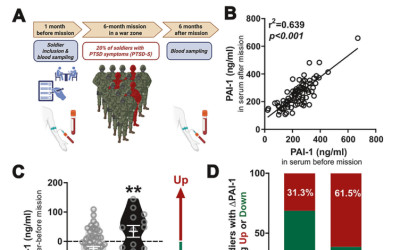
Post-traumatic stress disorder (PTSD) is a severe stress-related psychiatric condition triggered by traumatic life-threatening events, characterized notably by an altered memory profile. Although clinically well-documented, no specific biomarker exists. This translational study identifies plasminogen activator inhibitor-1 (PAI-1) as a brain risk factor for PTSD, thereby supporting its potential as a blood-derived biomarker. Mice with genetically ablated PAI-1 were protected from developing a PTSD-like memory profile. Conversely, mice exhibiting PTSD-like cognitive impairment showed increased blood PAI-1 levels, correlating with their profile severity. In the brain, PAI-1 levels were specifically increased in the dorsal hippocampus, a key region for cognitive functions and in the etiology of PTSD. Finally, a longitudinal study of soldiers revealed that those developing PTSD symptoms exhibit rising blood PAI-1 levels over a 12-month period. Its significant association with various indicators of PTSD-related psychological distress attests to PAI-1's potential as a blood biomarker and brain therapeutic target for PTSD.


15/02/2025 | Prog Neurobiol
The correct connectivity of the DG-CA3 circuits involved in declarative memory processes depends on Vangl2-dependent planar cell polarity signaling.
Depret N, Gleizes M, Moreau MM, Poirault-Chassac S, Quiedeville A, Carvalho SDS, Venugopal V, Abed ASA, Ezan J, Barthet G, Mulle C, Desmedt A, Marighetto A, Racca C, Montcouquiol M, Sans N

Abstract:
In the hippocampus, dentate gyrus granule cells connect to CA3 pyramidal cells via their axons, the mossy fibers (Mf). The synaptic terminals of Mfs (Mf boutons, MfBs) form large and complex synapses with thorny excrescences (TE) on the proximal dendrites of CA3 pyramidal cells (PCs). MfB/TE synapses have distinctive 'detonator' properties due to low initial release probability and large presynaptic facilitation. The molecular mechanisms shaping the morpho-functional properties of MfB/TE synapses are still poorly understood, though alterations in their morphology are associated with Down syndrome, intellectual disabilities, and Alzheimer's disease. Here, we identify the core PCP gene Vangl2 as essential to the morphogenesis and function of MfB/TE synapses. Vangl2 colocalises with the presynaptic heparan sulfate proteoglycan glypican 4 (GPC4) to stabilise the postsynaptic orphan receptor GPR158. Embryonic loss of Vangl2 disrupts the morphology of MfBs and TEs, impairs ultrastructural and molecular organisation, resulting in defective synaptic transmission and plasticity. In adult, the early loss of Vangl2 results in a number of hippocampus-dependent memory deficits including characteristic flexibility of declarative memory, organisation and retention of working / everyday-like memory. These deficits also lead to abnormal generalisation of memories to salient cues and diminished ability to form detailed contextual memories. Together, these results establish Vangl2 as a key regulator of DG-CA3 connectivity and functions.


14/09/2024 | Prog Neuropsychopharmacol Biol Psychiatry
Sequential physical and cognitive training disrupts cocaine-context associations via multi-level stimulation of adult hippocampal neurogenesis.
Ávila-Gámiz F, Pérez-Cano AM, Pérez-Berlanga JM, Zambrana-Infantes EN, Mañas-Padilla MC, Gil-Rodríguez S, Tronel S, Santín LJ, Ladrón de Guevara-Miranda D
doi: 10.1016/j.pnpbp.2024.111148

Abstract:
Cocaine-related contextual cues are a recurrent source of craving and relapse. Extinction of cue-driven cocaine seeking remains a clinical challenge, and the search for adjuvants is ongoing. In this regard, combining physical and cognitive training is emerging as a promising strategy that has shown synergistic benefits on brain structure and function, including enhancement of adult hippocampal neurogenesis (AHN), which has been recently linked to reduced maintenance of maladaptive drug seeking. Here, we examined whether this behavioral approach disrupts cocaine-context associations via improved AHN. To this aim, C57BL/6J mice (N = 37) developed a cocaine-induced conditioned place preference (CPP) and underwent interventions consisting of exercise and/or spatial working memory training. Bromodeoxyuridine (BrdU) was administered during early running sessions to tag a subset of new dentate granule cells (DGCs) reaching a critical window of survival during spatial learning. Once these DGCs became functionally mature (∼ 6 weeks-old), mice received extinction training before testing CPP extinction and reinstatement. We found that single and combined treatments accelerated CPP extinction and prevented reinstatement induced by a low cocaine priming (2 mg/kg). Remarkably, the dual-intervention mice showed a significant decrease of CPP after extinction relative to untreated animals. Moreover, combining the two strategies led to increased number and functional integration of BrdU(+) DGCs, which in turn maximized the effect of spatial training (but not exercise) to reduce CPP persistence. Together, our findings suggests that sequencing physical and cognitive training may redound to decreased maintenance of cocaine-context associations, with multi-level stimulation of AHN as a potential underlying mechanism.


26/12/2022 | Sci Rep
Effect of learning on slow gamma propagation between hippocampus and cortex in the wild-type and AD mice.
Blinowska KJ, Kamiński M, Macrez N, Marighetto A, Meyrand P, Bem T
doi: 10.1038/s41598-022-26754-2

Abstract:
Slow gamma oscillations (20-50 Hz) have been suggested to coordinate information transfer between brain structures involved in memory formation. Whereas the involvement of slow gamma in memory processing was studied by means of correlation between the gamma power and the occurrence of a given event (sharp wave ripples (SWRs), cortical transients), our approach consists of the analysis of the transmission of slow gamma itself. We use the method based on Granger causality principle-direct Directed Transfer Function, which allows to determine directed propagation of brain activity, including bidirectional flows. Four cortical sites along with CA1 ipsi- and contralateral were recorded in behaving wild-type and APP/PS1 mice before and after learning session of a spatial memory task. During slow wave sleep propagation of slow gamma was bidirectional, forming multiple loops of interaction which involved both CA1 and some of cortical sites. In episodes coincident with SWRs the number and strength of connectivity pathways increased in both groups compared to episodes without SWRs. The effect of learning was expressed only in APP/PS1 mice and consisted in strengthening of the slow gamma transmission from hippocampus to cortex as well as between both CA1 which may serve more efficient transmission of information from impaired CA1.


10/12/2022 | Psychoneuroendocrinology
Age-dependent effects of estradiol on temporal memory: A role for the type 1 cannabinoid receptor?
Potier M, Maitre M, Leste-Lasserre T, Marsicano G, Chaouloff F, Marighetto A
doi: 10.1016/j.psyneuen.2022.106002

Abstract:
This study investigated in male mice how age modulates the effects of acute 17beta-estradiol (E2) on dorsal CA1 (dCA1)-dependent retention of temporal associations, which are critical for declarative memory. E2 was systemically injected to young (3-4 months old) and aged (22-24 months old) adult mice either (i) 1 h before the acquisition of an auditory trace fear conditioning (TFC) procedure allowing the assessment of temporal memory retention 24 h later or (ii) during in vivo electrophysiological recordings of CA3 to dCA1 synaptic efficacy under anesthesia. In young mice, E2 induced parallel dose-dependent reductions in memory and synaptic efficacy, i.e. an impairment in TFC retention and a long-term (NMDA receptor-dependent) depression of dCA1 synaptic efficacy as assessed by field excitatory postsynaptic potentials. In contrast, E2 tended to improved TFC retention whilst failing to change synaptic efficacy in aged mice. Age-dependent effects of E2 treatment were confirmed by immunohistochemical analyses of TFC acquisition-elicited dCA1 Fos activation. Thus, such an activation was respectively reduced and enhanced in young and aged E2-treated mice, compared to vehicle treatments. Hippocampal mRNA expression of estrogen receptors by RT-PCR analyses revealed an age-related increase in each receptor mRNA expression. In keeping with the key role of the endocannabinoid system in memory processes and CA3 to dCA1 synaptic plasticity, we next examined the role of cannabinoid type 1 receptors (CB(1)-R) in the aforementioned age-dependent effects of E2. Having confirmed that mRNA expression of CB(1)-R diminishes with age, we then observed that the deleterious effects of E2 on both memory and synaptic efficacy were both prevented by the CB(1)-R antagonist Rimonabant whilst being absent in CB(1)-R knock out mice. This study (i) reveals age-dependent effects of acute E2 on temporal memory and CA3 to dCA1 synaptic efficacy and (ii) suggests a key role of CB(1)-R in mediating E2 deleterious effects in young adulthood. Aging-related reductions in CB(1)-R might thus underlie E2 paradoxical effects across age.


13/10/2022 | Prog Neurobiol
Chemogenetic stimulation of adult neurogenesis, and not neonatal neurogenesis, is sufficient to improve long-term memory accuracy.
Lods M, Mortessagne P, Pacary E, Terral G, Farrugia F, Mazier W, Masachs N, Charrier V, Cota D, Ferreira G, Abrous DN, Tronel S
doi: 10.1016/j.pneurobio.2022.102364

Abstract:
Hippocampal adult neurogenesis is involved in many memory processes from learning, to remembering and forgetting. However, whether or not the stimulation of adult neurogenesis is a sufficient condition to improve memory performance remains unclear. Here, we developed and validated, using ex-vivo electrophysiology, a chemogenetic approach that combines selective tagging and activation of discrete adult-born neuron populations. Then we demonstrated that, in rats, this activation can improve accuracy and strength of remote memory. These results show that stimulation of adult-born neuron activity can counteract the natural fading of memory traces that occurs with the passage of time. This opens up new avenues for treating memory problems that may arise over time.


2022 | Front Endocrinol (Lausanne)
Impaired quality of life, but not cognition, is linked to a history of chronic hypercortisolism in patients with Cushing's disease in remission.
Pupier E, Santos A, Etchamendy N, Lavielle A, Ferriere A, Marighetto A, Resmini E, Cota D, Webb SM, Tabarin A

Abstract:
CONTEXT: Impaired cognition and altered quality of life (QoL) may persist despite long-term remission of Cushing's disease (CD). Persistent comorbidities and treatment modalities may account for cognitive impairments. Therefore, the role of hypercortisolism per se on cognitive sequelae remains debatable. OBJECTIVE: To investigate whether memory and QoL are impaired after long-term remission of CD in patients with no confounding comorbidity. DESIGN AND SETTING: Cross-sectional case-control study in two tertiary referral centers. PATIENTS: 25 patients (44.5 ± 2.4 years) in remission from CD for 102.7 ± 19.3 Mo and 25 well-matched controls, without comorbidity or treatment liable to impair cognition. MAIN OUTCOME MEASURES: Hippocampus- and prefrontal cortex-dependent memory, including memory flexibility and working memory, were investigated using multiple tests including sensitive locally-developed computerized tasks. Depression and anxiety were evaluated with the MADRS and HADS questionnaires. QoL was evaluated with the SF-36 and CushingQoL questionnaires. The intensity of CD was assessed using mean urinary free cortisol and a score for clinical symptoms. RESULTS: CD patients displayed similar performance to controls in all cognitive tests. In contrast, despite the absence of depression and a minimal residual clinical Cushing score, patients had worse QoL. Most of the SF36 subscales and the CushingQoL score were negatively associated only with the duration of exposure to hypercortisolism (p≤ 0.01 to 0.001). CONCLUSIONS: Persistent comorbidities can be a primary cause of long-lasting cognitive impairment and should be actively treated. Persistently altered QoL may reflect irreversible effects of hypercortisolism, highlighting the need to reduce its duration. CLINICAL TRIAL REGISTRATION NUMBER: https://clinicaltrials.gov, identifier NCT02603653.


13/11/2021 | Nutrients
Gut Microbiota and Mycobiota Evolution Is Linked to Memory Improvement after Bariatric Surgery in Obese Patients: A Pilot Study.
Enaud R, Cambos S, Viaud E, Guichoux E, Chancerel E, Marighetto A, Etchamendy N, Clark S, Mohammedi K, Cota D, Delhaes L, Gatta-Cherifi B
doi: 10.3390/nu13114061

Abstract:
Patients with obesity are known to exhibit gut microbiota dysbiosis and memory deficits. Bariatric surgery (BS) is currently the most efficient anti-obesity treatment and may improve both gut dysbiosis and cognition. However, no study has investigated association between changes of gut microbiota and cognitive function after BS. We prospectively evaluated 13 obese patients on anthropometric data, memory functions, and gut microbiota-mycobiota before and six months after BS. The Rey Auditory Verbal Learning Test (AVLT) and the symbol span (SS) of the Weschler Memory Scale were used to assess verbal and working memory, respectively. Fecal microbiota and mycobiota were longitudinally analyzed by 16S and ITS2 rRNA sequencing respectively. AVLT and SS scores were significantly improved after BS (AVLT scores: 9.7 +/- 1.7 vs. 11.2 +/- 1.9, p = 0.02, and SS scores: 9.7 +/- 23.0 vs. 11.6 +/- 2.9, p = 0.05). An increase in bacterial alpha-diversity, and Ruminococcaceae, Prevotella, Agaricus, Rhodotorula, Dipodascus, Malassezia, and Mucor were significantly associated with AVLT score improvement after BS, while an increase in Prevotella and a decrease in Clostridium, Akkermansia, Dipodascus and Candida were linked to SS scores improvement. We identified several changes in the microbial communities that differ according to the improvement of either the verbal or working memories, suggesting a complex gut-brain-axis that evolves after BS.


19/10/2021 | Neurobiol Dis
Complement C3 mediates early hippocampal neurodegeneration and memory impairment in experimental multiple sclerosis.
Bourel J, Planche V, Dubourdieu N, Oliveira A, Sere A, Ducourneau EG, Tible M, Maitre M, Leste-Lasserre T, Nadjar A, Desmedt A, Ciofi P, Oliet SH, Panatier A, Tourdias T
doi: 10.1016/j.nbd.2021.105533

Abstract:
Memory impairment is one of the disabling manifestations of multiple sclerosis (MS) possibly present from the early stages of the disease and for which there is no specific treatment. Hippocampal synaptic dysfunction and dendritic loss, associated with microglial activation, can underlie memory deficits, yet the molecular mechanisms driving such hippocampal neurodegeneration need to be elucidated. In early-stage experimental autoimmune encephalomyelitis (EAE) female mice, we assessed the expression level of molecules involved in microglia-neuron interactions within the dentate gyrus and found overexpression of genes of the complement pathway. Compared to sham immunized mice, the central element of the complement cascade, C3, showed the strongest and 10-fold upregulation, while there was no increase of downstream factors such as the terminal component C5. The combination of in situ hybridization with immunofluorescence showed that C3 transcripts were essentially produced by activated microglia. Pharmacological inhibition of C3 activity, by daily administration of rosmarinic acid, was sufficient to prevent early dendritic loss, microglia-mediated phagocytosis of synapses in the dentate gyrus, and memory impairment in EAE mice, while morphological markers of microglial activation were still observed. In line, when EAE was induced in C3 deficient mice (C3KO), dendrites and spines of the dentate gyrus as well as memory abilities were preserved. Altogether, these data highlight the central role of microglial C3 in early hippocampal neurodegeneration and memory impairment in EAE and, therefore, pave the way toward new neuroprotective strategies in MS to prevent cognitive deficit using complement inhibitors.


Abstract:
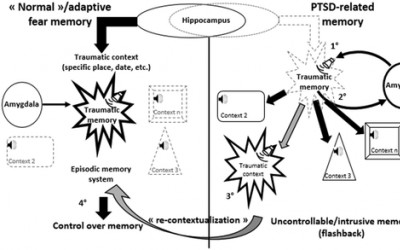
One of the cardinal features of post-traumatic stress disorder (PTSD) is a paradoxical memory alteration including both emotional hypermnesia for salient trauma-related cues and amnesia for the surrounding traumatic context. Interestingly, some clinical studies have suggested that contextual amnesia would causally contribute to the PTSD-related hypermnesia insofar as decontextualized, traumatic memory is prone to be reactivated in contexts that can be very different from the original traumatic context. However, most current animal models of PTSD-related memory focus exclusively on the emotional hypermnesia, i.e., the persistence of a strong fear memory, and do not distinguish normal (adaptive) from pathological (PTSD-like) fear memory, leaving unexplored the hypothetical critical role of contextual amnesia in PTSD-related memory formation, and thus challenging the development of innovative treatments. Having developed the first animal model that precisely recapitulates the two memory components of PTSD in mice (emotional hypermnesia and contextual amnesia), we recently demonstrated that contextual amnesia, induced by optogenetic inhibition of the hippocampus (dorsal CA1), is a causal cognitive process of PTSD-like hypermnesia formation. Moreover, the hippocampus-dependent contextualization of traumatic memory, by optogenetic activation of dCA1 in traumatic condition, prevents PTSD-like hypermnesia formation. Finally, once PTSD-like memory has been formed, the re-contextualization of traumatic memory by its reactivation in the original traumatic context normalizes this pathological fear memory. Revealing the key role of contextual amnesia in PTSD-like memory, this procedure opens a therapeutic perspective based on trauma contextualization and the underlying hippocampal mechanisms.


15/09/2021 | Mol Psychiatry
The temporal origin of dentate granule neurons dictates their role in spatial memory.
Masachs N, Charrier V, Farrugia F, Lemaire V, Blin N, Mazier W, Tronel S, Montaron MF, Ge S, Marsicano G, Cota D, Deroche-Gamonet V, Herry C, Abrous DN
doi: 10.1038/s41380-021-01276-x

Abstract:
The dentate gyrus is one of the only brain regions that continues its development after birth in rodents. Adolescence is a very sensitive period during which cognitive competences are programmed. We investigated the role of dentate granule neurons (DGNs) born during adolescence in spatial memory and compared them with those generated earlier in life (in embryos or neonates) or during adulthood by combining functional imaging, retroviral and optogenetic tools to tag and silence DGNs. By imaging DGNs expressing Zif268, a proxy for neuronal activity, we found that neurons generated in adolescent rats (and not embryos or neonates) are transiently involved in spatial memory processing. In contrast, adult-generated DGNs are recruited at a later time point when animals are older. A causal relationship between the temporal origin of DGNs and spatial memory was confirmed by silencing DGNs in behaving animals. Our results demonstrate that the emergence of spatial memory depends on neurons born during adolescence, a function later assumed by neurons generated during adulthood.


19/03/2021 | Nat Commun
Adult-born neurons immature during learning are necessary for remote memory reconsolidation in rats.
Lods M, Pacary E, Mazier W, Farrugia F, Mortessagne P, Masachs N, Charrier V, Massa F, Cota D, Ferreira G, Abrous DN, Tronel S
doi: 10.1038/s41467-021-22069-4

Abstract:
Memory reconsolidation, the process by which memories are again stabilized after being reactivated, has strengthened the idea that memory stabilization is a highly plastic process. To date, the molecular and cellular bases of reconsolidation have been extensively investigated particularly within the hippocampus. However, the role of adult neurogenesis in memory reconsolidation is unclear. Here, we combined functional imaging, retroviral and chemogenetic approaches in rats to tag and manipulate different populations of rat adult-born neurons. We find that both mature and immature adult-born neurons are activated by remote memory retrieval. However, only specific silencing of the adult-born neurons immature during learning impairs remote memory retrieval-induced reconsolidation. Hence, our findings show that adult-born neurons immature during learning are required for the maintenance and update of remote memory reconsolidation.


28/01/2021 | Mol Psychiatry
PAI-1 protein is a key molecular effector in the transition from normal to PTSD-like fear memory.
Bouarab C*, Lacarriere V*, Vallee M, Leroux A, Guette C, Mennesson M, Marighetto A, Desmedt A*, Piazza PV*, Revest JM*
doi: 10.1038/s41380-021-01024-1

Abstract:
Moderate stress increases memory and facilitates adaptation. In contrast, intense stress can induce pathological memories as observed in post-traumatic stress disorders (PTSD). A shift in the balance between the expression of tPA and PAI-1 proteins is responsible for this transition. In conditions of moderate stress, glucocorticoid hormones increase the expression of the tPA protein in the hippocampal brain region which by triggering the Erk1/2(MAPK) signaling cascade strengthens memory. When stress is particularly intense, very high levels of glucocorticoid hormones then increase the production of PAI-1 protein, which by blocking the activity of tPA induces PTSD-like memories. PAI-1 levels after trauma could be a predictive biomarker of the subsequent appearance of PTSD and pharmacological inhibition of PAI-1 activity a new therapeutic approach to this debilitating condition.


Abstract:
A cardinal feature of Post-traumatic stress-related disorder (PTSD) is a paradoxical memory alteration including both intrusive emotional hypermnesia and declarative/contextual amnesia. Most preclinical, but also numerous clinical, studies focus almost exclusively on the emotional hypermnesia aiming at suppressing this recurrent and highly debilitating symptom either by reducing fear and anxiety or with the ethically questionable idea of a rather radical erasure of traumatic memory. Of very mixed efficacy, often associated with a resurgence of symptoms after a while, these approaches focus on PTSD-related symptom while neglecting the potential cause of this symptom: traumatic amnesia. Two of our preclinical studies have recently demonstrated that treating contextual amnesia durably prevents, and even treats, PTSD-related hypermnesia. Specifically, promoting the contextual memory of the trauma, either by a cognitivo-behavioral, optogenetic or pharmacological approach enhancing a hippocampus-dependent memory processing of the trauma normalizes the fear memory by inducing a long-lasting suppression of the erratic traumatic hypermnesia.


03/10/2020 | Aging Cell
Age-related impairment of declarative memory: linking memorization of temporal associations to GluN2B redistribution in dorsal CA1.
Al Abed AS, Sellami A, Potier M, Ducourneau EG, Gerbeaud-Lassau P, Brayda-Bruno L, Lamothe V, Sans N, Desmedt A, Vanhoutte P, Bennetau-Pelissero C, Trifilieff P, Marighetto A
doi: 10.1111/acel.13243

Abstract:
GluN2B subunits of NMDA receptors have been proposed as a target for treating age-related memory decline. They are indeed considered as crucial for hippocampal synaptic plasticity and hippocampus-dependent memory formation, which are both altered in aging. Because a synaptic enrichment in GluN2B is associated with hippocampal LTP in vitro, a similar mechanism is expected to occur during memory formation. We show instead that a reduction of GluN2B synaptic localization induced by a single-session learning in dorsal CA1 apical dendrites is predictive of efficient memorization of a temporal association. Furthermore, synaptic accumulation of GluN2B, rather than insufficient synaptic localization of these subunits, is causally involved in the age-related impairment of memory. These challenging data identify extra-synaptic redistribution of GluN2B-containing NMDAR induced by learning as a molecular signature of memory formation and indicate that modulating GluN2B synaptic localization might represent a useful therapeutic strategy in cognitive aging.


24/08/2020 | Nat Commun
Preventing and treating PTSD-like memory by trauma contextualization.
Al Abed AS, Ducourneau EG, Bouarab C, Sellami A, Marighetto A, Desmedt A
doi: 10.1038/s41467-020-18002-w

Abstract:
Post-traumatic stress disorder (PTSD) is characterized by emotional hypermnesia on which preclinical studies focus so far. While this hypermnesia relates to salient traumatic cues, partial amnesia for the traumatic context can also be observed. Here, we show in mice that contextual amnesia is causally involved in PTSD-like memory formation, and that treating the amnesia by re-exposure to all trauma-related cues cures PTSD-like hypermnesia. These findings open a therapeutic perspective based on trauma contextualization and the underlying hippocampal mechanisms.


19/08/2020 | Mol Psychiatry
Brexpiprazole blocks post-traumatic stress disorder-like memory while promoting normal fear memory.
Ducourneau EG, Guette C, Perrot D, Mondesir M, Mombereau C, Arnt J, Desmedt A*, Piazza PV*
doi: 10.1038/s41380-020-0852-z

Abstract:
A cardinal feature of post-traumatic stress disorder (PTSD) is a long-lasting paradoxical alteration of memory with hypermnesia for salient traumatic cues and amnesia for peri-traumatic contextual cues. So far, pharmacological therapeutic approach of this stress-related disorder is poorly developed mainly because of the lack of animal model for this paradoxical memory alteration. Using a model that precisely recapitulates the two memory components of PTSD in mice, we tested if brexpiprazole, a new antipsychotic drug with pro-cognitive effects in rodents, may persistently prevent the expression of PTSD-like memory induced by injection of corticosterone immediately after fear conditioning. Acute administration of brexpiprazole (0.3 mg/kg) 7 days' post-trauma first blocks the expression of the maladaptive fear memory for a salient but irrelevant trauma-related cue. In addition, it enhances (with superior efficacy when compared to diazepam, prazosin, and escitalopram) memory for the traumatic context, correct predictor of the threat. This beneficial effect of brexpiprazole is overall maintained 1 week after treatment. In contrast brexpiprazole fully spares normal/adaptive cued fear memory, showing that the effect of this drug is specific to an abnormal/maladaptive (PTSD-like) fear memory of a salient cue. Finally, this treatment not only promotes the switch from PTSD-like to normal fear memory, but also normalizes most of the alterations in the hippocampal-amygdalar network activation associated with PTSD-like memory, as measured by C-Fos expression. Altogether, these preclinical data indicate that brexpiprazole could represent a new pharmacological treatment of PTSD promoting the normalization of traumatic memory.


09/06/2020 | Cell Rep
Vangl2 in the Dentate Network Modulates Pattern Separation and Pattern Completion.
Robert BJA, Moreau MM, Dos Santos Carvalho S, Barthet G, Racca C, Bhouri M, Quiedeville A, Garret M, Atchama B, Al Abed AS, Guette C, Henderson DJ, Desmedt A, Mulle C, Marighetto A, Montcouquiol M, Sans N
doi: 10.1016/j.celrep.2020.107743

Abstract:
The organization of spatial information, including pattern completion and pattern separation processes, relies on the hippocampal circuits, yet the molecular and cellular mechanisms underlying these two processes are elusive. Here, we find that loss of Vangl2, a core PCP gene, results in opposite effects on pattern completion and pattern separation processes. Mechanistically, we show that Vangl2 loss maintains young postmitotic granule cells in an immature state, providing increased cellular input for pattern separation. The genetic ablation of Vangl2 disrupts granule cell morpho-functional maturation and further prevents CaMKII and GluA1 phosphorylation, disrupting the stabilization of AMPA receptors. As a functional consequence, LTP at lateral perforant path-GC synapses is impaired, leading to defects in pattern completion behavior. In conclusion, we show that Vangl2 exerts a bimodal regulation on young and mature GCs, and its disruption leads to an imbalance in hippocampus-dependent pattern completion and separation processes.


Abstract:
Injection of corticosterone (CORT) in the dorsal hippocampus (DH) can mimic post-traumatic stress disorder (PTSD)-related memory in mice: both maladaptive hypermnesia for a salient but irrelevant simple cue and amnesia for the traumatic context. However, accumulated evidence indicates a functional dissociation within the hippocampus such that contextual learning is primarily associated with the DH whereas emotional processes are more linked to the ventral hippocampus (VH). This suggests that CORT might have different effects on fear memories as a function of the hippocampal sector preferentially targeted and the type of fear learning (contextual vs. cued) considered. We tested this hypothesis in mice using CORT infusion into the DH or VH after fear conditioning, during which a tone was either paired (predicting-tone) or unpaired (predicting-context) with the shock. We first replicate our previous results showing that intra-DH CORT infusion impairs contextual fear conditioning while inducing fear responses to the not predictive tone. Second, we show that, in contrast, intra-VH CORT infusion has opposite effects on fear memories: in the predicting-tone situation, it blocks tone fear conditioning while enhancing the fear responses to the context. In both situations, a false fear memory is formed based on an erroneous selection of the predictor of the threat. Third, these opposite effects of CORT on fear memory are both mediated by glucocorticoid receptor (GR) activation, and reproduced by post-conditioning stress or systemic CORT injection. These findings demonstrate that false opposing fear memories can be produced depending on the hippocampal sector in which the GRs are activated.


Abstract:
General theory of declarative memory formation posits a cortical-hippocampal dialog during which hippocampal ripple oscillations support information transfer and long-term consolidation of hippocampus dependent memories. Brain dementia, as Alzheimer disease (AD), is accompanied by memory loss and inability to form new memories. A large body of work has shown variety of mechanisms acting at cellular and molecular levels which can putatively play an important role in the impairment of memory formation. However, far less is known about changes occurring at the network-level activity patterns that support memory processing. Using freely moving APP/PS1 mice, a model of AD, we undertook a study to unravel the alterations of the activity of hippocampal and cortical circuits during generation of ripples in the transgenic and wild-type mice undergoing encoding and consolidation of spatial information. We report that APP/PS1 animals are able to consolidate spatial memory despite a major deficit of hippocampal ripples occurrence rate and learning dependent dynamics. We propose that these impairments may be compensated by an increase of the occurrence of cortical ripples and reorganization of cortical-hippocampal interaction.


08/03/2019 | Sci Rep
ApoE-fragment/Abeta heteromers in the brain of patients with Alzheimer's disease.
Mouchard A, Boutonnet MC, Mazzocco C, Biendon N, Macrez N
doi: 10.1038/s41598-019-40438-4

Abstract:
Identification of endogenous pathological amyloid beta peptides (Abeta) forms in the brains of patients with Alzheimer's disease (AD) is still unclear. In healthy brain, Abeta can associate with Apolipoprotein E (ApoE) which is involved in its metabolism and clearance. In the brain of patients with AD, ApoE is cleaved and produces ApoE fragments. We studied the forms of Abeta and their interaction with the ApoE fragments in post-mortem brains from control and AD patients by western blots and co-immunoprecipitation. Three Abeta-containing peptides and three ApoE fragments were specifically found in the brain of AD patients. Co-immunoprecipitations showed that ApoE fragments and Abeta1-42 peptides are co-partners in heteromers of 18 and 16 kDa while ApoE-fragments and Abeta peptides of 12 kDa did not interact with each other. Formation of the 18 kDa ApoE-fragment/Abeta heteromers is specifically increased in ApoE4 carriers and is a strong brain marker of AD while 16 kDa ApoE-fragment/Abeta and Abeta 12 kDa correlate to memory deficit. These data show that in patients with AD, ApoE fragmentation generates peptides that trap Abeta in the brain. Inhibiting the fragmentation or targeting ApoE fragments could be exploited to define strategies to detect or reverse AD.


19/07/2018 | j gerontol a biol sci med sci
Polyphenols from grape and blueberry improve episodic memory in healthy elderly with lower level of memory performance: a bicentric double-blind, randomized, placebo-controlled clinical study.
Bensalem J, Dudonne S, Etchamendy N, Pellay H, Amadieu C, Gaudout D, Dubreuil S, Paradis ME, Pomerleau S, Capuron L, Hudon C, Laye S, Desjardins Y, Pallet V
doi: 10.1093/gerona/gly166

Abstract:
Polyphenols are promising nutritional bioactives exhibiting beneficial effect on age-related cognitive decline. The present study evaluated the effect of a polyphenol-rich extract from grape and blueberry (PEGB) on memory of healthy elderly subjects (60-70 years-old). A bicentric, randomized, double-blind, placebo-controlled trial was conducted with 215 volunteers receiving 600 mg/day of PEGB (containing 258 mg flavonoids) or a placebo for 6 months. The primary outcome was the CANTAB Paired Associate Learning (PAL), a visuospatial learning and episodic memory test. Secondary outcomes included verbal episodic and recognition memory (VRM) and working memory (SSP). There was no significant effect of PEGB on the PAL on the whole cohort. Yet, PEGB supplementation improved VRM free recall. Stratifying the cohort in quartiles based on PAL at baseline revealed a subgroup with advanced cognitive decline (decliners) who responded positively to the PEGB. In this group, PEGB consumption was also associated with a better VRM delayed recognition. In addition to a lower polyphenol consumption, the urine metabolomic profile of decliners revealed that they excreted more metabolites. Urinary concentrations of specific flavan-3-ols metabolites were associated, at the end of the intervention, with the memory improvements. Our study demonstrates that PEGB improves age-related episodic memory decline in individuals with the highest cognitive impairments.


20/06/2018 | bio protoc
Protocols to Study Declarative Memory Formation in Mice and Humans: Optogenetics and Translational Behavioral Approaches
Sellami A, Al abed S, Brayda-Bruno L, Etchamendy N, Valerio S, Oule M, Pantaleon L, Lamothe V, Potier M, Bernard K, Jabourian M, Herry C, Mons N, Marighetto A


20/06/2018 | bio protoc
Protocols to Study Declarative Memory Formation in Mice and Humans:Optogenetics and Translational Behavioral Approaches.
Sellami A, Abed ASA, Brayda-Bruno L, Etchamendy N, Valerio S, Oule M, Pantaleon L, Lamothe V, Potier M, Bernard K, Jabourian M, Herry C, Mons N, Marighetto A
doi: 10.21769/BioProtoc.2888

Abstract:
Declarative memory formation depends on the hippocampus and declines in aging. Two functions of the hippocampus, temporal binding and relational organization (Rawlins and Tsaltas, 1983; Eichenbaum et al., 1992 ; Cohen et al., 1997 ), are known to decline in aging (Leal and Yassa, 2015). However, in the literature distinct procedures have been used to study these two functions. Here, we describe the experimental procedures used to investigate how these two processes are related in the formation of declarative memory and how they are compromised in aging ( Sellami et al., 2017 ). First, we studied temporal binding using a one-trial learning procedure: trace fear conditioning. It is classical Pavlovian conditioning requiring temporal binding since a brief temporal gap separates the conditioned stimulus (CS) and unconditioned stimulus (US) presentations. We combined the trace fear condition procedure with an optogenetic approach, and we showed that the temporal binding relies on dorsal (d)CA1 activity over temporal gaps. Then, we studied the interaction between temporal binding and relational organization in declarative memory formation using a two-phase radial-maze task in mice and its virtual analog in humans. The behavioral procedure comprises an initial learning phase where subjects learned the constant rewarding /no rewarding valence of each arm, followed by a test phase where the reward contingencies among the arms remained unchanged but where the arms were recombined to assess flexibility, a cardinal property of declarative memory. We demonstrated that dCA1-dependent temporal binding is necessary for the development of a relational organization of memories that allows flexible declarative memory expression. Furthermore, in aging, the degradation of declarative memory is due to a reduction of temporal binding capacity that prevents relation organization.


22/11/2017 | Psychopharmacology (Berl)
Synergistic enhancing-memory effect of donepezil and S 47445, an AMPA positive allosteric modulator, in middle-aged and aged mice.
Bretin S, Krazem A, Henkous N, Froger-Colleaux C, Mocaer E, Louis C, Perdaems N, Marighetto A, Beracochea D
doi: 10.1007/s00213-017-4792-5

Abstract:
Positive allosteric modulators of AMPA receptors (AMPA-PAMs) are described to facilitate cognitive processes in different memory-based models. Among them, S 47445 is a novel potent and selective AMPA-PAM. In order to assess its efficacy after repeated administration, S 47445 effect was evaluated in two aging-induced memory dysfunction tasks in old mice, one short-term working memory model evaluated in a radial maze task and one assessing contextual memory performance. S 47445 was shown to improve cognition in both models sensitive to aging. In fact, administration of S 47445 at 0.3 mg/kg (s.c.) reversed the age-induced deficits of the working memory model whatever the retention interval. Moreover, in the contextual task, S 47445 also reversed the age-induced deficit at all tested doses (from 0.03 to 0.3 mg/kg, p.o.). Since donepezil, an acetylcholinesterase inhibitor, induces only moderate symptomatic effects on memory in Alzheimer's disease patients, an alternative strategy for treatment of cognitive symptoms could be to act simultaneously on both glutamatergic AMPA receptors and cholinergic pathways by combining pharmacological treatments. The present study further examined such effects by assessing combinations of S 47445 and donepezil given orally during 9 days in aged C57/Bl6J mice using contextual memory task (CSD) and the working memory model of serial alternation task (AT). Interestingly, a significant synergistic memory-enhancing effect was observed with the combination of donepezil at 0.1 mg/kg with S 47445 at 0.1 mg/kg p.o. in the CSD or with S 47445 at 0.1 and 0.3 mg/kg in AT in comparison to compounds given alone and without any pharmacokinetic interaction.


Abstract:
Cognitive deficits in normal aging have been associated with atrophy of the hippocampus. As such, methods to detect early dysfunction of the hippocampus have become valuable, if not indispensable, to early intervention. The hippocampus is critical for spatial memory and is among the first structures to atrophy with aging. Despite the presence of navigation deficits in aging, few studies have looked at the association between wayfinding ability, navigation strategies, general cognitive function, and hippocampal volume. In the current study we investigated whether better general cognitive function is associated with the use of hippocampal-dependent spatial strategies, better spatial memory, and increased hippocampal volume. We also investigated, within older adults, the effects of aging on spatial memory. Healthy older adults (N = 107) were tested on a virtual wayfinding task and a dual-solution navigation task that can be solved using either a hippocampal-dependent spatial strategy or a caudate nucleus-dependent response strategy. Participants were also administered the Montreal Cognitive Assessment (MoCA), a test that measures general cognition and is sensitive to dementia. A structural MRI was administered to a sub-set of participants (n = 49) and hippocampal volume was calculated using a Multiple Automatically Generated Templates (MAGeT) Brain algorithm. We found that age was negatively associated with wayfinding ability and hippocampal volume. On the wayfinding task, participants with higher MoCA scores found more target locations and travelled shorter distances. We also found a significant association between higher MoCA scores and spatial strategy use. MoCA scores, spatial memory ability, and spatial strategy use all positively correlated with a larger hippocampal volume. These results confirm that with age there is a decrease in spatial memory, which is consistent with decreased volume in the hippocampus with aging. Furthermore, better general cognitive function is associated with better wayfinding ability and increased use of hippocampal-dependent spatial strategies.


10/2017 | Neurobiol Aging
Presenilin 1 mutation decreases both calcium and contractile responses in cerebral arteries.
Toussay X, Morel JL, Biendon N, Rotureau L, Legeron FP, Boutonnet MC, Cho YH, Macrez N
doi: 10.1016/j.neurobiolaging.2017.06.015

Abstract:
Mutations or upregulation in presenilin 1 (PS1) gene are found in familial early-onset Alzheimer's disease or sporadic late-onset Alzheimer's disease, respectively. PS1 has been essentially studied in neurons and its mutation was shown to alter intracellular calcium (Ca(2+)) signals. Here, we showed that PS1 is expressed in smooth muscle cells (SMCs) of mouse cerebral arteries, and we assessed the effects of the deletion of exon 9 of PS1 (PS1dE9) on Ca(2+) signals and contractile responses of vascular SMC. Agonist-induced contraction of cerebral vessels was significantly decreased in PS1dE9 both in vivo and ex vivo. Spontaneous activity of Ca(2+) sparks through ryanodine-sensitive channels (RyR) was unchanged, whereas the RyR-mediated Ca(2+)-release activated by caffeine was shorter in PS1dE9 SMC when compared with control. Moreover, PS1dE9 mutation decreased the caffeine-activated capacitive Ca(2+) entry, and inhibitors of SERCA pumps reversed the effects of PS1dE9 on Ca(2+) signals. PS1dE9 mutation also leads to the increased expression of SERCA3, phospholamban, and RyR3. These results show that PS1 plays a crucial role in the cerebrovascular system and the vascular reactivity is decreased through altered Ca(2+) signals in PS1dE9 mutant mice.


19/09/2017 | Proc Natl Acad Sci U S A
Temporal binding function of dorsal CA1 is critical for declarative memory formation.
Sellami A, Al Abed AS, Brayda-Bruno L, Etchamendy N, Valerio S, Oule M, Pantaleon L, Lamothe V, Potier M, Bernard K, Jabourian M, Herry C, Mons N, Piazza PV, Eichenbaum H, Marighetto A
doi: 10.1073/pnas.1619657114

Abstract:
Temporal binding, the process that enables association between discontiguous stimuli in memory, and relational organization, a process that enables the flexibility of declarative memories, are both hippocampus-dependent and decline in aging. However, how these two processes are related in supporting declarative memory formation and how they are compromised in age-related memory loss remain hypothetical. We here identify a causal link between these two features of declarative memory: Temporal binding is a necessary condition for the relational organization of discontiguous events. We demonstrate that the formation of a relational memory is limited by the capability of temporal binding, which depends on dorsal (d)CA1 activity over time intervals and diminishes in aging. Conversely, relational representation is successful even in aged individuals when the demand on temporal binding is minimized, showing that relational/declarative memory per se is not impaired in aging. Thus, bridging temporal intervals by dCA1 activity is a critical foundation of relational representation, and a deterioration of this mechanism is responsible for the age-associated memory impairment.


09/2017 | anal bioanal chem
Derivatization-free LC-MS/MS method for estrogen quantification in mouse brain highlights a local metabolic regulation after oral versus subcutaneous administration.
Lozan E, Shinkaruk S, Al Abed SA, Lamothe V, Potier M, Marighetto A, Schmitter JM, Bennetau-Pelissero C, Bure C
doi: 10.1007/s00216-017-0473-9

Abstract:
17beta-Estradiol (17beta-E2) is a steroid with pleiotropic actions. In addition to being a sexual hormone, it is also produced in the brain where it modulates the reproductive axis. It has been shown that 17beta-E2 also acts on synaptic plasticity and plays a role in neurological pathways and in neurodegenerative diseases. Assaying this steroid in the brain is thus interesting to improve our knowledge of 17beta-E2 effects in the brain. However, 17beta-E2 concentration in the central nervous system has been reported to be of a few nanograms per gram wet weight (nanomolar range concentration); therefore, its quantification requires both an efficient extraction process and a sensitive detection method. Herein is presented a derivatization-free procedure based on solid-phase extraction followed by LC-MS/MS analysis, targeted on 17beta-E2, its isomer17alpha-E2, and its metabolites estrone (E1) and estriol (E3). This extraction process allowed reaching 96% 17beta-E2 recovery from the mouse brain. Limit of detection (LOD) and limit of quantification (LOQ) values of 0.5 and 2.5 pmol mL(-1), respectively, were reached for both 17alpha-E2 and 17beta-E2. LOD values for E1 and E3 were 0.01 and 0.025 pmol mL(-1), respectively. The variation coefficients for intra- and inter-assays were 6 and 14%, respectively, for both estradiol forms. The method was applied to assess estrogen levels in the mouse brain and hippocampus after 17beta-E2 acute (subcutaneous injection) and chronic (drinking water) physiological administration. Total estrogen levels were determined after enzymatic deconjugation and compared to free estrogen levels. While 17alpha-E2 was not detected in biological samples, 17beta-E2 and metabolite measurements highlight a local biotransformation of estrogens after physiological administration via drinking water. Graphical abstract Method workflow: After oral or subcutaneous Estradiol administration, mouse brain or hippocampus was removed. Samples were homogenized and prepared according to a liquid-liquid extraction, followed by a solid-phase extraction. Then, LC-MS/MS was optimized to quantify 17ss-E2, its isomer17alpha-E2, its metabolites estrone (E1) and estriol (E3) and their conjugates.


10/04/2017 | Nat Neurosci
Abnormal wiring of CCK+ basket cells disrupts spatial information coding.
Del Pino I, Brotons-Mas JR, Marques-Smith A, Marighetto A, Frick A, Marin O, Rico B
doi: 10.1038/nn.4544

Abstract:
The function of cortical GABAergic interneurons is largely determined by their integration into specific neural circuits, but the mechanisms controlling the wiring of these cells remain largely unknown. This is particularly true for a major population of basket cells that express the neuropeptide cholecystokinin (CCK). Here we found that the tyrosine kinase receptor ErbB4 was required for the normal integration into cortical circuits of basket cells expressing CCK and vesicular glutamate transporter 3 (VGlut3). The number of inhibitory synapses made by CCK+VGlut3+ basket cells and the inhibitory drive they exerted on pyramidal cells were reduced in conditional mice lacking ErbB4. Developmental disruption of the connectivity of these cells diminished the power of theta oscillations during exploratory behavior, disrupted spatial coding by place cells, and caused selective alterations in spatial learning and memory in adult mice. These results suggest that normal integration of CCK+ basket cells in cortical networks is key to support spatial coding in the hippocampus.


2017 | PLoS ONE
Long-term effects of interference on short-term memory performance in the rat.
Missaire M, Fraize N, Joseph MA, Hamieh AM, Parmentier R, Marighetto A, Salin PA, Malleret G
doi: 10.1371/journal.pone.0173834

Abstract:
A distinction has always been made between long-term and short-term memory (also now called working memory, WM). The obvious difference between these two kinds of memory concerns the duration of information storage: information is supposedly transiently stored in WM while it is considered durably consolidated into long-term memory. It is well acknowledged that the content of WM is erased and reset after a short time, to prevent irrelevant information from proactively interfering with newly stored information. In the present study, we used typical WM radial maze tasks to question the brief lifespan of spatial WM content in rodents. Groups of rats were submitted to one of two different WM tasks in a radial maze: a WM task involving the repetitive presentation of a same pair of arms expected to induce a high level of proactive interference (PI) (HIWM task), or a task using a different pair in each trial expected to induce a low level of PI (LIWM task). Performance was effectively lower in the HIWM group than in LIWM in the final trial of each training session, indicative of a 'within-session/short-term' PI effect. However, we also observed a different 'between-session/long-term' PI effect between the two groups: while performance of LIWM trained rats remained stable over days, the performance of HIWM rats dropped after 10 days of training, and this impairment was visible from the very first trial of the day, hence not attributable to within-session PI. We also showed that a 24 hour-gap across training sessions known to allow consolidation processes to unfold, was a necessary and sufficient condition for the long-term PI effect to occur. These findings suggest that in the HIWM task, WM content was not entirely reset between training sessions and that, in specific conditions, WM content can outlast its purpose by being stored more permanently, generating a long-term deleterious effect of PI. The alternative explanation is that WM content could be transferred and stored more permanently in an intermediary form or memory between WM and long-term memory.


12/11/2016 | Brain Behav Immun
Selective dentate gyrus disruption causes memory impairment at the early stage of experimental multiple sclerosis.
Planche V, Panatier A, Hiba B, Ducourneau EG, Raffard G, Dubourdieu N, Maitre M, Leste-Lasserre T, Brochet B, Dousset V, Desmedt A, Oliet SH, Tourdias T
doi: 10.1016/j.bbi.2016.11.010

Abstract:
Memory impairment is an early and disabling manifestation of multiple sclerosis whose anatomical and biological substrates are still poorly understood. We thus investigated whether memory impairment encountered at the early stage of the disease could be explained by a differential vulnerability of particular hippocampal subfields. By using experimental autoimmune encephalomyelitis (EAE), a mouse model of multiple sclerosis, we identified that early memory impairment was associated with selective alteration of the dentate gyrus as pinpointed in vivo with diffusion-tensor-imaging (DTI). Neuromorphometric analyses and electrophysiological recordings confirmed dendritic degeneration, alteration in glutamatergic synaptic transmission and impaired long-term synaptic potentiation selectively in the dentate gyrus, but not in CA1, together with a more severe pattern of microglial activation in this subfield. Systemic injections of the microglial inhibitor minocycline prevented DTI, morphological, electrophysiological and behavioral impairments in EAE-mice. Furthermore, daily infusions of minocycline specifically within the dentate gyrus were sufficient to prevent memory impairment in EAE-mice while infusions of minocycline within CA1 were inefficient. We conclude that early memory impairment in EAE is due to a selective disruption of the dentate gyrus associated with microglia activation. These results open new pathophysiological, imaging, and therapeutic perspectives for memory impairment in multiple sclerosis.


21/03/2016 | Psychoneuroendocrinology
Estradiol enhances retention but not organization of hippocampus-dependent memory in intact male mice.
Al Abed AS, Sellami A, Brayda-Bruno L, Lamothe V, Nogues X, Potier M, Bennetau-Pelissero C, Marighetto A
doi: 10.1016/j.psyneuen.2016.03.014

Abstract:
Because estrogens have mostly been studied in gonadectomized females, effects of chronic exposure to environmental estrogens in the general population are underestimated. Estrogens can enhance hippocampus-dependent memory through the modulation of information storage. However, declarative memory, the hippocampus-dependent memory of facts and events, demands more than abilities to retain information. Specifically, memory of repetitive events of everyday life such as 'where I parked' requires abilities to organize/update memories to prevent proactive interference from similar memories of previous 'parking events'. Whether such organizational processes are estrogen-sensitive is unknown. We here studied, in intact young and aged adult mice, drinking-water (1muM) estradiol effects on both retention and organizational components of hippocampus-dependent memory, using a radial-maze task of everyday-like memory. Demand on retention vs organization was manipulated by varying the time-interval separating repetitions of similar events. Estradiol increased performance in young and aged mice under minimized organizational demand, but failed to improve the age-associated memory impairment and diminished performance in young mice under high organizational demand. In fact, estradiol prolonged mnemonic retention of successive events without improving organization abilities, hence resulted in more proactive interference from irrelevant memories. c-Fos imaging of testing-induced brain activations showed that the deterioration of young memory was associated with dentate gyrus dysconnectivity, reminiscent of that seen in aged mice. Our findings support the view that estradiol is promnesic but also reveal that such property can paradoxically impair memory. These findings have important outcomes regarding health issues relative to the impact of environmental estrogens in the general population.


2016 | Front Behav Neurosci
Switching Adolescent High-Fat Diet to Adult Control Diet Restores Neurocognitive Alterations.
Boitard C, Parkes SL, Cavaroc A, Tantot F, Castanon N, Laye S, Tronel S, Pacheco-Lopez G, Coutureau E, Ferreira G

Abstract:
In addition to metabolic and cardiovascular disorders, obesity is associated with adverse cognitive and emotional outcomes. Its growing prevalence in adolescents is particularly alarming since this is a period of ongoing maturation for brain structures (including the hippocampus and amygdala) and for the hypothalamic-pituitary-adrenal (HPA) stress axis, which is required for cognitive and emotional processing. We recently demonstrated that adolescent, but not adult, high-fat diet (HF) exposure leads to impaired hippocampal function and enhanced amygdala function through HPA axis alteration (Boitard et al., 2012, 2014, 2015). Here, we assessed whether the effects of adolescent HF consumption on brain function are permanent or reversible. After adolescent exposure to HF, switching to a standard control diet restored levels of hippocampal neurogenesis and normalized enhanced HPA axis reactivity, amygdala activity and avoidance memory. Therefore, while the adolescent period is highly vulnerable to the deleterious effects of diet-induced obesity, adult exposure to a standard diet appears sufficient to reverse alterations of brain function.


Abstract:
TRPP2 is a cationic channel expressed in plasma membrane and in sarcoplasmic reticulum. In several cell lines, TRPP2 is described as a reticulum Ca(2+) leak channel but it also interacts with ryanodine and inositol 1,4,5-trisphosphate (InsP3) receptors to inhibit and increase the release of Ca(2+) stores, respectively. TRPP2 is known to be expressed in vascular smooth muscle cells, however its function in Ca(2+) signals remains poorly described in native cells, principally because the pharmacology is not developed. TRPP2 was expressed in cerebral arteries. Triptolide evoked Ca(2+) responses in a Ca(2+)-free solution as well as permeabilized arteries. This Ca(2+) signal was inhibited in presence of antisense oligonucleotide and siRNA directed against TRPP2 and antibody directed against the first loop of TRPP2. The partial inhibition of TRPP2 expression increased both the caffeine-evoked Ca(2+) responses and in vivo contraction. It also decreased the InsP3-evoked Ca(2+) responses. Finally, aging affected the regulations in which TRPP2 is engaged, whereas the triptolide-evoked Ca(2+) response was not modified. Taken together, our results have shown that TRPP2 is implicated in triptolide-induced Ca(2+) release from intracellular Ca(2+) stores. TRPP2 functionally interacts with both ryanodine and InsP3 receptors. These interactions were not similar in adult and old mice.


01/09/2015 | Biol Psychiatry
Abnormal Fear Memory as a Model for Posttraumatic Stress Disorder.
Desmedt A, Marighetto A, Piazza PV
doi: 10.1016/j.biopsych.2015.06.017

Abstract:
For over a century, clinicians have consistently described the paradoxical co-existence in posttraumatic stress disorder (PTSD) of sensory intrusive hypermnesia and declarative amnesia for the same traumatic event. Although this amnesia is considered as a critical etiological factor of the development and/or persistence of PTSD, most current animal models in basic neuroscience have focused exclusively on the hypermnesia, i.e., the persistence of a strong fear memory, neglecting the qualitative alteration of fear memory. The latest is characterized by an underrepresentation of the trauma in the context-based declarative memory system in favor of its overrepresentation in a cue-based sensory/emotional memory system. Combining psychological and neurobiological data as well as theoretical hypotheses, this review supports the idea that contextual amnesia is at the core of PTSD and its persistence and that altered hippocampal-amygdalar interaction may contribute to such pathologic memory. In a first attempt to unveil the neurobiological alterations underlying PTSD-related hypermnesia/amnesia, we describe a recent animal model mimicking in mice some critical aspects of such abnormal fear memory. Finally, this line of argument emphasizes the pressing need for a systematic comparison between normal/adaptive versus abnormal/maladaptive fear memory to identify biomarkers of PTSD while distinguishing them from general stress-related, potentially adaptive, neurobiological alterations.


11/08/2015 | stress
Adaptive emotional memory: the key hippocampal-amygdalar interaction.
Desmedt A, Marighetto A, Richter-Levin G, Calandreau L

Abstract:
For centuries philosophical and clinical studies have emphasized a fundamental dichotomy between emotion and cognition, as, for instance, between behavioral/emotional memory and explicit/representative memory. However, the last few decades cognitive neuroscience have highlighted data indicating that emotion and cognition, as well as their underlying neural networks, are in fact in close interaction. First, it turns out that emotion can serve cognition, as exemplified by its critical contribution to decision-making or to the enhancement of episodic memory. Second, it is also observed that reciprocally cognitive processes as reasoning, conscious appraisal or explicit representation of events can modulate emotional responses, like promoting or reducing fear. Third, neurobiological data indicate that reciprocal amygdalar-hippocampal influences underlie such mutual regulation of emotion and cognition. While supporting this view, the present review discusses experimental data, obtained in rodents, indicating that the hippocampal and amygdalar systems not only regulate each other and their functional outcomes, but also qualify specific emotional memory representations through specific activations and interactions. Specifically, we review consistent behavioral, electrophysiological, pharmacological, biochemical and imaging data unveiling a direct contribution of both the amygdala and hippocampal-septal system to the identification of the predictor of a threat in different situations of fear conditioning. Our suggestion is that these two brain systems and their interplay determine the selection of relevant emotional stimuli, thereby contributing to the adaptive value of emotional memory. Hence, beyond the mutual quantitative regulation of these two brain systems described so far, we develop the idea that different activations of the hippocampus and amygdala, leading to specific configurations of neural activity, qualitatively impact the formation of emotional memory representations, thereby producing either adaptive or maladaptive fear memories.



31/07/2015 | Biol Psychiatry
Temporal Memory and Its Enhancement by Estradiol Requires Surface Dynamics of Hippocampal CA1 N-Methyl-D-Aspartate Receptors.
Potier M, Georges F, Brayda-Bruno L, Ladepeche L, Lamothe V, Al Abed AS, Groc L, Marighetto A
doi: 10.1016/j.biopsych.2015.07.017

Abstract:
BACKGROUND: Identifying the underlying cellular mechanisms of episodic memory is an important challenge, since this memory, based on temporal and contextual associations among events, undergoes preferential degradation in aging and various neuropsychiatric disorders. Memory storage of temporal and contextual associations is known to rely on hippocampal N-methyl-D-aspartate receptor (NMDAR)-dependent synaptic plasticity, which depends ex vivo on dynamic organization of surface NMDARs. Whether NMDAR surface trafficking sustains the formation of associative memory, however, remains unknown. METHODS: We tested this hypothesis, using single nanoparticle imaging, electrophysiology, and behavioral approaches, in hippocampal networks challenged with a potent modulator of NMDAR-dependent synaptic plasticity and memory, 17beta-estradiol (E2). RESULTS: We demonstrate that E2 modulates NMDAR surface trafficking, a necessary condition for E2-induced potentiation at hippocampal cornu ammonis 1 synapses. Strikingly, cornu ammonis 1 NMDAR surface trafficking controls basal and E2-enhanced mnemonic retention of temporal, but not contextual, associations. CONCLUSIONS: NMDAR surface trafficking and its modulation by the sex hormone E2 is a cellular mechanism critical for a major component of episodic memory, opening a new and noncanonical research avenue in the physiopathology of cognition.


25/04/2015 | Hippocampus
Adult-born dentate neurons are recruited in both spatial memory encoding and retrieval.
Tronel S, Charrier V, Sage C, Maitre M, Leste-Lasserre T, Abrous DN
doi: 10.1002/hipo.22468

Abstract:
Adult neurogenesis occurs in the dentate gyrus of the hippocampus, which is a key structure in learning and memory. Adult-generated granule cells have been shown to play a role in spatial memory processes such as acquisition or retrieval, in particular during an immature stage when they exhibit a period of increased plasticity. Here, we demonstrate that immature and mature neurons born in the dentate gyrus of adult rats are similarly activated in spatial memory processes. By imaging the activation of these two different neuron generations in the same rat and by using the immediate early gene Zif268, we show that these neurons are involved in both spatial memory acquisition and retrieval. These results demonstrate that adult-generated granule cells are involved in memory beyond their immaturity stage. This article is protected by copyright. All rights reserved.


19/02/2015 | j alzheimers dis
An Eighteen-Month Helicobacter Infection Does Not Induce Amyloid Plaques or Neuroinflammation in Brains of Wild Type C57BL/6J Mice.
Baudron CR, Chambonnier L, Buissionniere A, Giese A, Macrez N, Cho Y, Fenelon V, Blaszczyk L, Dubus P, Lehours P, Megraud F, Salles N, Varon C

Abstract:
There is increasing evidence to support the role of infectious agents in the progression of Alzheimer's disease (AD), especially Helicobacter pylori (H. pylori). The impact of Helicobacter infection on the brain of non-AD predisposed mice was studied. For that, C57BL/6J mice were infected by oral gavage with H. pylori SS1 (n = 6) and Helicobacter felis (H. felis) (n = 6) or not infected (n = 6) for evaluation of neuroinflammation (anti-GFAP and anti-iba1 immunohistochemistry) and amyloid-beta deposition (thioflavin-S stain and anti-Abeta immunohistochemistry). After 18-month of infection, H. pylori SS1 and H. felis infection induced a strong gastric inflammation compared to non-infected mice, but did not induce brain neuroinflammation or amyloid-beta deposition.


Abstract:
Abstract Findings suggest that stress-induced impaired learning and coping abilities may be attributed more to the psychological nature of the stressor, rather than its physical properties. It has been proposed that establishing controllability over stressors can ameliorate some of its effects on cognition and behavior. Gaining controllability was suggested to be associated with the development of stress resilience. Based on repeated exposure to the two-way shuttle avoidance task, we previously developed and validated a behavioral task that leads to a strict dissociation between gaining controllability (to the level that the associated fear is significantly reduced) and a fearful state of uncontrollability. Employing this protocol, we investigated here the impact of gaining or failing to gain emotional controllability on indices of anxiety and depression and on subsequent abilities to cope with positively or negatively reinforcing learning experiences. In agreement with previous studies, rats exposed to the uncontrollable protocol demonstrated high concentration of sera corticosterone, increased immobility, reduced duration of struggling in the forced swim test and impaired ability to acquire subsequent learning tasks. Achieving emotional controllability resulted in resilience to stress as was indicated by longer duration of struggling in the forced swim test, and enhanced learning abilities. Our prolonged training protocol, with the demonstrated ability of rats to gain emotional controllability, is proposed as a useful tool to study the neurobiological mechanisms of stress resilience.


09/2014 | Mol Psychiatry
BDNF-TrkB signaling through Erk1/2 MAPK phosphorylation mediates the enhancement of fear memory induced by glucocorticoids.
Revest JM, Le Roux A, Roullot-Lacarriere V, Kaouane N, Vallee M, Kasanetz F, Rouge-Pont F, Tronche F, Desmedt A, Piazza PV
doi: 10.1038/mp.2013.134

Abstract:
Activation of glucocorticoid receptors (GR) by glucocorticoid hormones (GC) enhances contextual fear memories through the activation of the Erk1/2(MAPK) signaling pathway. However, the molecular mechanism mediating this effect of GC remains unknown. Here we used complementary molecular and behavioral approaches in mice and rats and in genetically modified mice in which the GR was conditionally deleted (GR(NesCre)). We identified the tPA-BDNF-TrkB signaling pathway as the upstream molecular effectors of GR-mediated phosphorylation of Erk1/2(MAPK) responsible for the enhancement of contextual fear memory. These findings complete our knowledge of the molecular cascade through which GC enhance contextual fear memory and highlight the role of tPA-BDNF-TrkB-Erk1/2(MAPK) signaling pathways as one of the core effectors of stress-related effects of GC.


Abstract:
Microgravity induces a redistribution of blood volume. Consequently, astronauts' body pressure is modified so that the upright blood pressure gradient is abolished, thereby inducing a modification in cerebral blood pressure. This effect is mimicked in the hindlimb unloaded rat model. After a duration of 8 days of unloading, Ca2+ signals activated by depolarization and inositol-1,4,5-trisphosphate intracellular release were increased in cerebral arteries. In the presence of ryanodine and thapsigargin, the depolarization-induced Ca2+ signals remained increased in hindlimb suspended animals, indicating that Ca2+ influx and Ca2+-induced Ca2+ release mechanism were both increased. Spontaneous Ca2+ waves and localized Ca2+ events were also investigated. Increases in both amplitude and frequency of spontaneous Ca2+ waves were measured in hindlimb suspension conditions. After pharmacological segregation of Ca2+ sparks and Ca2+ sparklets, their kinetic parameters were characterized. Hindlimb suspension induced an increase in the frequencies of both Ca2+ localized events, suggesting an increase of excitability. Labeling with bodipy compounds suggested that voltage-dependent Ca2+ channels and ryanodine receptor expressions were increased. Finally, the expression of the ryanodine receptor subtype 1 (RyR1) was increased in hindlimb unloading conditions. Taken together, these results suggest that RyR1 expression and voltage-dependent Ca2+ channels activity are the focal points of the regulation of Ca2+ signals activated by vasoconstriction in rat cerebral arteries with an increase of the voltage-dependent Ca2+ influx.


09/02/2014 | Brain Struct Funct
Influence of ontogenetic age on the role of dentate granule neurons.
Tronel S, Lemaire V, Charrier V, Montaron MF, Abrous DN
doi: 10.1007/s00429-014-0715-y

Abstract:
New neurons are continuously produced in the adult dentate gyrus of the hippocampus, a key structure in learning and memory. It has been shown that adult neurogenesis is crucial for normal memory processing. However, it is not known whether neurons born during the developmental period and during adulthood support the same functions. Here, we demonstrate that neurons born in neonates (first postnatal week) are activated in different memory processes when they are mature compared to neurons born in adults. By imaging the activation of these two different neuron generations in the same rat and using the IEG Zif268 and Fos, we show that these neurons are involved in discriminating dissimilar contexts and spatial problem solving, respectively. These findings demonstrate that the ontogenetic stage during which neurons are generated is crucial for their function within the memory network.


Abstract:
The neuroimaging literature has shown consistent decreases in functional magnetic resonance imaging (fMRI) activity in the hippocampus of healthy older adults engaged in a navigation task. However, navigation in a virtual maze relies on spatial or response strategies known to depend on the hippocampus and caudate nucleus, respectively. Therefore, since the proportion of people using spatial strategies decreases with normal aging, we hypothesized that it was responsible for the observed decreases in fMRI activity in the hippocampus reported in the literature. The aim of this study was to examine the effects of aging on the hippocampus and caudate nucleus during navigation while taking into account individual navigational strategies. Young (N = 23) and older adults (N = 29) were tested using fMRI on the Concurrent Spatial Discrimination Learning Task, a radial task that dissociates between spatial and response strategies (in Stage 2) after participants reached criteria (in Stage 1). Success on Stage 2 requires that participants have encoded the spatial relationship between the target object and environmental landmarks, that is, the spatial strategy. While older adults required more trials, all participants reached criterion. fMRI results showed that, as a group, young adults had significant activity in the hippocampus as opposed to older adults who instead had significant activity in the caudate nucleus. Importantly, individual differences showed that the older participants who used a spatial strategy to solve the task had significant activity in the hippocampus. These findings suggest that the aging process involves a shift from using the hippocampus toward the caudate nucleus during navigation but that activity in the hippocampus is sustained in a subset of healthy older adults engaged in spatial strategies.


Abstract:
The functional relevance of septo-hippocampal cholinergic (SHC) degeneration to the degradation of hippocampus-dependent declarative memory (DM) in aging and Alzheimer's disease (AD) remains ill-defined. Specifically, selective SHC lesions often fail to induce overt memory impairments in animal models. In spite of apparent normal performance, however, neuronal activity within relevant brain structures might be altered by SHC disruption. We hypothesized that partial SHC degeneration may contribute to functional alterations within memory circuits occurring in aging before DM decline. In young adult mice, we studied the effects of behaviorally ineffective (saporin-induced) SHC lesions - similar in extent to that seen in aged animals - on activity patterns and functional connectivity between three main neural memory systems: the septo-hippocampal system, the striatum and the amygdala that sustain declarative, procedural and emotional memory, respectively. Animals were trained in a radial maze procedure dissociating the human equivalents of relational/DM and non-R/DM expressions in animals. Test-induced Fos activation pattern revealed that the partial SHC lesion significantly altered the brain's functional activities and connectivity (co-activation pattern) despite the absence of overt behavioral deficit. Specifically, hippocampal CA3 hyperactivity and abnormal septo-hippocampo-amygdalar inter-connectivity resemble those observed in aging and prodromal AD. Hence, SHC neurons critically coordinate hippocampal function in concert with extra-hippocampal structures in accordance with specific mnemonic demand. Although partial SHC degeneration is not sufficient to impact DM performance by itself, the connectivity change might predispose the emergence of subsequent DM loss when, due to additional age-related insults, the brain can no longer compensate the holistic imbalance caused by cholinergic loss.


20/02/2013 | J Neurosci
CCAAT Enhancer Binding Protein delta Plays an Essential Role in Memory Consolidation and Reconsolidation.
Arguello AA, Ye X, Bozdagi O, Pollonini G, Tronel S, Bambah-Mukku D, Huntley GW, Platano D, Alberini CM
doi: 10.1523/JNEUROSCI.1635-12.2013

Abstract:
A newly formed memory is temporarily fragile and becomes stable through a process known as consolidation. Stable memories may again become fragile if retrieved or reactivated, and undergo a process of reconsolidation to persist and strengthen. Both consolidation and reconsolidation require an initial phase of transcription and translation that lasts for several hours. The identification of the critical players of this gene expression is key for understanding long-term memory formation and persistence. In rats, the consolidation of inhibitory avoidance (IA) memory requires gene expression in both the hippocampus and amygdala, two brain regions that process contextual/spatial and emotional information, respectively; IA reconsolidation requires de novo gene expression in the amygdala. Here we report that, after IA learning, the levels of the transcription factor CCAAT enhancer binding protein delta (C/EBPdelta) are significantly increased in both the hippocampus and amygdala. These increases are essential for long-term memory consolidation, as their blockade via antisense oligodeoxynucleotide-mediated knockdown leads to memory impairment. Furthermore, C/EBPdelta is upregulated and required in the amygdala for IA memory reconsolidation. C/EBPdelta is found in nuclear, somatic, and dendritic compartments, and a dendritic localization of C/EBPdelta mRNA in hippocampal neuronal cultures suggests that this transcription factor may be translated at synapses. Finally, the induction of long-term potentiation at CA3-CA1 synapses by tetanic stimuli in acute slices, a cellular model of long-term memory, leads to an accumulation of C/EBPdelta in the nucleus. We conclude that the transcription factor C/EBPdelta plays a critical role in memory consolidation and reconsolidation.


31/01/2013 | Neurobiol Dis
Partial loss in septo-hippocampal cholinergic neurons alters memory-dependent measures of brain connectivity without overt memory deficits.
Brayda-Bruno L, Mons N, Yee B K, Micheau J, Abrous DN, Nogues X, Marighetto A

Abstract:
The functional relevance of septo-hippocampal cholinergic (SHC) degeneration to the degradation of hippocampus-dependent declarative memory (DM) in aging and Alzheimer's disease (AD) remains ill-defined. Specifically, selective SHC lesions often fail to induce overt memory impairments in animal models. In spite of apparent normal performance, however, neuronal activity within relevant brain structures might be altered by SHC disruption. We hypothesized that partial SHC degeneration may contribute to functional alterations within memory circuits occurring in aging before DM decline. In young adult mice, we studied the effects of behaviorally ineffective (saporin-induced) SHC lesions - similar in extent to that seen in aged animals - on activity patterns and functional connectivity between three main neural memory systems: the septo-hippocampal system, the striatum and the amygdala that sustain declarative, procedural and emotional memory, respectively. Animals were trained in a radial maze procedure dissociating the human equivalents of relational/DM and non-R/DM expressions in animals. Test-induced Fos activation pattern revealed that the partial SHC lesion significantly altered the brain's functional activities and connectivity (co-activation pattern) despite the absence of overt behavioral deficit. Specifically, hippocampal CA3 hyperactivity and abnormal septo-hippocampo-amygdalar inter-connectivity resemble those observed in aging and prodromal AD. Hence, SHC neurons critically coordinate hippocampal function in concert with extra-hippocampal structures in accordance with specific mnemonic demand. Although partial SHC degeneration is not sufficient to impact DM performance by itself, the connectivity change might predispose the emergence of subsequent DM loss when, due to additional age-related insults, the brain can no longer compensate the holistic imbalance caused by cholinergic loss.


17/05/2012 | Hippocampus
Juvenile, but not adult exposure to high-fat diet impairs relational memory and hippocampal neurogenesis in mice.
Boitard C, Etchamendy N, Sauvant J, Aubert A, Tronel S, Marighetto A, Laye S, Ferreira G
doi: 10.1002/hipo.22032

Abstract:
Increased consumption of high-fat diet (HFD) leads to obesity and adverse neurocognitive outcomes. Childhood and adolescence are important periods of brain maturation shaping cognitive function. These periods could consequently be particularly sensitive to the detrimental effects of HFD intake. In mice, juvenile and adulthood consumption of HFD induce similar morphometric and metabolic changes. However, only juvenile exposure to HFD abolishes relational memory flexibility, assessed after initial radial-maze concurrent spatial discrimination learning, and decreases neurogenesis. Our results identify a critical period of development covering adolescence with higher sensitivity to HFD-induced hippocampal dysfunction at both behavioral and cellular levels. (c) 2012 Wiley Periodicals, Inc.


Abstract:
A radial maze concurrent spatial discrimination learning paradigm consisting of two stages was previously designed to assess the flexibility property of relational memory in mice, as a model of human declarative memory. Aged mice and young adult mice with damage to the hippocampus, learned accurately Stage 1 of the task which required them to learn a constant reward location in a specific set of arms (i.e., learning phase). In contrast, they were impaired relative to healthy young adult mice in a second stage when faced with rearrangements of the same arms (i.e., flexibility probes). This mnemonic inflexibility in Stage 2 is thought to derive from insufficient relational processing by the hippocampus during initial learning (Stage 1) which favors stimulus-response learning, a form of procedural learning. This was proposed as a model of the selective declarative and relational memory decline classically described in elderly people. As a first step to examine the validity of this model, we adapted this protocol to humans using a virtual radial-maze. (1) We showed that performance in the flexibility probes in young and older adults positively correlated with performance in a wayfinding task, suggesting that our paradigm assesses relational memory. (2) We demonstrated that older healthy participants displayed a deficit in the performance of the flexibility probes (Stage 2), similar to the one previously seen in aged mice. This was associated with a decline in the wayfinding task. (3) Our fMRI data in young adults confirmed that hippocampal activation during early discrimination learning in Stage 1 correlated with memory flexibility in Stage 2, whereas caudate nucleus activation in Stage 1 negatively correlated with subsequent flexibility. By enabling relational memory assessment in mice and humans, our radial-maze paradigm provides a valuable tool for translational research.


29/02/2012 | J Neurosci
Long-lasting plasticity of hippocampal adult-born neurons.
Lemaire V, Tronel S, Montaron MF, Fabre A, Dugast E, Abrous DN
doi: 10.1523/JNEUROSCI.4731-11.2012

Abstract:
Adult neurogenesis occurs in the dentate gyrus of the hippocampus, which is a key structure in learning and memory. It is believed that adult-born neurons exert their unique role in information processing due to their high plasticity during immature stage that renders them malleable in response to environmental demands. Here, we demonstrate that, in rats, there is no critical time window for experience-induced dendritic plasticity of adult-born neurons as spatial learning in the water maze sculpts the dendritic arbor of adult-born neurons even when they are several months of age. By ablating neurogenesis within a specific period of time, we found that learning was disrupted when the delay between ablation and learning was extended to several months. Together, these results show that mature adult-born neurons are still plastic when they are functionally integrated into dentate network. Our results suggest a new perspective with regard to the role of neo-neurons by highlighting that even mature ones can provide an additional source of plasticity to the brain to process memory information.


23/02/2012 | Science
Glucocorticoids Can Induce PTSD-Like Memory Impairments in Mice.
Kaouane N, Porte Y, Vallee M, Brayda-Bruno L, Mons N, Calandreau L, Marighetto A, Piazza PV, Desmedt A
doi: 10.1126/science.1207615

Abstract:
Post-traumatic stress disorder (PTSD) is characterized by a hypermnesia of the trauma and by a memory impairment that decreases the ability to restrict fear to the appropriate context. Infusion of glucocorticoids in the hippocampus after fear conditioning induces PTSD-like memory impairments and an altered pattern of neural activation in the hippocampal-amygdalar circuit. Mice become unable to identify the context as the right predictor of the threat and show fear responses for a discrete cue non-predicting the threat in normal conditions. These data demonstrate PTSD-like memory impairments in rodents and identify a potential pathophysiological mechanism of this condition.


Abstract:
Until recently, it was believed that the introduction of new neurons in neuronal networks was incompatible with memory function. Since the rediscovery of adult hippocampal neurogenesis, behavioral data demonstrate that adult neurogenesis is required for memory processing. We examine neurocomputational studies to identify which basic mechanisms involved in memory might be mediated by adult neurogenesis. Mainly, adult neurogenesis might be involved in the reduction of catastrophic interference and in a time-related pattern separation function. Artificial neuronal networks suggest that the selective recruitment of new-born or old neurons is not stochastic, but depends on environmental requirements. This leads us to propose the novel concept of 'soft-supervision'. Soft-supervision would be a biologically plausible process, by which the environment is able to influence activation and learning rules of neurons differentially.


02/2012 | Hippocampus
Adult-born neurons are necessary for extended contextual discrimination.
Tronel S, Belnoue L, Grosjean N, Revest JM, Piazza PV, Koehl M, Abrous DN
doi: 10.1002/hipo.20895

Abstract:
New neurons are continuously produced in the adult dentate gyrus of the hippocampus. It has been shown that one of the functions of adult neurogenesis is to support spatial pattern separation, a process that transforms similar memories into nonoverlapping representations. This prompted us to investigate whether adult-born neurons are required for discriminating two contexts, i.e., for identifying a familiar environment and detect any changes introduced in it. We show that depleting adult-born neurons impairs the animal's ability to disambiguate two contexts after extensive training. These data suggest that the continuous production of new dentate neurons plays a crucial role in extracting and separating efficiently contextual representation in order to discriminate features within events.


Abstract:
Gravity has a structural role for living systems. Tissue development, architecture, and organization are modified when the gravity vector is changed. In particular, microgravity induces a redistribution of blood volume and thus pressure in the astronaut body, abolishing an upright blood pressure gradient, inducing orthostatic hypotension. The present study was designed to investigate whether isolated vascular smooth muscle cells are directly sensitive to altered gravitational forces and, second, whether sustained blood pressure changes act on the same molecular target. Exposure to microgravity during 8 days in the International Space Station induced the decrease of ryanodine receptor subtype 1 expression in primary cultured myocytes from rat hepatic portal vein. Identical results were found in portal vein from mice exposed to microgravity during an 8-day shuttle spaceflight. To evaluate the functional consequences of this physiological adaptation, we have compared evoked calcium signals obtained in myocytes from hindlimb unloaded rats, in which the shift of blood pressure mimics the one produced by the microgravity, with those obtained in myocytes from rats injected with antisense oligonucleotide directed against ryanodine receptor subtype 1. In both conditions, calcium signals implicating calcium-induced calcium release were significantly decreased. In contrast, in spontaneous hypertensive rat, an increase in ryanodine receptor subtype 1 expression was observed as well as the calcium-induced calcium release mechanism. Taken together, our results shown that myocytes were directly sensitive to gravity level and that they adapt their calcium signaling pathways to pressure by the regulation of the ryanodine receptor subtype 1 expression.


01/2012 | Neurobiol Aging
Early temporal short-term memory deficits in double transgenic APP/PS1 mice.
Lagadec S, Rotureau L, Hemar A, Macrez N, Delcasso S, Jeantet Y, Cho YH
doi: 10.1016/j.neurobiolaging.2010.07.023

Abstract:
We tested single APP (Tg2576) transgenic, PS1 (PS1dE9) transgenic, and double APP/PS1 transgenic mice at 3 and 6 months of age on the acquisition of a hippocampal-dependent operant 'differential reinforcement of low rate schedule' (DRL) paradigm. In this task mice are required to wait for at least 10 seconds (DRL-10s) between 2 consecutive nose poke responses. Our data showed that while single APP and PS1 transgene expression did not affect DRL learning and performance, mice expressing double APP/PS1 transgenes were impaired in the acquisition of DRL-10s at 6 months, but not at 3 months of age. The same impaired double transgenic mice, however, were perfectly capable of normal acquisition of signaled DRL-10s (SDRL-10s) task, a hippocampal-independent task, wherein mice were required to emit responses when the end of the 10-second delay was signaled by a lighting of the chamber. The age-dependent and early deficits of APP/PS1 mice suggest that the appetitive DRL paradigm is sensitive to the amyloid pathology present in double APP/PS1 mice, and that this mouse line represents a good model with which to study the efficacy of therapeutic strategies against Alzheimer's disease.


Abstract:
In the present chapter, we describe our own attempts to improve our understanding of the pathophysiology of memory in aging. First, we tried to improve animal models of memory degradations occurring in aging, and develop common behavioral tools between mice and humans. Second, we began to use these behavioral tools to identify the molecular/intracellular changes occurring within the integrate network of memory systems in order to bridge the gap between the molecular and system level of analysis. The chapter is divided into three parts (i) modeling aging-related degradation in declarative memory (DM) in mice, (ii) assessing the main components of working memory (WM) with a common radial-maze task in mice and humans and (iii) studying the role of the retinoid cellular signaling path in aging-related changes in memory systems.


2012 | Int J Mol Sci
Effects of Methylmercury Contained in a Diet Mimicking the Wayana Amerindians Contamination through Fish Consumption: Mercury Accumulation, Metallothionein Induction, Gene Expression Variations, and Role of the Chemokine CCL2.
Bourdineaud JP, Laclau M, Maury-Brachet R, Gonzalez P, Baudrimont M, Mesmer-Dudons N, Fujimura M, Marighetto A, Godefroy D, Rostene W, Brethes D
doi: 10.3390/ijms13067710

Abstract:
Methylmercury (MeHg) is a potent neurotoxin, and human beings are mainly exposed to this pollutant through fish consumption. We addressed the question of whether a diet mimicking the fish consumption of Wayanas Amerindians from French Guiana could result in observable adverse effects in mice. Wayanas adult men are subjected to a mean mercurial dose of 7 g Hg/week/kg of body weight. We decided to supplement a vegetarian-based mice diet with 0.1% of lyophilized Hoplias aimara fish, which Wayanas are fond of and equivalent to the same dose as that afflicting the Wayanas Amerindians. Total mercury contents were 1.4 +/- 0.2 and 5.4 +/- 0.5 ng Hg/g of food pellets for the control and aimara diets, respectively. After 14 months of exposure, the body parts and tissues displaying the highest mercury concentration on a dry weight (dw) basis were hair (733 ng/g) and kidney (511 ng/g), followed by the liver (77 ng/g). Surprisingly, despite the fact that MeHg is a neurotoxic compound, the brain accumulated low levels of mercury (35 ng/g in the cortex). The metallothionein (MT) protein concentration only increased in those tissues (kidney, muscles) in which MeHg demethylation had occurred. This can be taken as a molecular sign of divalent mercurial contamination since only Hg(2+) has been reported yet to induce MT accumulation in contaminated tissues. The suppression of the synthesis of the chemokine CCL2 in the corresponding knockout (KO) mice resulted in important changes in gene expression patterns in the liver and brain. After three months of exposure to an aimara-containing diet, eight of 10 genes selected (Sdhb, Cytb, Cox1, Sod1, Sod2, Mt2, Mdr1a and Bax) were repressed in wild-type mice liver whereas none presented a differential expression in KO Ccl2(-/-) mice. In the wild-type mice brain, six of 12 genes selected (Cytb, Cox1, Sod1, Sod2, Mdr1a and Bax) presented a stimulated expression, whereas all remained at the basal level of expression in KO Ccl2(-/-) mice. In the liver of aimara-fed mice, histological alterations were observed for an accumulated mercury concentration as low as 32 ng/g, dw, and metal deposits were observed within the cytoplasm of hepatic cells.


Abstract:
Multiple memory systems are involved in parallel processing of spatial information during navigation. A series of studies have distinguished between hippocampus-dependent 'spatial' navigation, which relies on knowledge of the relationship between landmarks in one's environment to build a cognitive map, and habit-based 'response' learning, which requires the memorization of a series of actions and is mediated by the caudate nucleus. Studies have demonstrated that people spontaneously use one of these two alternative navigational strategies with almost equal frequency to solve a given navigation task, and that strategy correlates with functional magnetic resonance imaging (fMRI) activity and grey matter density. Although there is evidence for experience modulating grey matter in the hippocampus, genetic contributions may also play an important role in the hippocampus and caudate nucleus. Recently, the Val66Met polymorphism of the brain-derived neurotrophic factor (BDNF) gene has emerged as a possible inhibitor of hippocampal function. We have investigated the role of the BDNF Val66Met polymorphism on virtual navigation behaviour and brain activation during an fMRI navigation task. Our results demonstrate a genetic contribution to spontaneous strategies, where 'Met' carriers use a response strategy more frequently than individuals homozygous for the 'Val' allele. Additionally, we found increased hippocampal activation in the Val group relative to the Met group during performance of a virtual navigation task. Our results support the idea that the BDNF gene with the Val66Met polymorphism is a novel candidate gene involved in determining spontaneous strategies during navigation behaviour.


02/02/2011 | Behav Brain Res
Effect of one week of stress on emotional reactivity and learning and memory
Calandreau L, Bertin A, Boissy A, Arnould C, Constantin P, Desmedt A, Guemene D, Nowak R, Leterrier C
doi: 10.1016/j.bbr.2010.10.004

Abstract:
Chronic stress is known to induce long term alterations of emotional behaviours


Abstract:
Even though 'procholinergic' drugs are almost the sole kind of treatments


12/2010 | Mol Psychiatry
The enhancement of stress-related memory by glucocorticoids depends on
Revest JM, Kaouane N, Mondin M, Le Roux A, Rouge-Pont F, Vallee M, Barik J, Tronche F, Desmedt A, Piazza PV
doi: 10.1038/mp.2010.40

Abstract:
The activation of glucocorticoid receptors (GR) by glucocorticoids increases


27/04/2010 | Proc Natl Acad Sci U S A
Spatial learning sculpts the dendritic arbor of adult-born hippocampal neurons.
Tronel S, Fabre A, Charrier V, Oliet SH, Gage FH, Abrous DN
doi: 10.1073/pnas.0914613107

Abstract:
Neurogenesis in the hippocampus is characterized by the birth of thousand of cells that generate neurons throughout life. The fate of these adult newborn neurons depends on life experiences. In particular, spatial learning promotes the survival and death of new neurons. Whether learning influences the development of the dendritic tree of the surviving neurons (a key parameter for synaptic integration and signal processing) is unknown. Here we show that learning accelerates the maturation of their dendritic trees and their integration into the hippocampal network. We demonstrate that these learning effects on dendritic arbors are homeostatically regulated, persist for several months, and are specific to neurons born during adulthood. Finally, we show that this dendritic shaping depends on the cognitive demand and relies on the activation of NMDA receptors. In the search for the structural changes underlying long-term memory, these findings lead to the conclusion that shaping neo-networks is important in forming spatial memories.


Abstract:
In Duchenne muscular dystrophy, a stop-codon mutation in the dystrophin gene induces an impairment of skeletal and smooth muscles contraction. In duodenum from mdx mouse, the disease model, the decrease of contractility was linked with the decrease of calcium signals encoded by ryanodine receptor subtype 2. Aminoglycoside and antisense oligonucleotide strategies were investigated to restore calcium signalling in the mdx mouse. Mdx mice were treated by intraperitoneal injection of gentamycin or 2-O-methyl antisense ribonucleotide directed against exon 23 of dystrophin for 2 weeks. The efficiency of both therapeutic strategies was determined by the level of dystrophin protein expression. The physiological effects of both treatments on ryanodine receptor expression and function were followed by RT-PCR, western blot and calcium measurements. Fourteen days after injection of gentamycin or anti-dystrophin antisense, the expression of dystrophin was recovered in skeletal muscle from treated mdx mice. In duodenum cells, RT-PCR and western blot indicated that the expression of ryanodine receptor subtype 2 was similar in treated mice than in control mice in association with the recovery of caffeine-induced Ca(2+) response. No significant difference was observed in the ryanodine subtype 3-dependent spontaneous Ca(2+) oscillations in untreated and treated mice. Conclusions - these results may help to explain the efficiency of aminoglycoside and anti-dystrophin antisense treatments in smooth muscle. Both treatments could be an interesting therapeutic option to restore smooth muscle contraction in patients with Duchenne muscular dystrophy.


02/2010 | Endocrinology
Plasma transcortin influences endocrine and behavioral stress responses in mice.
Richard EM, Helbling JC, Tridon C, Desmedt A, Minni AM, Cador M, Pourtau L, Konsman JP, Morm, Moisan MP
doi: 10.1210/en.2009-0862

Abstract:
Glucocorticoids are released after hypothalamus-pituitary-adrenal axis stimulation by stress and act both in the periphery and in the brain to bring about adaptive responses that are essential for life. Dysregulation of the stress response can precipitate psychiatric diseases, in particular depression. Recent genetic studies have suggested that the glucocorticoid carrier transcortin, also called corticosteroid-binding globulin (CBG), may have an important role in stress response. We have investigated the effect of partial or total transcortin deficiency using transcortin knockout mice on hypothalamus-pituitary-adrenal axis functioning and regulation as well as on behaviors linked to anxiety and depression traits in animals. We show that CBG deficiency in mice results in markedly reduced total circulating corticosterone at rest and in response to stress. Interestingly, free corticosterone concentrations are normal at rest but present a reduced surge after stress in transcortin-deficient mice. No differences were detected between transcortin-deficient mice for anxiety-related traits. However, transcortin-deficient mice display increased immobility in the forced-swimming test and markedly enhanced learned helplessness after prolonged uncontrollable stress. The latter is associated with an approximately 30% decrease in circulating levels of free corticosterone as well as reduced Egr-1 mRNA expression in hippocampus in CBG-deficient mice. Additionally, transcortin-deficient mice show no sensitization to cocaine-induced locomotor responses, a well described corticosterone-dependent test. Thus, transcortin deficiency leads to insufficient glucocorticoid signaling and altered behavioral responses after stress. These findings uncover the critical role of plasma transcortin in providing an adequate endocrine and behavioral response to stress.


2010 | Learn Mem
Switching from contextual to tone fear conditioning and vice versa: the key role
Calandreau L, Desgranges B, Jaffard R, Desmedt A
doi: 10.1101/lm.1859810

Abstract:
The aim of the present experiment was to directly assess the role of the


Abstract:
The mdx mouse, a model of the human Duchenne muscular dystrophy, displays impaired contractile function in skeletal, cardiac and smooth muscles. We explored the possibility that ryanodine receptor (RYR) expression could be altered in vascular muscle. The three RYR sub-types were expressed in portal vein myocytes. As observed through mRNA and protein levels, RYR2 expression was strongly decreased in mdx myocytes, whereas RYR3 and RYR1 expression were unaltered. The use of antisense oligonucleotide directed against RYR sub-types indicated that caffeine-induced Ca(2+) response and Ca(2+) spark frequency depended on RYR2 and RYR1. In mdx mice, caffeine-induced Ca(2+) responses were decreased in both amplitude and maximal rate of rise, and the frequency of Ca(2+) sparks was also strongly decreased. The gentamycin treatment was able to increase both the expression of RYR2 and the caffeine-induced Ca(2+) response to the same level as that observed in wild-type mice. Taken together, these results confirm that both RYR1 and RYR2 are required for vascular Ca(2+) signalling and indicate that inhibition of RYR2 expression may account for the decreased Ca(2+) release from the SR in mdx vascular myocytes. Finally, we suggest that gentamycin can restore the Ca(2+) signalling in smooth muscle from mdx mice by increasing RYR2 and dystrophin expression. These results may help explain the reduced efficacy of contraction in vascular myocytes of mdx mice and Duchenne muscular dystrophy-afflicted patients. Gentamycin treatment could be a good therapeutic tool to restore the vascular function.


05/2009 | Neurobiol Aging
Age-related accumulation of Reelin in amyloid-like deposits.
Knuesel I, Nyffeler M, Mormede C, Muhia M, Meyer U, Pietropaolo S, Yee BK, Pryce CR, LaFerla FM, Marighetto A, Feldon J

Abstract:
Accumulating evidence suggest that alterations in Reelin-mediated signaling may


Abstract:
T-type Ca(2+) channel family includes three subunits Ca(V)3.1, Ca(V)3.2 and Ca(V)3.3 and have been shown to control burst firing and intracellular Ca(2+) concentration ([Ca(2+)](i)) in neurons. Here, we investigated whether Ca(V)3.1 channels could generate a pacemaker current and contribute to cell excitability. Ca(V)3.1 clones were over-expressed in the neuronal cell line NG108-15. Ca(V)3.1 channel expression induced repetitive action potentials, generating spontaneous membrane potential oscillations (MPOs) and concomitant [Ca(2+)](i) oscillations. These oscillations were inhibited by T-type channels antagonists and were present only if the membrane potential was around -61mV. [Ca(2+)](i) oscillations were critically dependent on Ca(2+) influx through Ca(V)3.1 channels and did not involve Ca(2+) release from the endoplasmic reticulum. The waveform and frequency of the MPOs are constrained by electrophysiological properties of the Ca(V)3.1 channels. The trigger of the oscillations was the Ca(V)3.1 window current. This current induced continuous [Ca(2+)](i) increase at -60mV that depolarized the cells and triggered MPOs. Shifting the Ca(V)3.1 window current potential range by increasing the external Ca(2+) concentration resulted in a corresponding shift of the MPOs threshold. The hyperpolarization-activated cation current (I(h)) was not required to induce MPOs, but when expressed together with Ca(V)3.1 channels, it broadened the membrane potential range over which MPOs were observed. Overall, the data demonstrate that the Ca(V)3.1 window current is critical in triggering intrinsic electrical and [Ca(2+)](i) oscillations.


24/09/2008 | J Neurosci
The neurotrophin-inducible gene Vgf regulates hippocampal function and behavior through a brain-derived neurotrophic factor-dependent mechanism.
Bozdagi O, Rich E, Tronel S, Sadahiro M, Patterson K, Shapiro ML, Alberini CM, Huntley GW, Salton SR
doi: 10.1523/JNEUROSCI.3145-08.2008

Abstract:
VGF is a neurotrophin-inducible, activity-regulated gene product that is expressed in CNS and PNS neurons, in which it is processed into peptides and secreted. VGF synthesis is stimulated by BDNF, a critical regulator of hippocampal development and function, and two VGF C-terminal peptides increase synaptic activity in cultured hippocampal neurons. To assess VGF function in the hippocampus, we tested heterozygous and homozygous VGF knock-out mice in two different learning tasks, assessed long-term potentiation (LTP) and depression (LTD) in hippocampal slices from VGF mutant mice, and investigated how VGF C-terminal peptides modulate synaptic plasticity. Treatment of rat hippocampal slices with the VGF-derived peptide TLQP62 resulted in transient potentiation through a mechanism that was selectively blocked by the BDNF scavenger TrkB-Fc, the Trk tyrosine kinase inhibitor K252a (100 nm), and tPA STOP, an inhibitor of tissue plasminogen activator (tPA), an enzyme involved in pro-BDNF cleavage to BDNF, but was not blocked by the NMDA receptor antagonist APV, anti-p75(NTR) function-blocking antiserum, or previous tetanic stimulation. Although LTP was normal in slices from VGF knock-out mice, LTD could not be induced, and VGF mutant mice were impaired in hippocampal-dependent spatial learning and contextual fear conditioning tasks. Our studies indicate that the VGF C-terminal peptide TLQP62 modulates hippocampal synaptic transmission through a BDNF-dependent mechanism and that VGF deficiency in mice impacts synaptic plasticity and memory in addition to depressive behavior.


09/2008 | can j physiol pharmacol
Acetylcholine evokes an InsP3R1-dependent transient Ca2+ signal in rat duodenum myocytes.
Fritz N, Dabertrand F, Mironneau J, Macrez N, Morel JL
doi: 10.1139/y08-067

Abstract:
In smooth muscle myocytes, agonist-activated release of calcium ions (Ca2+) stored in the sarcoplasmic reticulum (SR) occurs via different but overlapping transduction pathways. Hence, to fully study how SR Ca2+ channels are activated, the simultaneous activation of different Ca2+ signals should be separated. In rat duodenum myocytes, we have previously characterized that acetylcholine (ACh) induces Ca2+ oscillations by binding to its M2 muscarinic receptor and activating the ryanodine receptor subtype 2. Here, we show that ACh simultaneously evokes a Ca2+ signal dependent on activation of inositol 1,4,5-trisphosphate (InsP3) receptor subtype 1. A pharmacologic approach, the use of antisense oligonucleotides directed against InsP3R1, and the expression of a specific biosensor derived from green-fluorescent protein coupled to the pleckstrin homology domain of phospholipase C, suggested that the InsP3R1-dependent Ca2+ signal is transient and due to a transient synthesis of InsP3 via M3 muscarinic receptor. Moreover, we suggest that both M2 and M3 signalling pathways are modulating phosphatidylinositol 4,5-bisphosphate and InsP3 concentration, thus describing closely interacting pathways activated by ACh in duodenum myocytes.


Abstract:
Two isoforms of the ryanodine receptor subtype 3 (RYR3) have been described in smooth muscle. The RYR3 short isoform (RYR3S) negatively regulates the calcium-induced calcium release mechanism encoded by the RYR2, whereas the role of the full length isoform of RYR3 (RYR3L) was still unclear. Here, we describe RYR-dependent spontaneous Ca(2+) oscillations measured in 10% of native duodenum myocytes. We investigated the role of RYR3 isoforms in these spontaneous Ca(2+) signals. Inhibition of RYR3S expression by antisense oligonucleotides revealed that both RYR2 and RYR3L were able to propagate spontaneous Ca(2+) waves that were distinguishable by frequency analysis. When RYR3L expression was inhibited, the spontaneous Ca(2+) oscillations were never observed, indicating that RYR3S inhibited the function of RYR2. RYR2 expression inhibition led to Ca(2+) oscillations identical to those observed in control cells suggesting that RYR3S did not functionally interact with RYR3L. The presence and frequency of RYR3L-dependent Ca(2+) oscillations were dependent on sarcoplasmic reticulum Ca(2+) content as revealed by long-term changes of the extracellular Ca(2+) concentration. Our study shows that, in native duodenal myocytes, the spontaneous Ca(2+) waves are encoded by the RYR3L alone, which activity is regulated by sarcoplasmic reticulum Ca(2+) loading.


07/2008 | J Psychopharmacol
Comparative effects of the dopaminergic agonists piribedil and bromocriptine in
Marighetto A, Valerio S, Philippin JN, Bertaina-Anglade V, Drieu la Rochelle C, Jaffard R, Morain P
doi: 10.1177/0269881107083836

Abstract:
The potential memory-enhancing properties of two dopamine agonists currently used


05/2008 | Behav Pharmacol
The AMPA modulator S 18986 improves declarative and working memory performances
Marighetto A, Valerio S, Jaffard R, Mormede C, Munoz C, Bernard K, Morain P
doi: 10.1097/FBP.0b013e3282feb0c1

Abstract:
The aim of this study was to further characterize the memory-enhancing profile of


Abstract:
Oscillations of cytosolic Ca2+ levels are believed to have important roles in various metabolic and signalling processes in many cell types. Previously, we have demonstrated that acetylcholine (ACh) evokes Ca2+ oscillations in vascular myocytes expressing InsP3R1 and InsP3R2, whereas transient responses are activated in vascular myocytes expressing InsP3R1 alone. The molecular mechanisms underlying oscillations remain to be described in these native smooth muscle cells. Two major hypotheses are proposed to explain this crucial signalling activity: (1) Ca2+ oscillations are activated by InsP3 oscillations; and (2) Ca2+ oscillations depend on the regulation of the InsP3R by both InsP3 and Ca2+. In the present study, we used a fluorescent InsP3 biosensor and revealed that ACh induced a transient InsP3 production in all myocytes. Moreover, steady concentrations of 3F-InsP3, a poorly hydrolysable analogue of InsP3, and pharmacological activation of PLC evoked Ca2+ oscillations. Increasing cytosolic Ca2+ inhibited the ACh-induced calcium oscillations but not the transient responses and strongly reduced the 3F-InsP3-evoked Ca2+ response in oscillating cells but not in non-oscillating cells. These results suggest that, in native vascular myocytes, ACh-induced InsP3 production is transient and Ca2+ oscillations depend on a Ca2+ modulation of InsP3R2.


Abstract:
INTRODUCTION: The comparative effects of a newly described specific alpha7 nAChR partial agonist, S 24795, and a cholinesterase inhibitor, donepezil, currently used as a symptomatic Alzheimer's disease treatment were studied in two mouse models of aging-related memory deficits. MATERIALS AND METHODS: We employed radial arm-maze paradigms assessing short-term working memory (STWM, experiment A) and mnemonic flexibility, a cardinal property of long-term declarative (LTDM, experiment B). Both compounds were administered daily at 0.3 and 1 mg/kg subcutaneously (~3 weeks). RESULTS: In the STWM experiment, vehicle-treated aged mice displayed a severe and persistent deficit in the retention of successive arm visits in comparison to younger controls. S 24795 at 1 mg/kg (trends at 0.3 mg/kg) and donepezil at 0.3 mg/kg (but not 1 mg/kg) exerted beneficial effects on this deficit: The performance of aged mice treated with these drugs remarkably increased across the testing days and almost reached young adult performance level. In the critical test trials of memory flexibility (i.e., LTDM), in experiment B, S 24795 at 1 mg/kg (trends at 0.3 mg/kg) and donepezil at the dose of 1 mg/kg (but not 0.3 mg/kg) improved aged mice performance. CONCLUSION: This preclinical demonstration that S 24795 restored specific age-related memory deficits with as much efficacy as donepezil adds to recent literature in highlighting the potential interest of an alpha7 nAChR drug as a symptomatic AD therapeutic.


02/01/2008 | J Neurosci
Retinoid hyposignaling contributes to aging-related decline in hippocampal
Mingaud F, Mormede C, Etchamendy N, Mons N, Niedergang B, Wietrzych M, Pallet V, Jaffard R, Krezel W, Higueret P, Marighetto A
doi: 10.1523/JNEUROSCI.4065-07.2008

Abstract:
An increasing body of evidence indicates that the vitamin A metabolite retinoic


2008 | Environ Health
Feeding mice with diets containing mercury-contaminated fish flesh from French
Bourdineaud JP, Bellance N, Benard G, Brethes D, Fujimura M, Gonzalez P, Marighetto A, Maury-Brachet R, Mormede C, Pedron V, Philippin JN, Rossignol R, Rostene W, Sawada M, Laclau M
doi: 10.1186/1476-069X-7-53

Abstract:
BACKGROUND: In 2005, 84% of Wayana Amerindians living in the upper marshes of the


01/11/2007 | J Cell Sci
RyR1-specific requirement for depolarization-induced Ca2+ sparks in urinary bladder smooth muscle.
Fritz N, Morel JL, Jeyakumar LH, Fleischer S, Allen PD, Mironneau J, Macrez N

Abstract:
Ryanodine receptor subtype 1 (RyR1) has been primarily characterized in skeletal muscle but several studies have revealed its expression in smooth muscle. Here, we used Ryr1-null mice to investigate the role of this isoform in Ca(2+) signaling in urinary bladder smooth muscle. We show that RyR1 is required for depolarization-induced Ca(2+) sparks, whereas RyR2 and RyR3 are sufficient for spontaneous or caffeine-induced Ca(2+) sparks. Immunostaining revealed specific subcellular localization of RyR1 in the superficial sarcoplasmic reticulum; by contrast, RyR2 and RyR3 are mainly expressed in the deep sarcoplasmic reticulum. Paradoxically, lack of depolarization-induced Ca(2+) sparks in Ryr1(-/-) myocytes was accompanied by an increased number of cells displaying spontaneous or depolarization-induced Ca(2+) waves. Investigation of protein expression showed that FK506-binding protein (FKBP) 12 and FKBP12.6 (both of which are RyR-associated proteins) are downregulated in Ryr1(-/-) myocytes, whereas expression of RyR2 and RyR3 are unchanged. Moreover, treatment with rapamycin, which uncouples FKBPs from RyR, led to an increase of RyR-dependent Ca(2+) signaling in wild-type urinary bladder myocytes but not in Ryr1(-/-) myocytes. In conclusion, although decreased amounts of FKBP increase Ca(2+) signals in Ryr1(-/-) urinary bladder myocytes the depolarization-induced Ca(2+) sparks are specifically lost, demonstrating that RyR1 is required for depolarization-induced Ca(2+) sparks and suggesting that the intracellular localization of RyR1 fine-tunes Ca(2+) signals in smooth muscle.


09/2007 | Am J Physiol Cell Physiol
Role of RYR3 splice variants in calcium signaling in mouse nonpregnant and pregnant myometrium.
Dabertrand F, Fritz N, Mironneau J, Macrez N, Morel JL

Abstract:
Alternative splicing of ryanodine receptor subtype 3 (RYR3) may generate a short isoform (RYR3S) without channel function and a functional full-length isoform (RYR3L). The RYR3S isoform has been shown to negatively regulate the native RYR2 subtype in smooth muscle cells as well as the RYR3L isoform when both isoforms were coexpressed in HEK-293 cells. Mouse myometrium expresses only the RYR3 subtype, but the role of RYR3 isoforms obtained by alternative splicing and their activation by cADP-ribose during pregnancy have never been investigated. Here, we show that both RYR3S and RYR3L isoforms are differentially expressed in nonpregnant and pregnant mouse myometrium. The use of antisense oligonucleotides directed against each isoform indicated that only RYR3L was activated by caffeine and cADP-ribose in nonpregnant myometrium. These RYR3L-mediated Ca(2+) releases were negatively regulated by RYR3S expression. At the end of pregnancy, the relative expression of RYR3L versus RYR3S and its ability to respond to cADP-ribose were increased. Therefore, our results suggest that physiological regulation of RYR3 alternative splicing may play an essential role at the end of pregnancy.


Abstract:
BACKGROUND: Posttraumatic stress disorder (PTSD) is characterized by acute and chronic changes in the stress response, which include alterations in glucocorticoid secretion and critically involve the limbic system, in particular the amygdala. Important symptoms of PTSD manifest as a classical conditioning to fear, which recurs each time trauma-related cues remind the subject of the original insult. Traumatic memories based on fear conditioning can be disrupted if interfering events or pharmacological interventions are applied following their retrieval. METHODS AND RESULTS: Using an animal model, here we show that a traumatic memory is persistently disrupted if immediately after its retrieval glucocorticoid receptors are inactivated in the amygdala. The disruption of the memory is long lasting and memory retention does not re-emerge following strong reminders of the conditioned fear. CONCLUSIONS: We propose that a combinatorial approach of psychological and pharmacological intervention targeting the glucocorticoid system following memory retrieval may represent a novel direction for the treatment of PTSD.


Abstract:
Extensive evidence indicates that the septum plays a predominant role in fear


2007 | Hippocampus
The hippocampus plays a critical role at encoding discontiguous events for
Mingaud F, Le Moine C, Etchamendy N, Mormede C, Jaffard R, Marighetto A

Abstract:
The hypothesis that hippocampal activity at encoding is causally related to


Abstract:
The 4-on-8 virtual maze provides evidence for variability in spontaneous strategy use during navigation. Functional magnetic resonance imaging (MRI) confirmed that these spatial and response strategies rely on the hippocampus and caudate nucleus memory systems, respectively. We asked whether the spontaneous use of a particular navigational strategy was associated with a particular ability to navigate in one's environment. We tested 30 young participants on the 4-on-8 virtual maze and we assessed their way finding ability in a virtual town. As expected, spatial learners performed well in the virtual town and the response learners, who never used external landmarks and relied purely on an egocentric strategy, performed poorly. Interestingly, a group who used the most efficient response strategy based on external landmarks in the 4-on-8 virtual maze, switched to the most efficient spatial strategy in the virtual town. Our data suggest that the best navigators are those who appropriately use spatial or response strategies depending on the demands of the task.


27/12/2006 | J Neurosci
Extracellular hippocampal acetylcholine level controls amygdala function and
Calandreau L, Trifilieff P, Mons N, Costes L, Marien M, Marighetto A, Micheau J, Jaffard R, Desmedt A

Abstract:
Ample data indicate that tone and contextual fear conditioning differentially


Abstract:
In vascular smooth muscles, angiotensin II (AII) has been reported to activate phospholipase C (PLC) and phosphatidylinositol 3-kinase (PI3K). We investigated the time-dependent effects of AII on both phosphatidylinositol 3,4,5-trisphosphate (PtdInsP3) and inositol phosphates (InsPs) accumulation in permeabilized microsomes from rat portal vein smooth muscle in comparison with those of noradrenaline (NA). AII stimulated an early production of PtdInsP3 (within 30 s) followed by a delayed production of InsPs (within 3-5 min), in contrast to NA which activated only a fast production of InsPs. The use of pharmacological inhibitors and antibodies raised against the PI3K and PLC isoforms expressed in portal vein smooth muscle showed that AII specifically activated PI3Kgamma and that this isoform was involved in the AII-induced stimulation of InsPs accumulation. NA-induced InsPs accumulation depended on PLCbeta1 activation whereas AII-induced InsPs accumulation depended on PLCgamma1 activation. AII-induced PLCgamma1 activation required both tyrosine kinase and PI3Kgamma since genistein and tyrphostin B48 (inhibitors of tyrosine kinase), LY294002 and wortmannin (inhibitors of PI3K) and anti-PI3Kgamma antibody abolished AII-induced stimulation of InsPs accumulation. Increased tyrosine phosphorylation of PLCgamma1 was only detected for long-lasting applications of AII and was suppressed by genistein. These data indicate that activation of both PI3Kgamma and tyrosine kinase is a prerequisite for AII-induced stimulation of PLCgamma1 in vascular smooth muscle and suggest that the sequential activation of the three enzymes may be responsible for the slow and long-lasting contraction induced by AII.


07/2006 | Cell Calcium
Modulation of calcium signalling by dominant negative splice variant of ryanodine receptor subtype 3 in native smooth muscle cells.
Dabertrand F, Morel JL, Sorrentino V, Mironneau J, Mironneau C, Macrez N

Abstract:
The ryanodine receptor subtype 3 (RYR3) is expressed ubiquitously but its physiological function varies from cell to cell. Here, we investigated the role of a dominant negative RYR3 isoform in Ca2+ signalling in native smooth muscle cells. We used intranuclear injection of antisense oligonucleotides to specifically inhibit endogenous RYR3 isoform expression. In mouse duodenum myocytes expressing RYR2 subtype and both spliced and non-spliced RYR3 isoforms, RYR2 and non-spliced RYR3 were activated by caffeine whereas the spliced RYR3 was not. Only RYR2 was responsible for the Ca2+-induced Ca2+ release mechanism that amplified Ca2+ influx- or inositol 1,4,5-trisphosphate-induced Ca2+ signals. However, the spliced RYR3 negatively regulated RYR2 leading to the decrease of amplitude and upstroke velocity of Ca2+ signals. Immunostaining in injected cells showed that the spliced RYR3 was principally expressed near the plasma membrane whilst the non-spliced isoform was revealed around the nucleus. This study shows for the first time that the short isoform of RYR3 controls Ca2+ release through RYR2 in native smooth muscle cells.


05/2006 | Cell Mol Life Sci
Mechanisms of memory stabilization and de-stabilization.
Alberini CM , Milekic MH , Tronel S

Abstract:
Memories become stabilized through a time-dependent process that requires gene


Abstract:
The precise contribution of T-type Ca2+ channels in generating action potentials (APs), burst firing and intracellular Ca2+ signals needs further elucidation. Here, we show that CaV3.3 channels can trigger repetitive APs, generating spontaneous membrane potential oscillations (MPOs), and a concomitant increase in the intracellular Ca2+ concentration ([Ca2+]i) when overexpressed in NG108-15 cells. MPOs were dependent on CaV3.3 channel activity given that they were recorded from a potential range of -55 to -70 mV, blocked by nickel and mibefradil, as well as by low external Ca2+ concentration. APs of distinct duration were recorded: short APs (sAP) or prolonged APs (pAP) with a plateau potential near -40 mV. The voltage-dependent properties of the CaV3.3 channels constrained the AP duration and the plateau potential was supported by sustained calcium current through CaV3.3 channels. The sustained current amplitude decreased when the resting holding potential was depolarized, thereby inducing a switch of AP shape from pAP to sAP. Duration of the [Ca2+]i oscillations was also closely related to the shape of APs. The CaV3.3 window current was the oscillation trigger as shown by shifting the CaV3.3 window current potential range as a result of increasing the external Ca2+ concentration, which resulted in a corresponding shift of the AP threshold. Overall, the data demonstrate that the CaV3.3 window current is critical in triggering intrinsic electrical and [Ca2+]i oscillations. The functional expression of CaV3.3 channels can generate spontaneous low-threshold calcium APs through its window current, indicating that CaV3.3 channels can play a primary role in pacemaker activity.


05/2006 | Learn Mem
Foreground contextual fear memory consolidation requires two independent phases of hippocampal ERK/CREB activation.
Trifilieff P, Herry C, Vanhoutte P, Caboche J, Desmedt A, Riedel G, Mons N, Micheau J

Abstract:
Fear conditioning is a popular model for investigating physiological and cellular mechanisms of memory formation. In this paradigm, a footshock is either systematically associated to a tone (paired conditioning) or is pseudorandomly distributed (unpaired conditioning). In the former procedure, the tone/shock association is acquired, whereas in the latter procedure, the context/shock association will prevail. Animals with chronically implanted recording electrodes show enhanced amplitude of the extracellularly recorded field EPSP in CA1 pyramidal cells for up to 24 h after unpaired, but not paired, fear conditioning. This is paralleled by a differential activation of the ERK/CREB pathway in CA1, which is monophasic in paired conditioning (0-15 min post-conditioning), but biphasic (0-1 h and 9-12 h post-conditioning) in unpaired conditioning as revealed by immunocytochemistry and Western blotting. Intrahippocampal injection of the MEK inhibitor U0126 prior to each phase prevents the activation of both ERK1/2 and CREB after unpaired conditioning. Block of any activation phase leads to memory impairment. We finally reveal that the biphasic activation of ERK/CREB activity is independently regulated, yet both phases are critically required for the consolidation of long-term memories following unpaired fear conditioning. These data provide compelling evidence that CA1 serves different forms of memory by expressing differential cellular mechanisms that are dependent on the training regime.


09/2005 | PLoS Biol
Linking new information to a reactivated memory requires consolidation and not
Tronel S , Milekic MH , Alberini CM

Abstract:
A new memory is initially labile and becomes stabilized through a process of


07/2005 | Learn Mem
A different recruitment of the lateral and basolateral amygdala promotes
Calandreau L, Desmedt A, Decorte L, Jaffard R

Abstract:
Convergent data suggest dissociated roles for the lateral (LA) and basolateral


Abstract:
In this study, we characterized the signalling pathway activated by acetylcholine that encodes Ca2+ oscillations in rat duodenum myocytes. These oscillations were observed in intact myocytes after removal of external Ca2+, in permeabilized cells after abolition of the membrane potential and in the presence of heparin (an inhibitor of inositol 1,4,5-trisphosphate receptors) but were inhibited by ryanodine, indicating that they are dependent on Ca2+ release from intracellular stores through ryanodine receptors. Ca2+ oscillations were selectively inhibited by methoctramine (a M2 muscarinic receptor antagonist). The M2 muscarinic receptor-activated Ca2+ oscillations were inhibited by 8-bromo cyclic adenosine diphosphoribose and inhibitors of adenosine diphosphoribosyl cyclase (ZnCl2 and anti-CD38 antibody). Stimulation of ADP-ribosyl cyclase activity by acetylcholine was evaluated in permeabilized cells by measuring the production of cyclic guanosine diphosphoribose (a fluorescent compound), which resulted from the cyclization of nicotinamide guanine dinucleotide. As duodenum myocytes expressed the three subtypes of ryanodine receptors, an antisense strategy revealed that the ryanodine receptor subtype 2 alone was required to initiate the Ca2+ oscillations induced by acetylcholine and also by cyclic adenosine diphosphoribose and rapamycin (a compound that induced uncoupling between 12/12.6 kDa FK506-binding proteins and ryanodine receptors). Inhibition of cyclic adenosine diphosphoribose-induced Ca2+ oscillations, after rapamycin treatment, confirmed that both compounds interacted with the ryanodine receptor subtype 2. Our findings show for the first time that the M2 muscarinic receptor activation triggered Ca2+ oscillations in duodenum myocytes by activation of the cyclic adenosine diphosphoribose/FK506-binding protein/ryanodine receptor subtype 2 signalling pathway.


05/2005 | Nat Neurosci
The MAPK pathway and Egr-1 mediate stress-related behavioral effects of glucocorticoids
Revest J M, Di Blasi F, Kitchener P, Rouge-Pont F, Desmedt A, Turiault M, Tronche F, Piazza P V

Abstract:
Many of the behavioral consequences of stress are mediated by the activation of the glucocorticoid receptor by stress-induced high levels of glucocorticoid hormones. To explore the molecular mechanisms of these effects, we combined in vivo and in vitro approaches. We analyzed mice carrying a brain-specific mutation (GR(NesCre)) in the glucocorticoid receptor gene (GR, also called Nr3c1) and cell lines that either express endogenous glucocorticoid receptor or carry a constitutively active form of the receptor (DeltaGR) that can be transiently induced. In the hippocampus of the wild-type [corrected] mice after stress, as well as in the cell lines, activation of glucocorticoid receptors greatly increased the expression and enzymatic activity of proteins in the MAPK signaling pathway and led to an increase in the levels of both Egr-1 mRNA and protein. In parallel, inhibition of the MAPK pathway within the hippocampus abolished the increase in contextual fear conditioning induced by glucocorticoids. The present results provide a molecular mechanism for the stress-related effects of glucocorticoids on fear memories.


01/2005 | Learn Mem
Reconsolidation after remembering an odor-reward association requires NMDA
Torras-Garcia M , Lelong J , Tronel S , Sara SJ

Abstract:
A rapidly learned odor discrimination task based on spontaneous foraging behavior


06/08/2004 | circ res
Regulation of vascular L-type Ca2+ channels by phosphatidylinositol 3,4,5-trisphosphate.
Le Blanc C, Mironneau C, Barbot C, Henaff M, Bondeva T, Wetzker R, Macrez N

Abstract:
Modulation of voltage-gated L-type Ca2+ channels by phosphoinositide 3-kinase (PI3K) regulates Ca2+ entry and plays a crucial role in vascular excitation-contraction coupling. Angiotensin II (Ang II) activates Ca2+ entry by stimulating L-type Ca2+ channels through Gbeta-sensitive PI3K in portal vein myocytes. Moreover, PI3K and Ca2+ entry activation have been reported to be necessary for receptor tyrosine kinase-coupled and G protein-coupled receptor-induced DNA synthesis in vascular cells. We have previously shown that tyrosine kinase-regulated class Ia and G protein-regulated class Ib PI3Ks are able to modulate vascular L-type Ca2+ channels. PI3Ks display 2 enzymatic activities: a lipid-kinase activity leading to the formation of phosphatidylinositol 3,4,5-trisphosphate [PI(3,4,5)P3 or PIP3] and a serine-kinase activity. Here we show that exogenous PIP3 applied into the cell through the patch pipette is able to reproduce the Ca2+ channel-stimulating effect of Ang II and PI3Ks. Moreover, the Ang II-induced PI3K-mediated stimulation of Ca2+ channel and the resulting increase in cytosolic Ca2+ concentration are blocked by the anti-PIP3 antibody. Mutants of PI3K transfected into vascular myocytes also revealed the essential role of the lipid-kinase activity of PI3K in Ang II-induced Ca2+ responses. These results suggest that PIP3 is necessary and sufficient to activate a Ca2+ influx in vascular myocytes stimulated by Ang II.


07/2004 | Learn Mem
Noradrenergic action in prefrontal cortex in the late stage of memory
Tronel S , Feenstra MG , Sara SJ

Abstract:
These experiments investigated the role of the noradrenergic system in the late


05/2004 | curr mol med
Local Ca2+ signals in cellular signalling.
Macrez N, Mironneau J

Abstract:
Local Ca2+ rises and propagated Ca2+ signals represent different patterns that are differentially decoded for fine tuning cellular signalling. This Ca2+ concentration plasticity is absolutely required to allow adaptation to different needs of the cells ranging from contraction or increased learning to proliferation and cell death. A wide diversity of molecular structures and specific location of Ca2+ signalling molecules confer spatial and temporal versatility to the Ca2+ changes allowing specific cellular responses to be elicited. Various types of local Ca2+ signals have been described. Ca2+ spikes correspond to Ca2+ signals spanning several micrometers but displaying limited propagation into a cell leading to regulation of cellular functions in one particular zone of this cell. This is of particular relevance in cells presenting distinct morphological specializations, i.e. apical versus basal sites or dendritic versus somatic/axonal sites. More stereotyped elementary Ca2+ events (denominated Ca2+ sparks or Ca2+ puffs depending on the type of endoplasmic reticulum Ca2+ release channel involved) are highly confined and non-propagated Ca2+ rises which are observed in the close neighbouring of the Ca2+ channels. These elementary Ca2+ events play a major role in controlling cellular excitability. Elementary Ca2+ events involve Ca2+ release channels such as the ryanodine receptors (RyRs) and the inositol 1,4,5-trisphosphate receptors (InsP3Rs). The molecular bases underlying the various local Ca2+ release events will be discussed by reviewing the channels and particularly the different isoforms of RyRs and InsP3Rs and their role in inducing localized Ca2+ responses. These calcium release events are controlled by various second messengers and are regulated by Ca2+ channel-associated proteins, intra-luminal Ca2+ content of the endoplasmic reticulum (ER) and other Ca2+ organelles. We will discuss on how the control of local cellular Ca2+ content may account for cellular functions in physiological and physiopathological conditions.


03/2004 | Brain Res Brain Res Rev
The amygdala and appraisal processes: stimulus and response complexity as an
Yaniv D, Desmedt A, Jaffard R, Richter-Levin G

Abstract:
The amygdala has been implicated in a variety of functions, ranging from

