


NGS technology enables all the RNA molecules in a sample to be analysed at high speed and without any preconditions. The platform offers a library preparation service, high-throughput sequencing (Next Generation Sequencing - NGS) and analysis of the data obtained. The sequencing of the libraries is carried out in collaboration with the Genome Transcriptome platform in Bordeaux (INRAe PGTB).
We offer several types of analysis to best suit your projects :
1. Analysis of messenger RNA: mRNA-seq
2. Analysis of total RNA (via ribodepletion): total RNA-seq
3. Analysis of micro-RNAs: small RNA-seq
4. Single neuron analysis (Patch-clamp + RNA-seq) : Patch-seq
5. Analysis using small quantities of material: mRNA-seq low input
6. Single cell 3' mRNA-seq analysis
7. Spatial Transcriptomics analysis
Thanks to funding from « Bordeaux Neurocampus » and « Fédération des plateformes mutualisées de l’Université de Bordeaux », we are equipped with several machines to manage large-scale projects :
- High-throughput analysis of total RNA, cDNA and libraries : LabChip GX Touch (Revvity)
- Synthesis of NGS libraries (up to 96 libraries in 2 days) : Biomek i5 (Beckman)
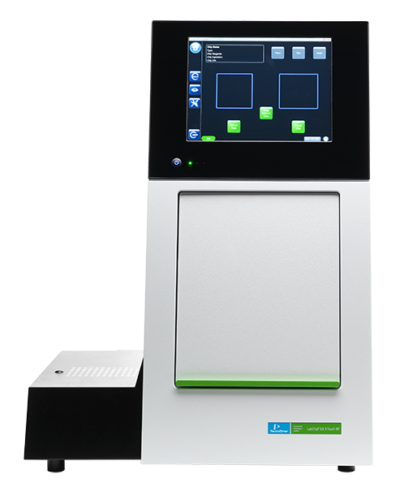

The transcriptomics platform offers you a turnkey service from the extraction of your samples to sequencing. Come and try it!
The protocol is divided into several stages: nucleic acid extraction, quantitative and qualitative analysis, synthesis of NGS libraries and sequencing.
High-throughput sequencing is multi-parallelized and consists of determining the sequences of the RNA molecules present in the samples. Using bioinformatics tools, the sequences are aligned with a reference genome in order to identify the genes expressed in the samples and their level of expression.
Differential analysis can then be performed between groups of biological samples to determine which transcripts are over- or underexpressed in the test condition compared with the control condition.

Email : ngs.u1215@inserm.fr


NEUROCENTRE MAGENDIE - U1215
146, rue Léo Saignat
33077 Bordeaux cedex
France
Phone +33 (0)5 57 57 36 79


