Team News


Sort by


Job offers
19/12/2019
Postdoc Position in sensory information processing and perception

The Cortical Plasticity group at the Neurocentre Magendie (Bordeaux, France) is seeking to recruit a postdoctoral researcher to join their group in 2020.

We are interested in the function of neocortical circuits and their pathophysiological modification in neurodevelopmental disorders. In particular, we study sensory information processing and perception. To address this, we will use in vivo calcium imaging (two-photon/miniscope) and electrophysiological approaches (multi-electrode/whole-cell) in behaving mice.
We are looking for a highly motivated and proactive candidate with experience in in vivo electrophysiology and/or calcium imaging and analysis of this data. The successful candidate is expected to make significant contributions to the direction and conceptualization of the project. The appointee must have a PhD or equivalent qualification in either neuroscience, life sciences, medicine, or physics. The candidate should also have a good level of proficiency in English.

The team is based at the Neurocentre Magendie, an INSERM research institute, and a member of the Bordeaux Neurocampus — a center of excellence for neuroscience research in France. The day-to-day language is English, but support would be provided for learning French if the candidate so wishes.

The project is funded for three years.

Interested applicants should send a cv, brief statement of research experience and interests, and names of 2-3 references to Dr. Andreas Frick: andreas.frick@inserm.fr


Hottopic
18/12/2019 10h00
Noémie DEPRET from Montcouquiol-Sans's lab will give a presentation entitled "Planar cell polarity protein Vangl2 : a key player in the morphofonctional development of hippocampal network"


A post-doc position in electrophysiology, optogenetics and functional imaging is available in the group of Dr. Nathalie Sans (Neurocentre Magendie).

We are looking for highly motivated researchers to analyse and manipulate hippocampal circuits involved in specific behavioural paradigms. The successful candidate is expected to have a strong interest in neuroscience with an expertise in whole-cell patch clamp, optogenetics and/or viral manipulation (preferably in the DG-CA3 network). The offered position is part of ongoing projects regarding the plasticity of the hippocampal network organization under pathophysiological conditions.

The ideal candidate should have a Ph.D. degree in neuroscience, physiology, or a related field (within the past five years and ideally is less than 35 years old). Candidates should be highly self-motivated, energetic, able to work independently and in collaboration.
There is some flexibility in the starting date, with preference within the first semester of 2020.

Applications should include a detailed CV with publication list, a brief statement of research experience and interests and at least two references to Dr. Nathalie Sans.

Contract length: 2 years

Contact

Nathalie Sans
nathalie.sans@inserm.fr


General informations
18/11/2019


General informations
25/09/2019


Seminars
17/09/2019 09h00
17th Synapse Day

Meeting room: Auditorium Centre Broca Nouvelle Aquitaine

Organised by: Maurice Garret – Nathalie Sans – Mathieu Letellier


General informations
12/09/2019
Bravo Sybille! (Planar Polarity and Plasticity Team )

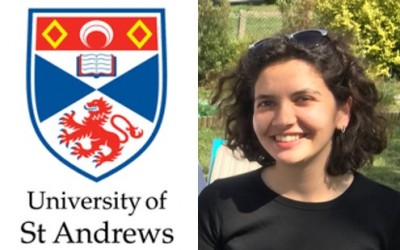
Congratulations to our M2 student, Sybille Marchese (Team Montcouquiol/Sans), who has won a doctoral contract at the University of Saint Andrews in Scotland with the young team of Dr Juan Alberto Varela, winner of the prestigious ERC programme (https://risweb.st-andrews.ac.uk/portal/en/persons/juan-alberto-varela(bf1154ef-1d43-41e1-b529-7dd9660cea91).html).

Sybille will use super-resolution imaging techniques to elucidate the extracellular trafficking of protein aggregates (beta-amyloid and alpha-synuclein) in the brain and their direct role in early neurodegeneration.

Good luck Sybille!


PhD/HDR defense
17/06/2019 13h30
Stéphanie MAURIAC from Montcouquiol-Sans's lab will give a presentation entitled ...

from Montcouquiol-Sans's lab will give a presentation entitled ...
Date de la soutenance: 17/06/2019 - 13h30
Lieu: Neurocentre Magendie Seminar room


Seminars
15/02/2019 11h30
Isabelle Brunet, Collège de France - Molecular Control of Neuro-Vascular Development

Meeting room: CGFB Seminar room

Invitant : Mireille Montcouquiol (Neurocentre Magendie, Montcouquiol-Sans's lab)

Sympathetic arterial innervation and EphrinaA4/EPHA4 Signaling: Arteries under pressure?
Abstract

Arteries receive a sympathetic innervation which is crucial to control their contraction level. Sympathetic nerves establish „“en passant““ synapses, called neurovascular junctions with arterial smooth muscle cells. Gene expres- sion comparison of non-innervated and innervated arteries revealed that the re- pulsive axon guidance molecule EphrinA4 is surprisingly expressed by arteries ar the onset of innervation (Postnatal day 2 P2). We here investigated the role of EphrinA4 signalization in the development and physiology of arterial innervation in mice. We showed that EphrinA4 is expressed by smooth muscle cells of resistance arteries and identified its receptor EphA4, expressed by sympathetic neurons. Binding and collapse experiments showed that EphrinA4 mediates the collapse of sympathetic growth cones in vitro via EphA4. EphrinA4 KO and EphA4 KO mice exhibited an increased arterial innervation at P2, consistent with a loss of repulsion. We then generated EphA4 flox-TH CRE mice who exhibited the same enhanced arterial innervation at P2 , which remained in adult mice. Increased arterial innervation in EPhA4 flox-TH CRE mice was correlated with a higher number of neurovascular junctions and a modifcation of their structure visible by eletronic microscopy. Measurement of cutaneous blood flow using laser doppler revealed an enhanced vasoconstriction in this mice. Resistivity and pulstility index of ca- rotids calculated from ultrasound views were increased, suggesting enhanced vascular resistivity. Thus EphrinA4 expressed by arterial smooth muscles cells induces collapse of sympathetic growth cones via the receptor EphA4 to refine sympathetic arterial innervation. Impairment of EphrinA4/EphA4 signaling leads to increased arterial innervation, vascular resistance and vasoconstriction. As systemic blood pressure depends on cardiac output but also vascular resistance, we are currently testing if those functional defects could lead to hypertension from sympathetic origin, or at least aggravate pre-existing hypertension.

Selected publications

– Minocha, S., Valloton, D., Brunet, I., Eichmann, A., Hornung, J.-P., Lebrand, C., (2015), NG2 glia are required for vessel network formation during embryonic development. Elife 4.

– Aspalter, I.M., Gordon, E., Dubrac, A., Ragab, A., Narloch, J., Vizán, P., Geudens, I., Collins, R.T., Franco, C.A., Abrahams, C.L., Thurston, G., Fruttiger, M., Rosewell, I., Eichmann, A., Gerhardt, H., (2015). Alk1 and Alk5 inhibition by Nrp1 controls vascular sprouting downstream of Notch. Nat Commun 6, 7264.

– Fortuna, V., Pardanaud, L., Brunet, I., Ola, R., Ristori, E., Santoro, M.M., Nicoli, S., and Eichmann, A. (2015). Vascular Mural Cells Promote Noradrenergic Differentiation of Embryonic Sympathetic Neurons. Cell Rep 11, 1786–1796.

– Rama N., Dubrac A., Mathivet T., Ní Chárthaigh R.-A., Genet G., Cristofaro B., Pibouin-Fragner L., Ma L., Eichmann A. & Chédotal A. (2015), Slit2 signaling through Robo1 and Robo2 is required for retinal neovascularization. Nat. Med. 21, 483–491.



Seminars
08/02/2019 11h30
Sandrine Humbert, Grenoble Institut des Neurosciences – INSERM U836 – UGA

Meeting room: Amphi CGFB

Sandrine Humbert, Grenoble Institut des Neurosciences – INSERM U836 – UGA will give a presentation entitled 'Is Huntington disease –a late onset neurological condition- a neurodevelopmental disorder?'

Invitants : Maurice Garret de l’INCIA et Nathalie Sans du Neurocentre Magendie

Huntington Disease (HD) belongs to the family of late onset manifesting neurological disorders including Alzheimer and Parkinson diseases. The cause of HD is the presence of an abnormal expansion of a polyglutamine tract in the huntingtin (HTT) protein. HD is characterized by a long premanifest phase before onset of progressive neurological and psychiatric symptoms at adult age, yet mutant HTT (mHTT) is expressed from the very beginning of life. Anyway, given the adult onset and dysfunction and death of adult neurons characterizing HD, most studies have focused on the toxic effects elicited by mutant HTT in post-mitotic neurons and the roles of the wild-type protein during development have been overlooked. We will discuss how HTT regulates several steps of mouse embryonic corticogenesis. HTT is crucial to maintain the pool of cycling progenitors and for the migration and post-natal maturation of post-mitotic neurons. We will describe the underlying molecular mechanisms by which HTT mediates its effects. Finally, we will also show the consequences of the presence of an abnormal polyglutamine expansion in HTT during cortical neurogenesis and consider the viewing of HD as a developmental disorder.

Selected publications
Barnat M, Le Friec J, Benstaali C and Humbert, S (2017). Huntingtin-mediated Multipolar-Bipolar Transition of Newborn Cortical Neurons is Critical for their Postnatal Neuronal Morphology. Neuron, 93, 99-114.
Thion MS, McGuire JR, Sousa CM, Fuhrmann L, Fitamant J, Leboucher S, Vacher S, Tezenas du Montcel S, Bièche I, Bernet A, Patrick Mehlen P, Anne Vincent-Salomon A, and Humbert, S (2015). Unravelling the role of huntingtin in breast cancer metastasis. J. Natl. Cancer Inst., doi: 10.1093/jnci/djv208.
Elias S, McGuire JR, Yu H and Humbert S (2015). Huntingtin is required for epithelial polarity through RAB11A mediated apical trafficking of PAR3-aPKC. Plos Biol., 13:e1002142.
Molina-Calavita M, Barnat M, Elias S, Aparicio E, Piel M and Humbert S (2014). Mutant huntingtin affects cortical progenitor cell division and development of the mouse neocortex. J. Neurosci., 34, 10034-10040.
Elias S, Thion MS, Yu H, Moreira Sousa C, Lasgi C, Morin X and Humbert S (2014). Huntingtin Regulates Mammary Stem Cell Division and Differentiation. Stem Cell Reports, 2, 491-506.