Team News


Sort by


We would like to inform you that since 1 September 2021, new telework rules have modified those adopted by the Institute in 2019 and which were suspended during the health crisis.

Agents who wish to benefit from this new system will be able to submit their request in the GAIA tool, before 1 October 2021, according to a simplified procedure. In particular, a declaration on honour will replace the proof of home insurance and internet subscription.

While their request is being examined, staff members will be able to remain in their current situation until 30 September at the latest.

As a reminder, telework is a possibility offered to Inserm agents, which requires the favourable opinion of the line manager. An agent cannot benefit from telework without his or her agreement or that of his or her Administration.

Telework is open to civil servants (tenured and trainees) as well as to contractual agents under public law with more than 6 months seniority in their functions.

Telework can now be carried out according to four different modalities: fixed telework days, floating days, fixed and floating days, or derogatory regime on the recommendation of the occupational doctor.


Congratulations to the Magendie laureates!

CE13 – Biologie Cellulaire, biologie du développement et de l’évolution
Catégorie PRC :
SelfMorphogEar : Auto-organisation d’un épithélium sensoriel: bases moléculaires, cellulaires et mécaniques de l’extension et du remodelage cochléaires.
Raphael Etournay (Institut Pasteur/Institut de l’Audition) / Mireille Montcouquiol (Magendie - Eq Montcouquiol-Sans)

CE14 – Physiologie et physiopathologie
Catégorie PRC :
StriaPOM : Rôle du circuit POMC-striatum ventral dans le développement de l’obésité
Daniela Cota (Magendie) / Xavier Fioramonti (Nutrineuro), Pierre Trifilieff (Nutrineuro)

CE16 – Neurosciences moléculaires et cellulaires – Neurobiologie du développement
Catégorie PRC :
EMTSens : Plasticité électro-morpho-transcriptomique des réseaux spinaux dans un contexte de perception sensorielle atypique
Yves Le Feuvre (Magendie - Eq Frick)

CE37 – Neurosciences intégratives et cognitives
Catégorie PRC :
RejuvBrain : La néo-neurogénèse hippocampique : une nouvelle stratégie pour rajeunir le cerveau vieillissant.
Nora Abrous (Magendie) / Stéphane Oliet (Magendie)

CE44 – Biochimie du Vivant
Catégorie PRC :
BrainFuel : Rôle des différents substrats énergétiques pour l’activité cérébrale
Luc Pellerin (IRTOMIT, Poitiers) / Aude Panatier (Magendie - Eq Oliet), Anne-Karine Bouzier-Sore (CRMSB, Bordeaux), Céline Baligand (LMN, Fontenay-aux-roses).


Expires on 11 June 2021

The Academy of Sciences will award, in 2021, the Lamonica Grand Prize of Neurology of an amount of €110,000.

This annual neurology prize will be awarded to a scientist, without any condition of nationality, working in a French laboratory.

An amount of €10,000 will be awarded to the winner and the remaining €100,000 will contribute to the financing of a post-doctorate.


Hottopic
31/03/2021 10h45
Steven CONDAMINE from Montcouquiol-Sans' lab will give a presentation entitled "Deafness in MPDZ mutant: epithelial and/or synaptic origin ?"


Hottopic
25/11/2020 10h00
Ana DORREGO-RIVAS from Montcouquiol-Sans's lab will give a presentation entitled 'A new role for planar cell polarity signaling in neuronal polarity and axonal function'


Luigi Bellocchio (Marsicano team) and al. in eLife

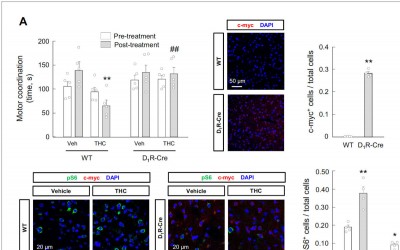
Cannabis is the most common illicit drug of abuse in the US and globally. In addition, many states in the US, as well as several countries in the world, have legalized the medical and/or recreational use of cannabis. In this rapidly expanding landscape of cannabis use, huge efforts are made to find innovative interventions reducing potential cannabis-evoked harms. Here, we investigated the possible relation between cannabinoids and autophagy, the process of programmed cell “self-digestion”, and asked whether it could be related to the control of motor coordination behavior, one of the best established neurobiological processes impacted by cannabinoids.

We showed that Δ9-tetrahydrocannabinol, the major psychoactive ingredient of cannabis, impairs autophagy and accumulates P62 protein in neurons of the striatum, a brain area that plays a key role in the control of motor coordination. Second, we demonstrate that boosting autophagy, either by pharmacological manipulation (with the FDA-approved mammalian target of rapamycin inhibitor temsirolimus) or by dietary intervention (with the natural, non-toxic disaccharide trehalose), rescues the Δ9-tetrahydrocannabinol-induced impairment of striatal autophagy and motor coordination in mice. Furthermore, we provide evidence that cannabinoid CB1 receptors located on neurons of the striatal direct (stratonigral) pathway, by coupling to mammalian target of rapamycin activation and autophagy inhibition, are indispensable for the motor dyscoordinating activity of Δ9-tetrahydrocannabinol in mice.

Last but not least, using viral mediated genetic manipulation of striatonigral neurons we confirmed that disrupting mammalian target of rapamycin pathway, as well as boosting P62 accumulation in these cells, completely prevents Δ9-tetrahydrocannabinol-induced impairment of striatal autophagy and motor dyscoordination in mice.

Taken together, these findings identify impairment of autophagy as an unprecedented mechanistic link between cannabinoids and motor dyscoordination, and suggest that activators of autophagy might be considered as promising therapeutic tools to treat certain cannabinoid-evoked behavioral alterations.

Article

Inhibition of striatonigral autophagy as a link between cannabinoid intoxication and impairment of motor coordination. Cristina Blázquez, Andrea Ruiz-Calvo, Raquel Bajo-Grañeras, Jérôme M Baufreton, Eva Resel, Marjorie Varilh, Antonio C Pagano Zottola, Yamuna Mariani, Astrid Cannich, José A Rodríguez-Navarro, Giovanni Marsicano, Ismael Galve-Roperh, Luigi Bellocchio, Manuel Guzmán ; eLife 2020;9:e56811 doi: 10.7554/eLife.56811

https://elifesciences.org/articles/56811



Hottopic
26/02/2020 10h30
Jennifer STANIC from Montcouquiol-Sans's lab will give a presentation entitled 'The PSD-95 spatial nano-architecture is altered by Scribble-dependent signaling'

Press review
14/01/2020
Carvalho et al in Elife - January 2020

Vangl2 acts at the interface between actin and N-cadherin to modulate mammalian neuronal outgrowth. Steve Dos-Santos Carvalho, Maite M Moreau, Yeri Esther Hien, Michael Garcia, Nathalie Aubailly, Deborah J Henderson, Vincent Studer, Nathalie Sans, Olivier Thoumine, Mireille Montcouquiol. eLife. 2020-01-07. 9.

Here, we show that an early deletion of vangl2 in neuronal progenitors of the forebrain leads to the spatially restricted deficit of only two commissural axon bundles. Mechanistically, we show that the absence of vangl2 leads to an increase in axonal outgrowth due to a reduced turnover of N-cadherin, and a better coupling between the adhesion molecule and the dynamic actin flow in the growth cone. Our results support a model in which Vangl2 acts as a regulator of membrane protein endocytosis and junctional remodeling during growth cone exploration, thereby modulating its outgrowth.

This study benefited from a close collaboration between the groups of Montcouquiol/Sans (Neurocentre Magendie), O. Thoumine (IINS), and V. Studer (IINS), funded by the Labex BRAIN (project PCP Compass).

https://www.bordeaux-neurocampus.fr/steve-dos-santos-carvalho-et-al-in-elife/
https://elifesciences.org/articles/51822