Team News


Sort by


Seminars
05/10/2022 11h00
Sebastien G. Bouret

Meeting room: CGFB

Research Director from Lille Neuroscience & Cognition (Development and Plasticity of the Neuroendocrine Brain
Inserm, University of Lille, CHU Lille)'s lab will give a presentation entitled 'The not-so-sweet effect of maternal nutrition on metabolic programming and brain development'

Invited by:
Agnès Nadjar (Magendie Eq Cota) and Xavier Fioramonti (NutriNeuro)


Seminars
13/09/2022 09h00
Synapse and Network Day

Meeting room: Centre Broca

Program
9:00 – Jose A. ESTEBAN
Centro de Biología Molecular Severo Ochoa, Madrid
PI3K signaling for neuronal growth and synaptic plasticity

9:45 – Stéphane LÉON
Neurocentre Magendie (Cota Team)
Single-cell mapping of POMC neurons in obesity reveals novel subtypes with atypical identity

10:05 – Vincent PAGET-BLANC
IINS
A Synaptomic analysis reveals dopamine hub synapses in the mouse striatum

10:25-10:55 – Coffee break

10:55 – François LAMBERT
INCIA
Multimodal integration and plasticity in extraocular motoneurons: Synapse or phenotype matters?

11:25 – Ignacio FERNANDEZ MONCADA
Neurocentre Magendie (Marsicano Team)
CB1 receptors control memoryconsolidation via modulation of astroglial lactate and L-serine metabolism

11:45 – Agatha IDZIAK
IINS
It’s time for GreenT! A novel sensor for extracellular calcium imaging

12:05 – Cyril HANUS
Institute for Psychiatry and Neurosciences of Paris
N-glycans regulate synaptic receptor structure and function12:50-14:30 Lunch

12:50-14:30 – Lunch

14:30 – Anna BRACHET
IINS
Organization and role of beta spectrins in dendritic spines

15:00 – Lorena DELGADO
IMN
Normalization of substantia nigra pars reticulata parvalbumin-expressing neuron activity restores motor function in Parkinsonian mice

15:20 – Émilie PACARY
Neurocentre Magendie (Abrous Team)
The temporal origin of dentate granule neurons dictates their anatomical properties

15:50 – Nathan BENAC
IINS
Transient dopamine-NMDA receptor interaction governs hippocampal synaptic and network maturation

16:10 – Laura BALLERINI
SISSA, Trieste
Engineered nanomaterials to target synapses at the nanoscale

Scientific Committee
Elena AVIGNONE (Neurocentre Magendie)
Maurice GARRET (INCIA)
Mathieu LETELLIER (IINS)
Nathalie SANS (Neurocentre Magendie)

Registration
Please fill the registration formular by following the webpage down below:
https://framaforms.org/synapse-and-network-day-2022-1658751038


In this short review article, Giovanni Marsicano, together with his former post-doc Arnau Busquets-Garcia (now in Barcelona) and his collaborator Juan Pedro Bolanos (Salamanca), highlights new aspects of endocannabinoid signalling as metabolic mediators.

Although their chemical structure is very different, endocannabinoids are endogenous analogues of cannabinoids, compounds originally derived from the cannabis sativa plant or produced synthetically. (Endo)cannabinoids bind to and activate cannabinoid receptors coupled to G proteins, producing a plethora of different effects that can affect most physiological functions in the mammalian body. Studies over the past decades have highlighted the strong metabolic impact of endocannabinoid signalling, and a 2017 paper by Piazza, Cota and Marsicano proposed that most (if not all) of the disparate functions of the endocannabinoid system point towards the promotion of energy accumulation, through mechanisms that have been termed exostatic. Here we present a new step in understanding the roles and functions of endocannabinoids and cannabinoid receptors. A series of recent studies have revealed that cannabinoid receptors can directly modulate mitochondrial activity. As mitochondria are the main metabolic organelles of the cell, this is obviously an additional direct means for the endocannabinoid system to regulate metabolic processes. However, the mitochondrial impact of (endo)cannabinoids goes beyond the simple regulation of basic cellular energy metabolism. By regulating high-level functions such as memory processing or social interactions, mitochondrial cannabinoid receptors help support the idea that energy use in the brain is not only for survival, but has signalling properties that can impact synaptic and brain function. Particular emphasis is placed on the role of the brain's main metabolic cells, the astrocytes, in these processes. Thus, new evidence indicates that endocannabinoid signalling can modulate energy use for the body and, at the same time, use this modulation to dictate behavioural choices.

Reference

Metabolic Messengers: endocannabinoids
Arnau Busquets-García, Juan P. Bolaños & Giovanni Marsicano
Nature Metabolism; 11 July 2022

http://doi.org/10.1038/s42255-022-00600-1


Félicitations aux lauréats magendiens !

CE13 – Biologie cellulaire, biologie du développement et de l’évolution
Catégorie PRC :

– MODCOM : Modulation de la communication trans- synaptique à la jonction neuromusculaire: des voies de signalisation aux approches thérapeutiques
Laure Strochlic (Institut de Myologie, Paris) / Nathalie Sans (Neurocentre Magendie), Jordi Molgo (CEA SIMOS_Paris) / Rozen LE PANSE (CRM_Paris)

CE14 – Physiologie et physiopathologie
Catégorie PRC :

– NeuroInflamIR – L’altération de l’homéostasie du glucose implique une nouvelle voie inflammatoire hypothalamique Mohammed Taouis (Institut des Neurosciences Paris-Saclay, Paris) / Daniela Cota (Magendie), Agnes Nadjar, (Magendie), Blandine Gatta-Cherifi (Magendie – CHU Bordeaux), Ariane Sharif (Lille Neurosciene & Cognition, Lille)

CE16 – Neurosciences moléculaires et cellulaires – Neurobiologie du développement

Catégorie JCJC (Jeunes Chercheuses et Jeunes Chercheurs) :

– AMY-FEB : Rôle des interneurones en panier et axo-axoniques de l’amygdale dans le contrôle de la
peur et de l’anxiété
Thomas Bienvenu (Magendie)

Catégorie PRC :

– GRINTRACK – Rôle de l’organisation à l’échelle nanométrique des récepteurs NMDA dans le développement normal du cerveau et les troubles GRIN.
Olivier Nicole (IINS) / Emilie Pacary (Magendie)

– PREGNENOID – Étude des mécanismes cellulaires et moléculaires qui constituent la boucle de régulation PREG-CB1R dans des conditions physiologiques et pathologiques
Monique Vallée (Magendie) / Luigi Bellocchio (Magendie)


CE37 – Neurosciences Intégratives et Cognitives

Catégorie PRC :

– CEA : Electrophysiologie des circuits de l’anxiété
Cyril Herry (Magendie), Anna Beyeler (Magendie), Thomas Bienvenu (Magendie), Thomas Tourdias (Magendie)

– EXINmemory : Etude du rôle des synapses excitatrices sur Interneurones dans le processus de mémoire
Yann Humeau (IINS), Daniel Choquet (IINS), Cyril Herry (Magendie)


CE45 – Interfaces: mathématiques, sciences du numérique – biologie, santé
Catégorie PRC :

– CROSS-TRACTS – Revealing the brain’s white matter crossing fibers’ topology: toward a new generation of tractography algorithms integrating the ground truth neuroanatomy.
Laurent Petit (IMN), Sylvain Miraux (CRMSB, Bordeaux), Andreas Frick (Magendie)


PhD/HDR defense
06/07/2022 10h30
Luigi Bellocchio from Marsicano's lab will defend his HDR entitled 'Cellular and Sub-cellular targets of cannabinoids in the brain: Form signaling to behavior and beyond.'

from Marsicano's lab will defend his HDR entitled 'Cellular and Sub-cellular targets of cannabinoids in the brain: Form signaling to behavior and beyond.'

During the past 15 years my research has focused on the role of the ECS and in particular the CB1 receptor in the regulation of several physiological and behavioral outcomes.

At beginning of my carrer I contributed to highlight the role of neuronal CB1 signalling as a key determinant of the ECS action on energy balance regulation. I showed that CB1R exerts a bimodal control of feeding behavior and, by regulating energy expenditure and sympathetic nervous system activity, it mediates also periphery/brain axes of communication that are altered in pathological conditions such as obesity and metabolic disorders. The differences observed between the role of endogenous versus exogenous CB1 agonists, as well as between agonists versus antagonists in most of my studies suggest that this receptor may have different pharmacological properties according to the cell type-specific signalling involved.

Thus, the first concept rising from these observations is that a high degree of heterogeneity exists for CB1 mediated actions in different neuronal circuits in esponse to endogenous and exogenous ligands, which support the idea that selective CB1 signalling might be specific to brain region/cell population/subcellular compartement involved. Following this line of research, I focused my attention on the basal ganlia, which represent the most abundant brain CB1 receptor pools. I contributed to show that CB1 activation can modulate several cellular processes which goes beyond regulation of neurotransmitter release. These include several intra-cellular signaling pathways involved in maintaning cellular homeostasis, e.g. kinases pathways, autophagy, neurosteroids, bioenergetics and many more processes. Moreover, we found that, based on the specific brain regions/cell types/subcellular compartements involved, CB1 signaling orchestrates many neurophysiological readouts that eventuallly lead to behavioral alterations, ranging from feeding to motor, cognitive and pain related processes. These processes are well know targets of cannabinoid-based medicine, as well as side effects often associated with recreational use of this drug, two phenomena that are exponentially rising wordwide.

Thus the study of biochemical, molecular and neurophysiological adaptations underlying such heterogeneity in CB1 signaling will represent the subject of my future studies. The expected results of this future work might provide novel insight into physiological processes regulated by the ECS, as well as newer and more selective therapeutical targets for motor, pain and addiction related diseases. Furthermore, given the high abundance of CB1 receptor and endocannabinoid signaling in the mammalian brain, understanding the neurophsyiological and behavioral regulation by this neuromodulatory system has been and will always be an important way to understand brain fuctionning.

Key publications
Soria-Gomez E, Pagano Zottola AC, Mariani Y, Desprez T, Barresi M, Bonilla-Del Río I, Muguruza C, Le Bon-Jego M, Julio-Kalajzić F, Flynn R, Terral G, Fernández-Moncada I, Robin LM, Oliveira da Cruz JF, Corinti S, Amer YO, Goncalves J, Varilh M, Cannich A, Redon B, Zhao Z, Lesté-Lasserre T, Vincent P, Tolentino-Cortes T, Busquets-García A, Puente N, Bains JS, Hebert-Chatelain E, Barreda-Gómez G, Chaouloff F, Lohman AW, Callado LF, Grandes P, Baufreton J, Marsicano G*, Bellocchio L*. Subcellular specificity of cannabinoid effects in striatonigral circuits. Neuron. 2021 May 5;109(9):1513-1526.e11.

Blázquez C, Ruiz-Calvo A, Bajo-Grañeras R, Baufreton JM, Resel E, Varilh M, Pagano Zottola AC, Mariani Y, Cannich A, Rodríguez-Navarro JA, Marsicano G, Galve-Roperh I, Bellocchio L*, Guzmán M*. Inhibition of striatonigral autophagy as a link between cannabinoid intoxication and impairment of motor coordination. Elife. 2020 Aug 10;9:e56811.

Ruiz-Calvo A, Maroto IB, Bajo-Grañeras R, Chiarlone A, Gaudioso Á, Ferrero JJ, Resel E, Sánchez-Prieto J, Rodríguez-Navarro JA, Marsicano G, Galve-Roperh I, Bellocchio L*, Guzmán M*. Pathway-Specific Control of Striatal Neuron Vulnerability by Corticostriatal Cannabinoid CB1 Receptors. Cereb Cortex. 2018 Jan 1;28(1):307-322.

Hebert-Chatelain E*, Desprez T*, Serrat R*, Bellocchio L*, Soria-Gomez E, Busquets-Garcia A, Pagano Zottola AC, Delamarre A, Cannich A, Vincent P, Varilh M, Robin LM, Terral G, García-Fernández MD, Colavita M, Mazier W, Drago F, Puente N, Reguero L, Elezgarai I, Dupuy JW, Cota D, Lopez-Rodriguez ML, Barreda-Gómez G, Massa F, Grandes P, Bénard G, Marsicano G. A cannabinoid link between mitochondria and memory. Nature. 2016 Nov 24;539(7630):555-559.

Bellocchio L, Ruiz-Calvo A, Chiarlone A, Cabanas M, Resel E, Cazalets JR, Blázquez C, Cho YH, Galve-Roperh I, Guzmán M. Sustained Gq-Protein Signaling Disrupts Striatal Circuits via JNK. J Neurosci. 2016 Oct 12;36(41):10611-10624.

Chiarlone A*, Bellocchio L*, Blázquez C, Resel E, Soria-Gómez E, Cannich A, Ferrero JJ, Sagredo O, Benito C, Romero J, Sánchez-Prieto J, Lutz B, Fernández-Ruiz J, Galve-Roperh I, Guzmán M. A restricted population of CB1 cannabinoid receptors with neuroprotective activity. Proc Natl Acad Sci U S A. 2014 Jun 3;111(22):8257-62.

Soria-Gómez E*, Bellocchio L*, Reguero L, Lepousez G, Martin C, Bendahmane M, Ruehle S, Remmers F, Desprez T, Matias I, Wiesner T, Cannich A, Nissant A, Wadleigh A, Pape HC, Chiarlone AP, Quarta C, Verrier D, Vincent P, Massa F, Lutz B, Guzmán M, Gurden H, Ferreira G, Lledo PM, Grandes P, Marsicano G. The endocannabinoid system controls food intake via olfactory processes. Nat Neurosci. 2014 Mar;17(3):407-15.

Bellocchio L*, Soria-Gómez E*, Quarta C, Metna-Laurent M, Cardinal P, Binder E, Cannich A, Delamarre A, Häring M, Martín-Fontecha M, Vega D, Leste-Lasserre T, Bartsch D, Monory K, Lutz B, Chaouloff F, Pagotto U, Guzman M, Cota D, Marsicano G. Activation of the sympathetic nervous system mediates hypophagic and anxiety-like effects of CB1 receptor blockade. Proc Natl Acad Sci U S A. 2013 Mar 19;110(12):4786-91.

Quarta C*, Bellocchio L*, Mancini G, Mazza R, Cervino C, Braulke LJ, Fekete C, Latorre R, Nanni C, Bucci M, Clemens LE, Heldmaier G, Watanabe M, Leste-Lassere T, Maitre M, Tedesco L, Fanelli F, Reuss S, Klaus S, Srivastava RK, Monory K, Valerio A, Grandis A, De Giorgio R, Pasquali R, Nisoli E, Cota D, Lutz B, Marsicano G, Pagotto U. CB(1) signaling in forebrain and sympathetic neurons is a key determinant of endocannabinoid actions on energy balance. Cell Metab. 2010 Apr 7;11(4):273-85.

Bellocchio L*, Lafenêtre P*, Cannich A, Cota D, Puente N, Grandes P, Chaouloff F, Piazza PV, Marsicano G. Bimodal control of stimulated food intake by the endocannabinoid system. Nat Neurosci. 2010 Mar;13(3):281-3. doi: 10.1038/nn.2494. Epub 2010 Feb 7.


Date de la soutenance: 06/07/2022 - 10h30
Lieu: CGFB

Pour plus de détails: https://www.bordeaux-neurocampus.fr/en/event/soutenance-hdr-luigi-bellocchio/?utm_source=mailpoet&utm_medium=email&utm_campaign=la-lettre-de-bordeaux-neurocampus_75



Le jury composé des coordinateurs et co-coordinateurs du GPR BRAIN_2030 a délibéré le lundi 27 juin 2022.

Parmo les lauréats:
GOMEZ SOTRES Paula
Titre de la thèse : Astrocytic CB1 receptors in social transmission of stress
Equipe : Marsicano (Magendie)
Directeur de thèse : Giovanni Marsicano

LEON Stéphane
Titre de la thèse : Single-cell molecular and functional mapping of POMC neurons in obesity: a multimodal approach
Equipe : Cota (Magendie)
Directeur de thèse : Carmelo Quarta

RAUX Pierre-Louis
Titre de la thèse : Physiological role of pregnenolone in the regulation of the CB1 cannabinoid receptor : Phenotypic study in CB1-E134G mutant mice
Equipe : Revest (Magendie)
Directrice de thèse : Monique Vallée


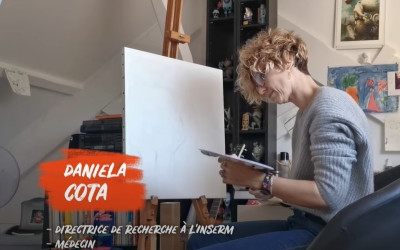
In New Aquitaine, there is a life of research!For Immunal, discover these unknown facets of scientists.Daniela Cota, director of the "Vergtic and obs" Quilibre Quilibre "in the Inserm 1215 unit of the Bordeaux Magendie Neurocentre, you are passionate about neuroscience and painting.

See the video here


General informations
25/04/2022


General informations
01/04/2022
Work in dcketing schedules: what's going on the weekend magendie?Vincent Simon tells us his experience.

Most of them are PhD students or post-docs, and on average there are about ten of them who come every weekend. There are many reasons for this: post-op surveillance, care of sick animals, daily injections during a protocol, but they should remain exceptional.
In any case, if you work at the weekend or finish your work in the lab after 7:30 pm, you are in a situation where you work shifted hours. For your safety, it is compulsory to declare yourself on the Magendie intranet. Vincent SIMON from the COTA team shares his experience during his numerous weekend visits.


Pièces jointes


General informations
31/03/2022
Election of Second Deputy Director

Cyril Herry was elected Deputy Director of the Neurocentre Magendie this morning. He joins Daniela Cota who had been appointed earlier this year by Stéphane Oliet. A very big thank you to Giovanni Marsicano who has been performing these duties since 2018.