Last News


Afficher par type :


General informations
03/05/2026
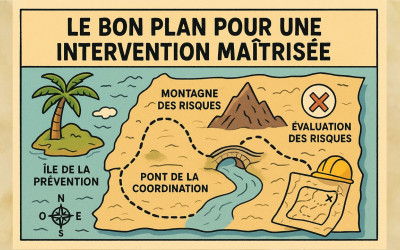
The smart way to ensure a safe intervention!
    Afficher le PDF

Every external contractor intervention in the laboratory may involve risks. But don’t worry: the prevention plan is here to help you anticipate hazards, coordinate activities, and ensure a safe and efficient intervention.
There is no Plan B: better preparation means better safety!
To learn more about the content of a prevention plan, click here.
And now that you know why and how to do it, go to:
K/MaintenanceEquipementsU1215/PLANS DE PREVENTION/2026/MODELES
… and it’s your turn!


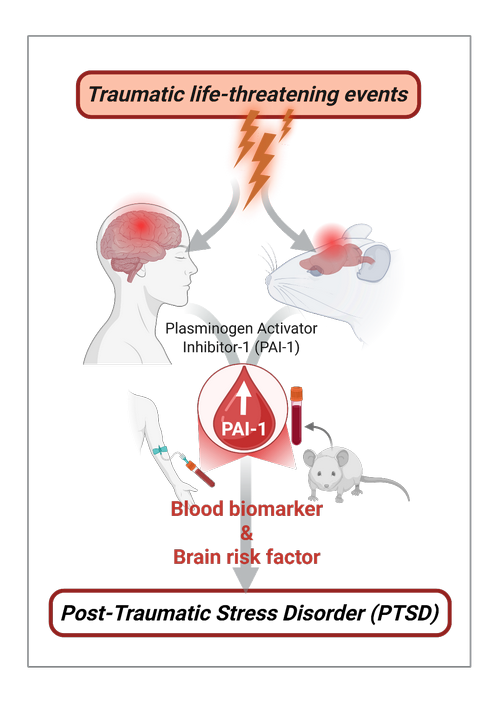
Post-traumatic stress disorder (PTSD) is a severe stress-related psychiatric condition triggered by traumatic life-threatening events, characterized notably by an altered memory profile. Although clinically well-documented, no specific biomarker exists. This translational study identifies plasminogen activator inhibitor-1 (PAI-1) as a brain risk factor for PTSD, thereby supporting its potential as a blood-derived biomarker. Mice with genetically ablated PAI-1 were protected from developing a PTSD-like memory profile. Conversely, mice exhibiting PTSD-like cognitive impairment showed increased blood PAI-1 levels, correlating with their profile severity. In the brain, PAI-1 levels were specifically increased in the dorsal hippocampus, a key region for cognitive functions and in the etiology of PTSD. Finally, a longitudinal study of soldiers revealed that those developing PTSD symptoms exhibit rising blood PAI-1 levels over a 12-month period. Its significant association with various indicators of PTSD-related psychological distress attests to PAI-1's potential as a blood biomarker and brain therapeutic target for PTSD.


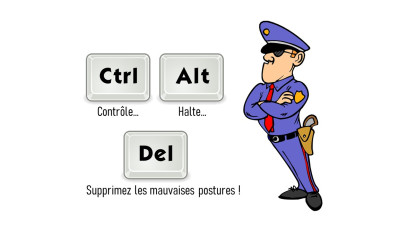
Keyboard too high? Mouse too far? These small details can cause pain and musculoskeletal disorders (MSDs).
Adopt the right habits: adjust the height, bring your tools closer, and keep your wrists aligned.
A few simple adjustments are enough to protect your comfort and health.
Check out these tips from Inserm to help you.


The Brain & Behavior Research Foundation (BBRF) today announced it will award $1 million in Distinguished Investigator Grants to 10 senior scientists conducting innovative research in neurobiological and behavioral science.

The $100,000, one-year grants will support studies focused on critical mental health challenges, including depression, autism spectrum disorder, PTSD, bipolar disorder, schizophrenia, cocaine use disorder, and chronic cannabis use. The awards are funded by the WoodNext Foundation and mark the third year of a five-year, $5 million commitment to support BBRF’s Distinguished Investigator Grants program.

Aline Desmedt, Ph.D., NeuroCenter Magendie U1215 (INSERM, France), has developed an animal model that reproduces in mice the two memory components of PTSD: traumatic hypermnesia—the intense, involuntary, and recurrent re-experiencing of traumatic memories, often presenting as flashbacks or intrusive thoughts; and contextual amnesia, i.e., remembering details or events but forgetting the surrounding circumstances. This distinguishes PTSD-like memory from normative fear memory. This project seeks to identify neural mechanisms underlying the switch to and from pathological (PTSD-like) to normative fear memories. In animal models, the team will investigate the fate and representation of the “memory engram” during the formation, prevention, and normalization of trauma representation. The aim is to determine the extent to which a memory trace is transformed when (re)contextualized traumatic memory is normalized, shedding light on neurobiological mechanisms that could inform development of new therapeutic and preventive strategies.